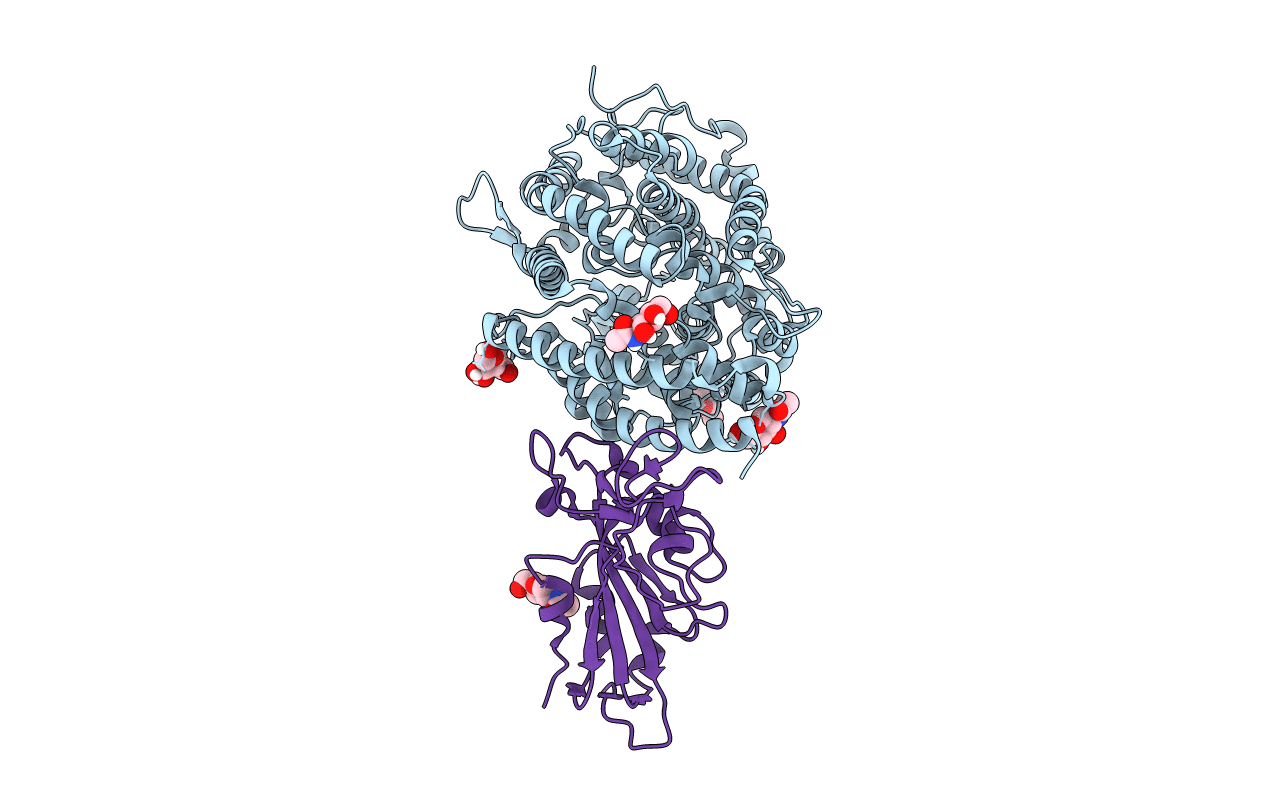
7EFP image
Deposition Date 2021-03-22
Release Date 2021-11-24
Last Version Date 2024-10-23
Entry Detail
PDB ID:
7EFP
Keywords:
Title:
Structure of SARS-CoV-2 spike receptor-binding domain in complex with high affinity ACE2 mutant (S19W,N330Y)
Biological Source:
Host Organism:
Method Details:
Experimental Method:
Resolution:
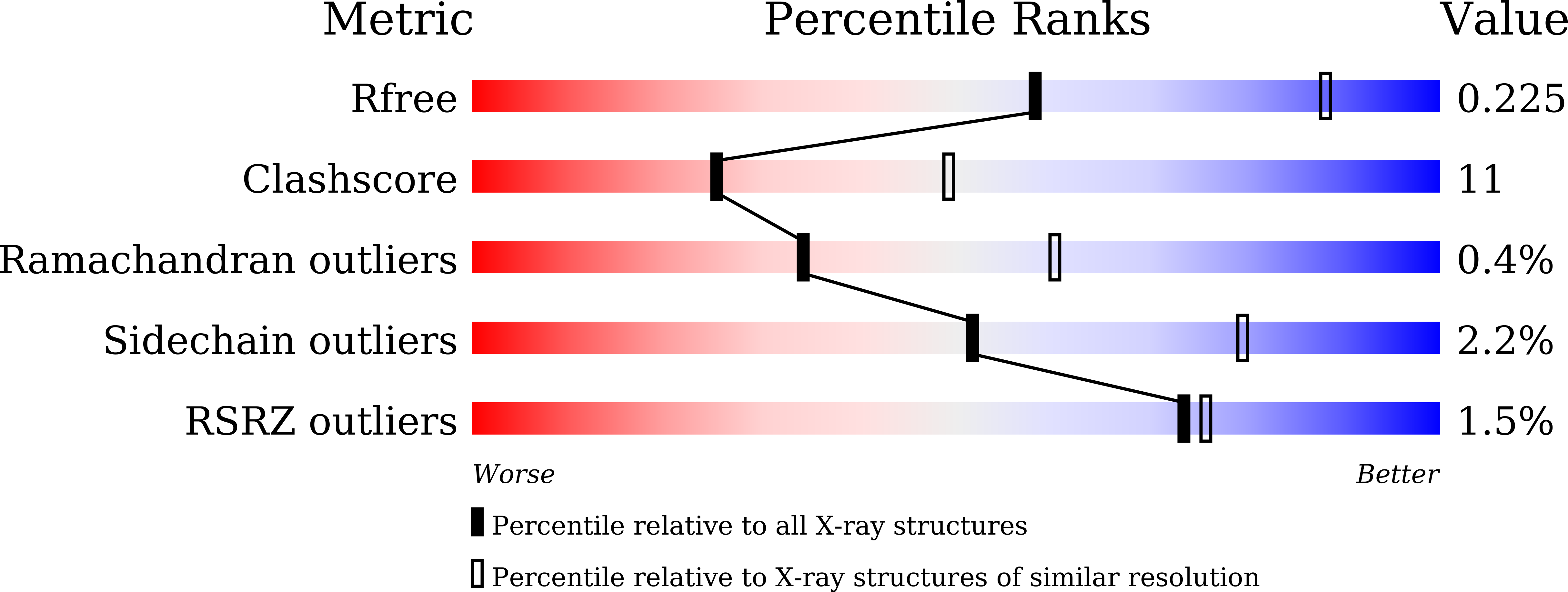
2.70 Å
R-Value Free:
0.22
R-Value Work:
0.18
R-Value Observed:
0.18
Space Group:
P 43 21 2
Macromolecular Entities
Structures with similar UniProt ID
Protein Blast
Polymer Type:polypeptide(L)
Molecule:Processed angiotensin-converting enzyme 2
Gene (Uniprot):ACE2
Mutagens:S19W, N330Y
Chain IDs:A
Chain Length:599
Number of Molecules:1
Biological Source:Homo sapiens
Structures with similar UniProt ID
Protein Blast
Polymer Type:polypeptide(L)
Molecule:Spike glycoprotein
Gene (Uniprot):S
Chain IDs:B
Chain Length:218
Number of Molecules:1
Biological Source:Severe acute respiratory syndrome coronavirus 2
Ligand Molecules
Primary Citation
S19W, T27W, and N330Y mutations in ACE2 enhance SARS-CoV-2 S-RBD binding toward both wild-type and antibody-resistant viruses and its molecular basis.
Signal Transduct Target Ther 6 343 343 (2021)
PMID: 34531369 DOI: 10.1038/s41392-021-00756-4

Abstact

SARS-CoV-2 recognizes, via its spike receptor-binding domain (S-RBD), human angiotensin-converting enzyme 2 (ACE2) to initiate infection. Ecto-domain protein of ACE2 can therefore function as a decoy. Here we show that mutations of S19W, T27W, and N330Y in ACE2 could individually enhance SARS-CoV-2 S-RBD binding. Y330 could be synergistically combined with either W19 or W27, whereas W19 and W27 are mutually unbeneficial. The structures of SARS-CoV-2 S-RBD bound to the ACE2 mutants reveal that the enhanced binding is mainly contributed by the van der Waals interactions mediated by the aromatic side-chains from W19, W27, and Y330. While Y330 and W19/W27 are distantly located and devoid of any steric interference, W19 and W27 are shown to orient their side-chains toward each other and to cause steric conflicts, explaining their incompatibility. Finally, using pseudotyped SARS-CoV-2 viruses, we demonstrate that these residue substitutions are associated with dramatically improved entry-inhibition efficacy toward both wild-type and antibody-resistant viruses. Taken together, our biochemical and structural data have delineated the basis for the elevated S-RBD binding associated with S19W, T27W, and N330Y mutations in ACE2, paving the way for potential application of these mutants in clinical treatment of COVID-19.

Legend

Protein

Chemical

Disease

Primary Citation of related structures
Feedback Form
Name
Email
Institute
Feedback