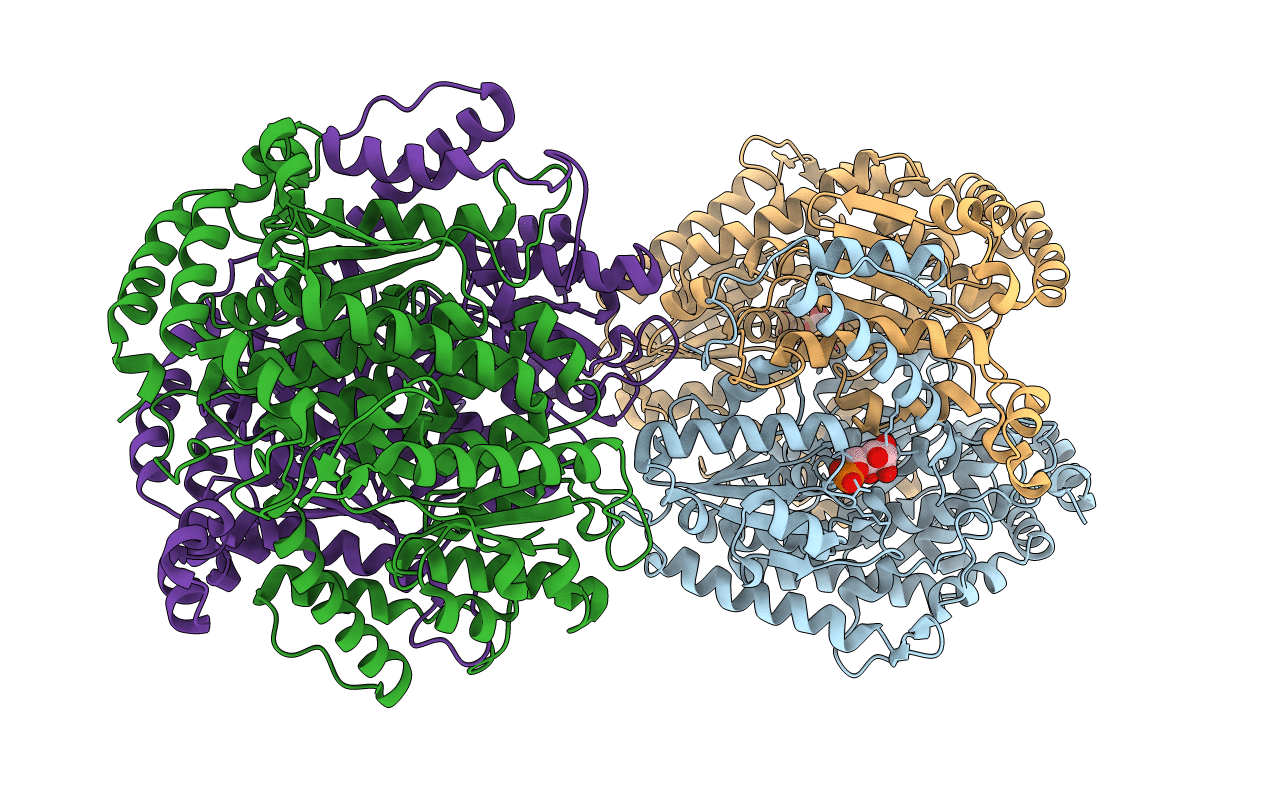
7E78 image
Deposition Date 2021-02-25
Release Date 2021-07-28
Last Version Date 2023-11-29
Entry Detail
PDB ID:
7E78
Keywords:
Title:
the structure of cytosolic TaPGI with substrate
Biological Source:
Source Organism:
Method Details:
Experimental Method:
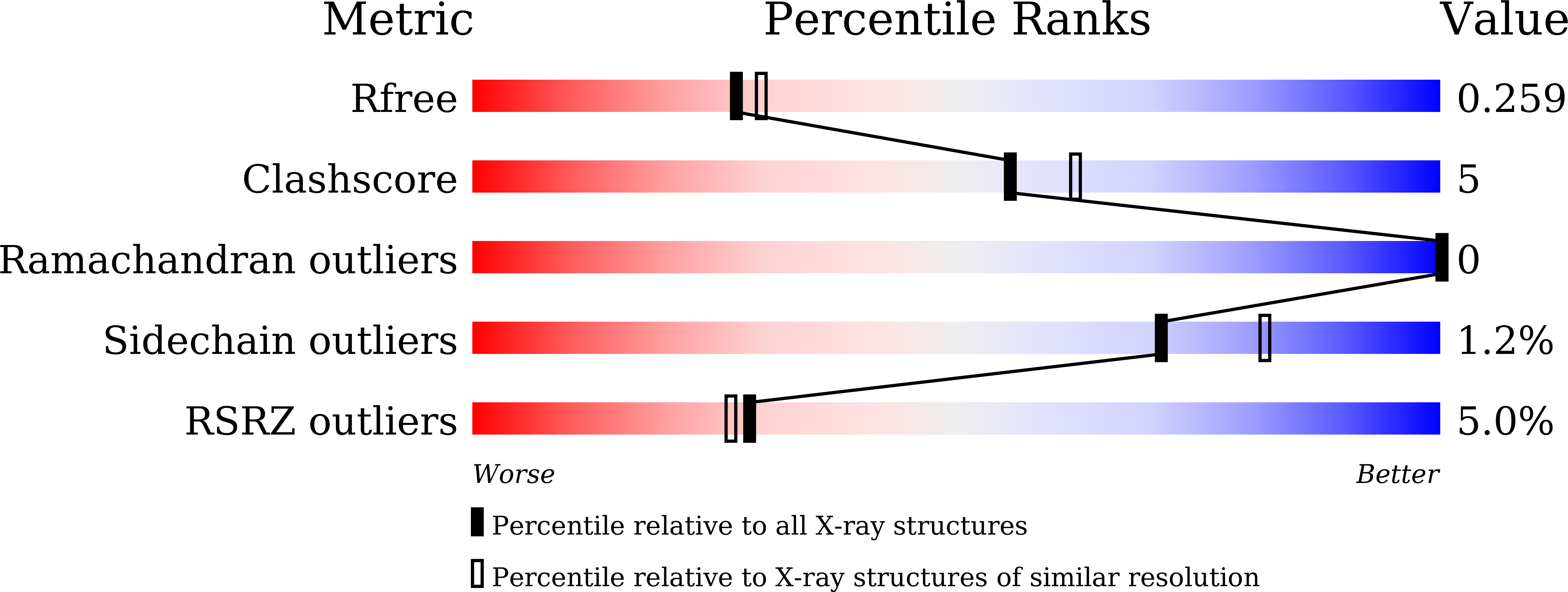
Resolution:
2.21 Å
R-Value Free:
0.25
R-Value Work:
0.23
R-Value Observed:
0.23
Space Group:
C 1 2 1
Macromolecular Entities
Structures with similar UniProt ID
Protein Blast
Polymer Type:polypeptide(L)
Molecule:Glucose-6-phosphate isomerase
Gene (Uniprot):GPI
Chain IDs:A, B (auth: C), C (auth: B), D
Chain Length:567
Number of Molecules:4
Biological Source:Triticum aestivum
Ligand Molecules
Primary Citation
Engineering of the cytosolic form of phosphoglucose isomerase into chloroplasts improves plant photosynthesis and biomass.
New Phytol. 231 315 325 (2021)
PMID: 33774822 DOI: 10.1111/nph.17368

Abstact

Starch is the most abundant carbohydrate synthesized in plant chloroplast as the product of photosynthetic carbon assimilation, serving a crucial role in the carbon budget as storage energy. Phosphoglucose isomerase (PGI) catalyzes the interconversion between glucose 6-phosphate (G6P) and fructose 6-phosphate (F6P), which are important metabolic molecules in starch synthesis within chloroplasts and sucrose synthesis in cytosol. Here, we found that the specific activity of recombinantly purified PGI localized in cytosolic PGI (PGIc) was much higher than its plastidic isoenzyme counterpart (PGIp) originated from wheat, rice and Arabidopsis, with wheat PGIc having by far the highest activity. Crystal structures of wheat TaPGIc and TaPGIp proteins were solved and the functional units were homodimers. The active sites of PGIc and PGIp, constituted by the same amino acids, formed different binding pockets. Moreover, PGIc showed slightly lower affinity to the substrate F6P but with much faster turnover rates. Engineering of TaPGIc into chloroplasts of a pgip mutant of Arabidopsis thaliana (atpgip) resulted in starch overaccumulation, increased CO2 assimilation, up to 19% more plant biomass and 27% seed yield productivity. These results show that manipulating starch metabolic pathways in chloroplasts can improve plant biomass and yield productivity.

Legend

Protein

Chemical

Disease

Primary Citation of related structures
Feedback Form
Name
Email
Institute
Feedback