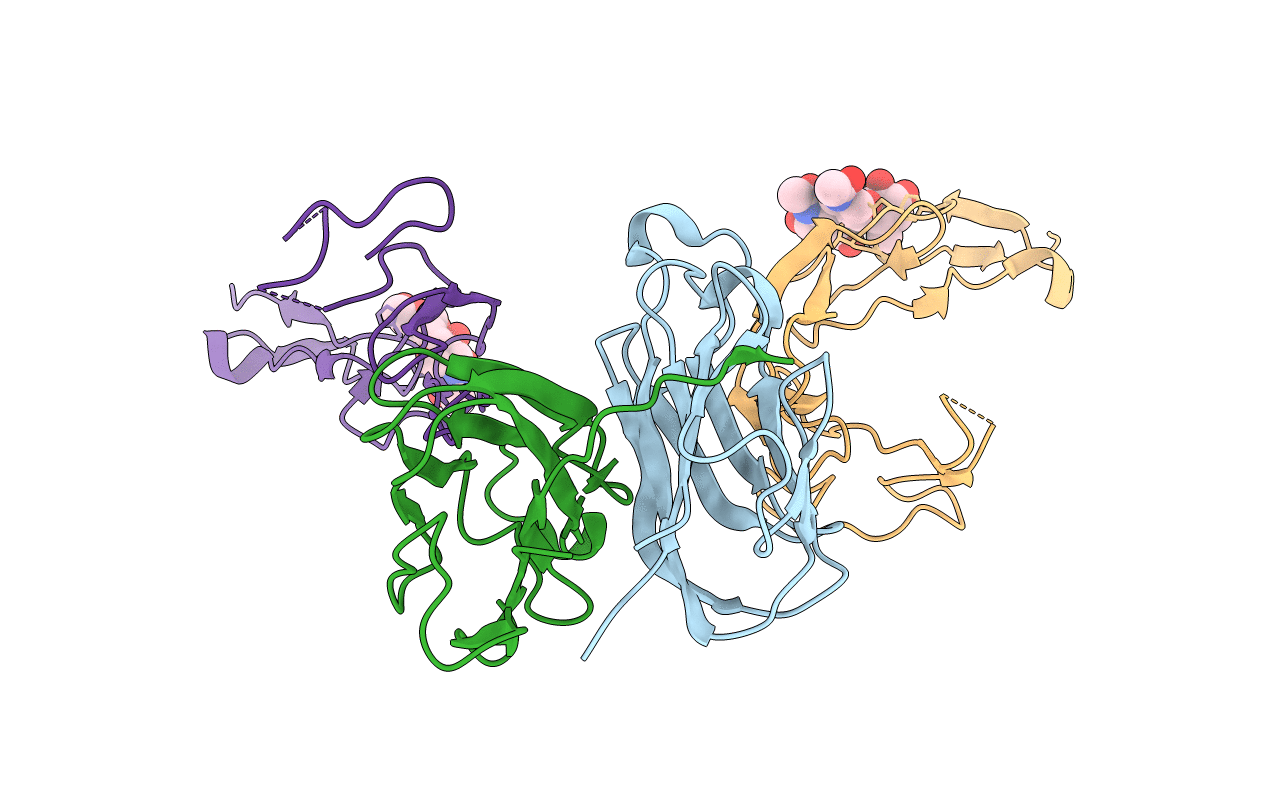
7E57 image
Deposition Date 2021-02-18
Release Date 2021-09-29
Last Version Date 2024-11-13
Entry Detail
PDB ID:
7E57
Keywords:
Title:
Crystal structure of murine GITR-GITRL complex
Biological Source:
Source Organism:
Mus musculus (Taxon ID: 10090)
Host Organism:
Method Details:
Experimental Method:
Resolution:
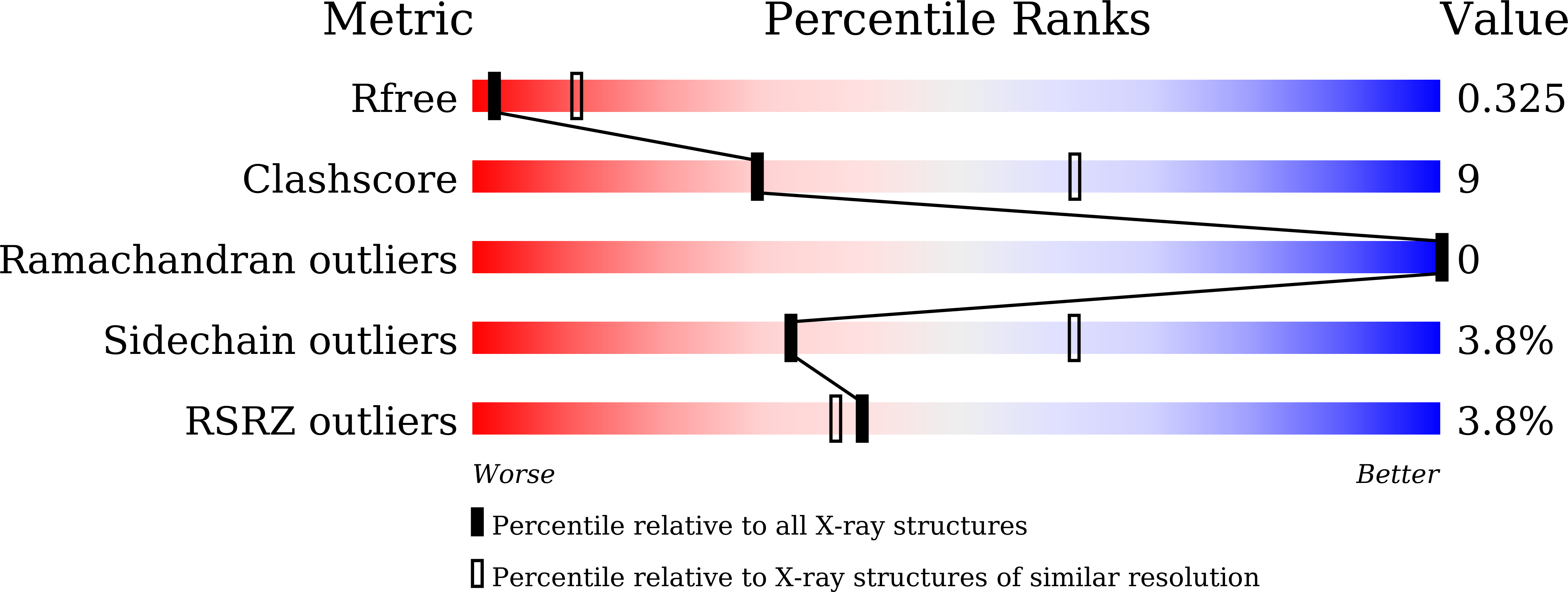
3.30 Å
R-Value Free:
0.32
R-Value Work:
0.27
R-Value Observed:
0.27
Space Group:
P 1 21 1
Macromolecular Entities
Structures with similar UniProt ID
Protein Blast
Polymer Type:polypeptide(L)
Molecule:Tumor necrosis factor ligand superfamily member 18
Gene (Uniprot):Tnfsf18
Chain IDs:A, B
Chain Length:173
Number of Molecules:2
Biological Source:Mus musculus
Structures with similar UniProt ID
Protein Blast
Polymer Type:polypeptide(L)
Molecule:Tumor necrosis factor receptor superfamily member 18
Gene (Uniprot):Tnfrsf18
Chain IDs:C, D
Chain Length:228
Number of Molecules:2
Biological Source:Mus musculus
Ligand Molecules
Primary Citation
Atypical TNF-TNFR superfamily binding interface in the GITR-GITRL complex for T cell activation.
Cell Rep 36 109734 109734 (2021)
PMID: 34551288 DOI: 10.1016/j.celrep.2021.109734

Abstact

Glucocorticoid-induced tumor necrosis factor receptor family-related protein (GITR) is a critical regulatory molecule in modulation of T cell immune responses. Here we report the mouse GITR (mGITR) and mGITR ligand (mGITRL) complex structure and find that the binding interface of mGITR and mGITRL is distinct from the typical tumor necrosis factor superfamily (TNFSF)/TNF receptor superfamily (TNFRSF) members. mGITR binds to its ligand with a single domain, whereas the binding interface on mGITRL is located on the side, which is distal from conserved binding sites of TNFSF molecules. Mutational analysis reveals that the binding interface of GITR/GITRL in humans is conserved with that in the mouse. Substitution of key interacting D93-I94-V95 (DIV) in mGITR with the corresponding K93-F94-S95 (KFS) in human GITR enables cross-recognition with human GITRL and cross-activation of receptor signaling. The findings of this study substantially expand our understanding of the interaction of TNFSF/TNFRSF superfamily molecules and can benefit the future design of biologics by targeting GITR/GITRL.

Legend

Protein

Chemical

Disease

Primary Citation of related structures
Feedback Form
Name
Email
Institute
Feedback