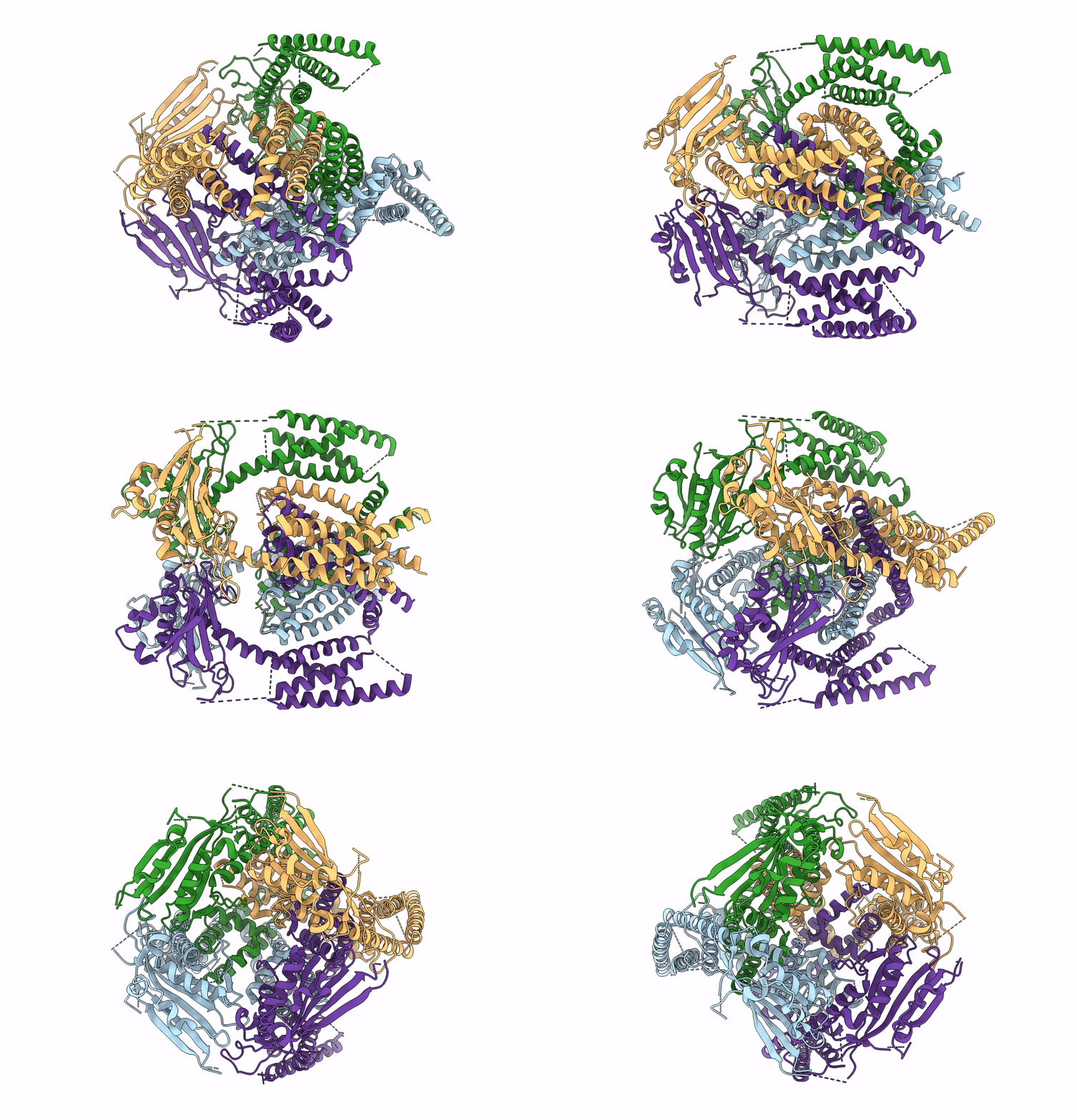
7DYS image
Deposition Date 2021-01-22
Release Date 2022-03-23
Last Version Date 2025-06-25
Entry Detail
PDB ID:
7DYS
Title:
CryoEM structure of full length mouse TRPML2
Biological Source:
Source Organism:
Mus musculus (Taxon ID: 10090)
Method Details:
Experimental Method:
Resolution:
3.18 Å
Aggregation State:
PARTICLE
Reconstruction Method:
SINGLE PARTICLE

Macromolecular Entities
Structures with similar UniProt ID
Protein Blast
Polymer Type:polypeptide(L)
Molecule:Mucolipin-2
Gene (Uniprot):Mcoln2
Chain IDs:A, B, C, D
Chain Length:518
Number of Molecules:4
Biological Source:Mus musculus
Ligand Molecules
Primary Citation
Cryo-EM structure of mouse TRPML2 in lipid nanodiscs.
J.Biol.Chem. 298 101487 101487 (2022)
PMID: 34915027 DOI: 10.1016/j.jbc.2021.101487

Abstact

In mammalians, transient receptor potential mucolipin ion channels (TRPMLs) exhibit variable permeability to cations such as Ca2+, Fe2+, Zn2+, and Na+ and can be activated by the phosphoinositide PI(3,5)P2 in the endolysosomal system. Loss or dysfunction of TRPMLs has been implicated in lysosomal storage disorders, infectious diseases, and metabolic diseases. TRPML2 has recently been identified as a mechanosensitive and hypotonicity-sensitive channel in endolysosomal organelles, which distinguishes it from TRPML1 and TRPML3. However, the molecular and gating mechanism of TRPML2 remains elusive. Here, we present the cryo-EM structure of the full-length mouse TRPML2 in lipid nanodiscs at 3.14 Å resolution. The TRPML2 homotetramer structure at pH 7.4 in the apo state reveals an inactive conformation and some unique features of the extracytosolic/luminal domain and voltage sensor-like domain that have implications for the ion-conducting pathway. This structure enables new comparisons between the different subgroups of TRPML channels with available structures and provides structural insights into the conservation and diversity of TRPML channels. These comparisons have broad implications for understanding a variety of molecular mechanisms of TRPMLs in different pH conditions, including with and without bound agonists and antagonists.

Legend

Protein

Chemical

Disease

Primary Citation of related structures
Feedback Form
Name
Email
Institute
Feedback