7DUU image
Deposition Date 2021-01-11
Release Date 2022-02-02
Last Version Date 2024-10-16
Entry Detail
PDB ID:
7DUU
Keywords:
Title:
Crystal structure of HLA molecule with an KIR receptor
Biological Source:
Source Organism:
Homo sapiens (Taxon ID: 9606)
Hepacivirus C (Taxon ID: 11103)
Host Organism:
Method Details:
Experimental Method:
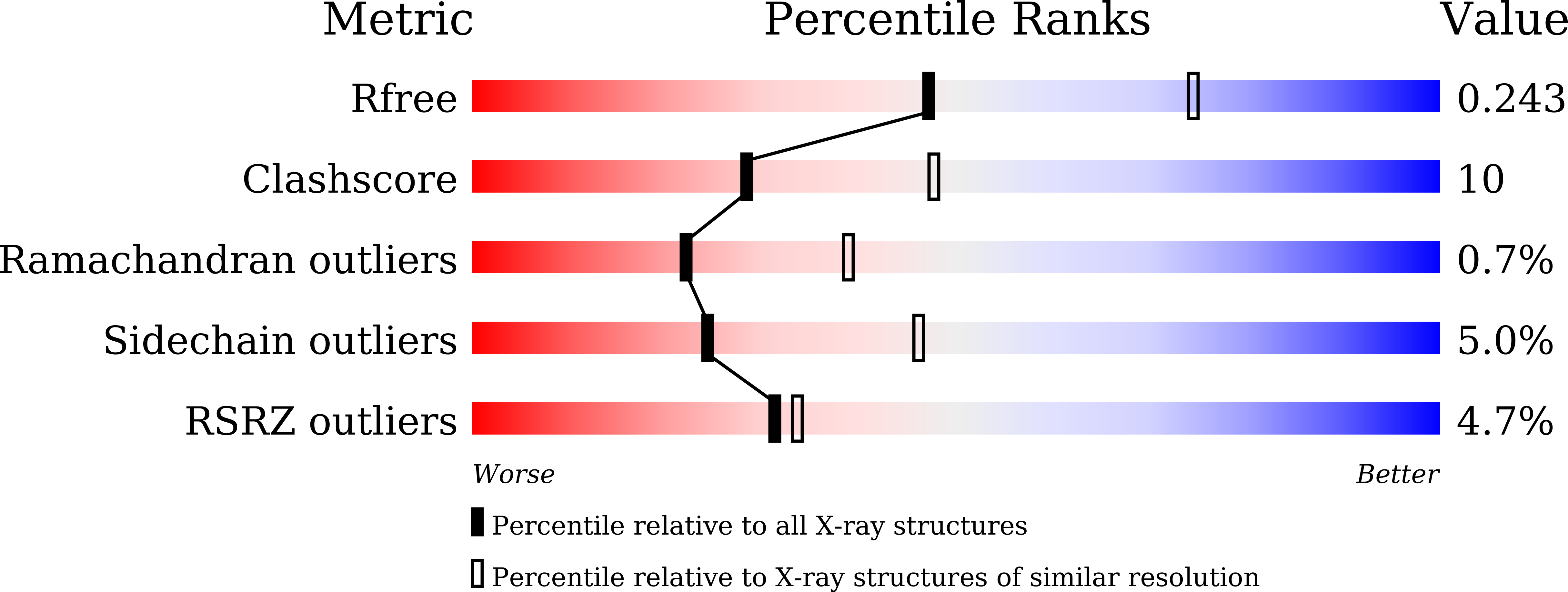
Resolution:
2.51 Å
R-Value Free:
0.24
R-Value Work:
0.20
R-Value Observed:
0.20
Space Group:
I 2 2 2
Macromolecular Entities
Structures with similar UniProt ID
Protein Blast
Polymer Type:polypeptide(L)
Molecule:MHC class I antigen
Gene (Uniprot):HLA-C
Chain IDs:A
Chain Length:273
Number of Molecules:1
Biological Source:Homo sapiens
Structures with similar UniProt ID
Protein Blast
Polymer Type:polypeptide(L)
Molecule:Beta-2-microglobulin
Gene (Uniprot):B2M
Chain IDs:B
Chain Length:100
Number of Molecules:1
Biological Source:Homo sapiens
Structures with similar UniProt ID
Protein Blast
Polymer Type:polypeptide(L)
Molecule:LEU-ASN-PRO-SER-VAL-ALA-ALA-THR-LEU
Chain IDs:C
Chain Length:9
Number of Molecules:1
Biological Source:Hepacivirus C
Structures with similar UniProt ID
Protein Blast
Polymer Type:polypeptide(L)
Molecule:Killer cell immunoglobulin-like receptor 2DS2
Gene (Uniprot):KIR2DS2
Chain IDs:D
Chain Length:200
Number of Molecules:1
Biological Source:Homo sapiens
Primary Citation
Activating receptor KIR2DS2 bound to HLA-C1 reveals the novel recognition features of activating receptor.
Immunology 165 341 354 (2022)
PMID: 34967442 DOI: 10.1111/imm.13439

Abstact

Killer cell immunoglobulin-like receptors (KIRs) are important receptors for regulating the killing of virus-infected or cancer cells of natural killer (NK) cells. KIR2DS2 can recognize peptides derived from hepatitis C virus (HCV) or global flaviviruses (such as dengue and Zika) presented by HLA-C*0102 to activate NK cells, and has shown promising results when used for cancer immunotherapy. Here, we present the complex structure of KIR2DS2 with HLA-C*0102 at a resolution of 2·5Å. Our structure reveals that KIR2DS2 can bind with HLA-C*0102 and HLA-A*1101 in two different directions. Moreover, Tyr45 (in activating receptor KIR2DS2) and Phe45 (in inhibitory KIRs) distinguish the two different binding models and binding affinity between activating KIRs and inhibitory KIRs. The conserved 'AT' motif of the peptide mediates recognition and determines the peptide specificity of recognition. These structural characteristics shed light on how KIRs activate NK cells and can provide a molecular basis for immunotherapy by NK cells.

Legend

Protein

Chemical

Disease

Primary Citation of related structures
Feedback Form
Name
Email
Institute
Feedback