7DRX image
Deposition Date 2020-12-30
Release Date 2022-03-23
Last Version Date 2025-07-02
Entry Detail
PDB ID:
7DRX
Keywords:
Title:
Cryo-EM structure of Dnf1 from Saccharomyces cerevisiae in 90PS with beryllium fluoride (E2P state)
Biological Source:
Source Organism:
Method Details:
Experimental Method:
Resolution:
2.90 Å
Aggregation State:
PARTICLE
Reconstruction Method:
SINGLE PARTICLE
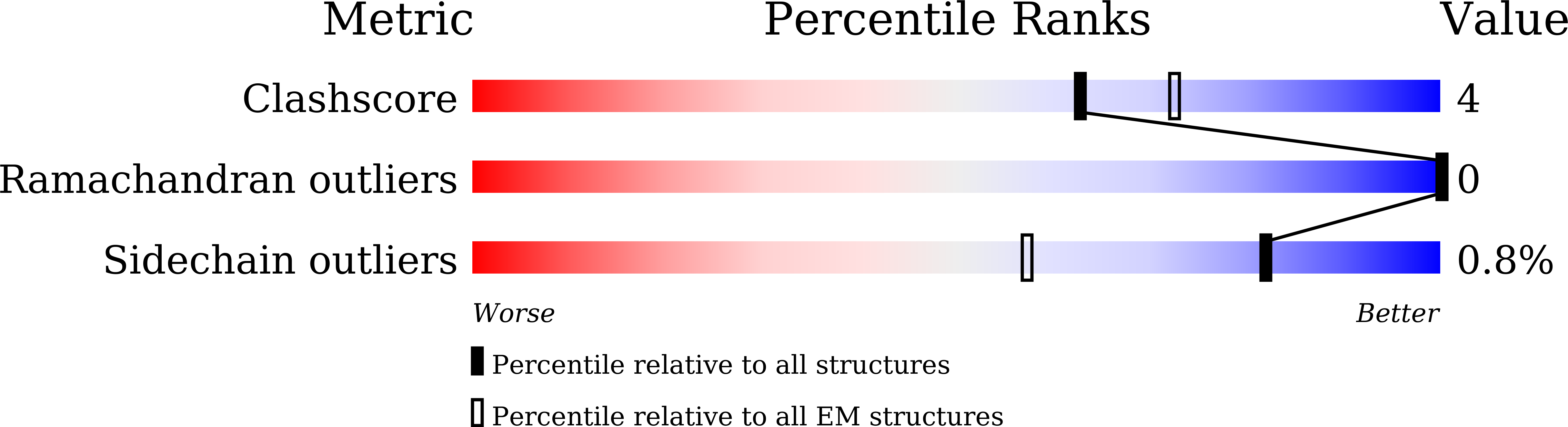
Macromolecular Entities
Structures with similar UniProt ID
Protein Blast
Polymer Type:polypeptide(L)
Molecule:Phospholipid-transporting ATPase DNF1
Gene (Uniprot):DNF1
Chain IDs:A
Chain Length:1571
Number of Molecules:1
Biological Source:Saccharomyces cerevisiae S288C
Structures with similar UniProt ID
Protein Blast
Polymer Type:polypeptide(L)
Molecule:Alkylphosphocholine resistance protein LEM3
Gene (Uniprot):LEM3
Chain IDs:B
Chain Length:414
Number of Molecules:1
Biological Source:Saccharomyces cerevisiae S288C
Primary Citation
Conformational changes of a phosphatidylcholine flippase in lipid membranes.
Cell Rep 38 110518 110518 (2022)
PMID: 35294892 DOI: 10.1016/j.celrep.2022.110518

Abstact

Type 4 P-type ATPases (P4-ATPases) actively and selectively translocate phospholipids across membrane bilayers. Driven by ATP hydrolysis, P4-ATPases undergo conformational changes during lipid flipping. It is unclear how the active flipping states of P4-ATPases are regulated in the lipid membranes, especially for phosphatidylcholine (PC)-flipping P4-ATPases whose substrate, PC, is a substantial component of membranes. Here, we report the cryoelectron microscopy structures of a yeast PC-flipping P4-ATPase, Dnf1, in lipid environments. In native yeast lipids, Dnf1 adopts a conformation in which the lipid flipping pathway is disrupted. Only when the lipid composition is changed can Dnf1 be captured in the active conformations that enable lipid flipping. These results suggest that, in the native membrane, Dnf1 may stay in an idle conformation that is unable to support the trans-membrane movement of lipids. Dnf1 may have altered conformational preferences in membranes with different lipid compositions.

Legend

Protein

Chemical

Disease

Primary Citation of related structures
Feedback Form
Name
Email
Institute
Feedback