7D35 image
Deposition Date 2020-09-18
Release Date 2021-04-14
Last Version Date 2023-11-29
Entry Detail
PDB ID:
7D35
Title:
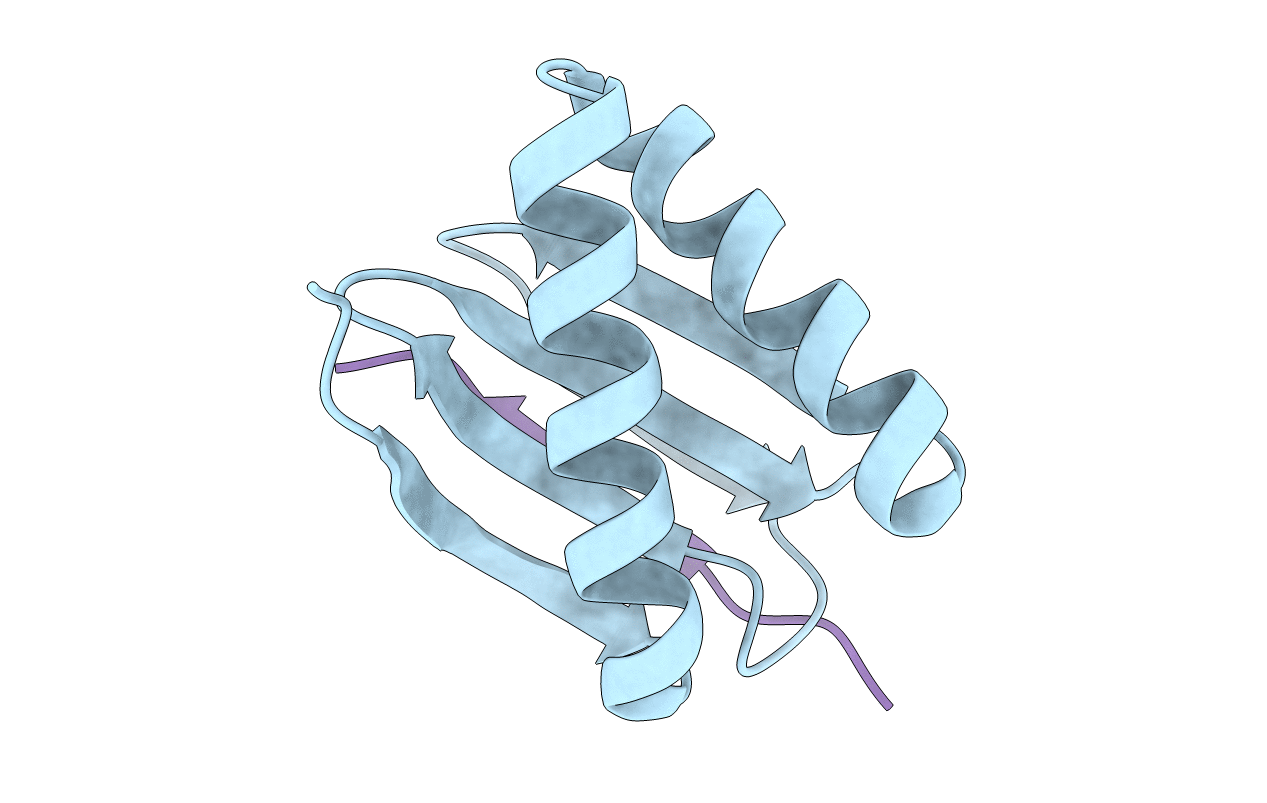
Human LC8 bound to ebola virus VP35(67-76)
Biological Source:
Source Organism:
Homo sapiens (Taxon ID: 9606)
Ebola virus (Taxon ID: 1570291)
Host Organism:
Method Details:
Experimental Method:
Resolution:
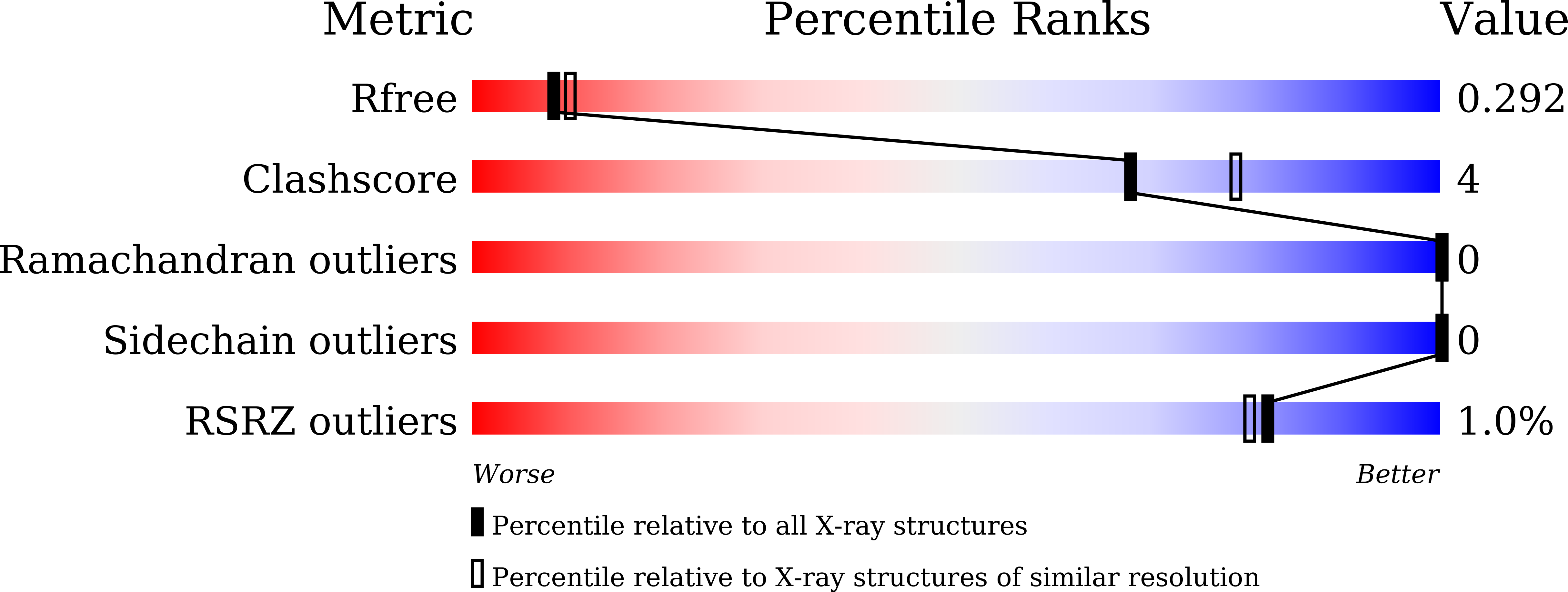
2.40 Å
R-Value Free:
0.29
R-Value Work:
0.22
R-Value Observed:
0.23
Space Group:
P 61 2 2
Macromolecular Entities
Structures with similar UniProt ID
Protein Blast
Polymer Type:polypeptide(L)
Molecule:Dynein light chain 1, cytoplasmic
Gene (Uniprot):DYNLL1
Chain IDs:A
Chain Length:91
Number of Molecules:1
Biological Source:Homo sapiens
Structures with similar UniProt ID
Protein Blast
Polymer Type:polypeptide(L)
Molecule:Peptide from Polymerase cofactor VP35
Chain IDs:B
Chain Length:10
Number of Molecules:1
Biological Source:Ebola virus
Primary Citation
Crystal structure of human LC8 bound to a peptide from Ebola virus VP35.
J.Microbiol 59 410 416 (2021)
PMID: 33630249 DOI: 10.1007/s12275-021-0641-7

Abstact

Zaire ebolavirus, commonly called Ebola virus (EBOV), is an RNA virus that causes severe hemorrhagic fever with high mortality. Viral protein 35 (VP35) is a virulence factor encoded in the EBOV genome. VP35 inhibits host innate immune responses and functions as a critical cofactor for viral RNA replication. EBOV VP35 contains a short conserved motif that interacts with dynein light chain 8 (LC8), which serves as a regulatory hub protein by associating with various LC8-binding proteins. Herein, we present the crystal structure of human LC8 bound to the peptide comprising residues 67-76 of EBOV VP35. Two VP35 peptides were found to interact with homodimeric LC8 by extending the central β-sheets, constituting a 2:2 complex. Structural analysis demonstrated that the intermolecular binding between LC8 and VP35 is mainly sustained by a network of hydrogen bonds and supported by hydrophobic interactions in which Thr73 and Thr75 of VP35 are involved. These findings were verified by binding measurements using isothermal titration calorimetry. Biochemical analyses also verified that residues 67-76 of EBOV VP35 constitute a core region for interaction with LC8. In addition, corresponding motifs from other members of the genus Ebolavirus commonly bound to LC8 but with different binding affinities. Particularly, VP35 peptides originating from pathogenic species interacted with LC8 with higher affinity than those from noninfectious species, suggesting that the binding of VP35 to LC8 is associated with the pathogenicity of the Ebolavirus species.

Legend

Protein

Chemical

Disease

Primary Citation of related structures
Feedback Form
Name
Email
Institute
Feedback