Planned Maintenance: Some services may turn out to be unavailable from 15th January, 2026 to 16th January, 2026. We apologize for the inconvenience!

7D1B image
Deposition Date 2020-09-14
Release Date 2021-04-14
Last Version Date 2024-03-27
Entry Detail
PDB ID:
7D1B
Keywords:
Title:
Crystal structure of Fimbriiglobus ruber glutaminyl cyclase
Biological Source:
Source Organism(s):
Expression System(s):
Method Details:
Experimental Method:
Resolution:
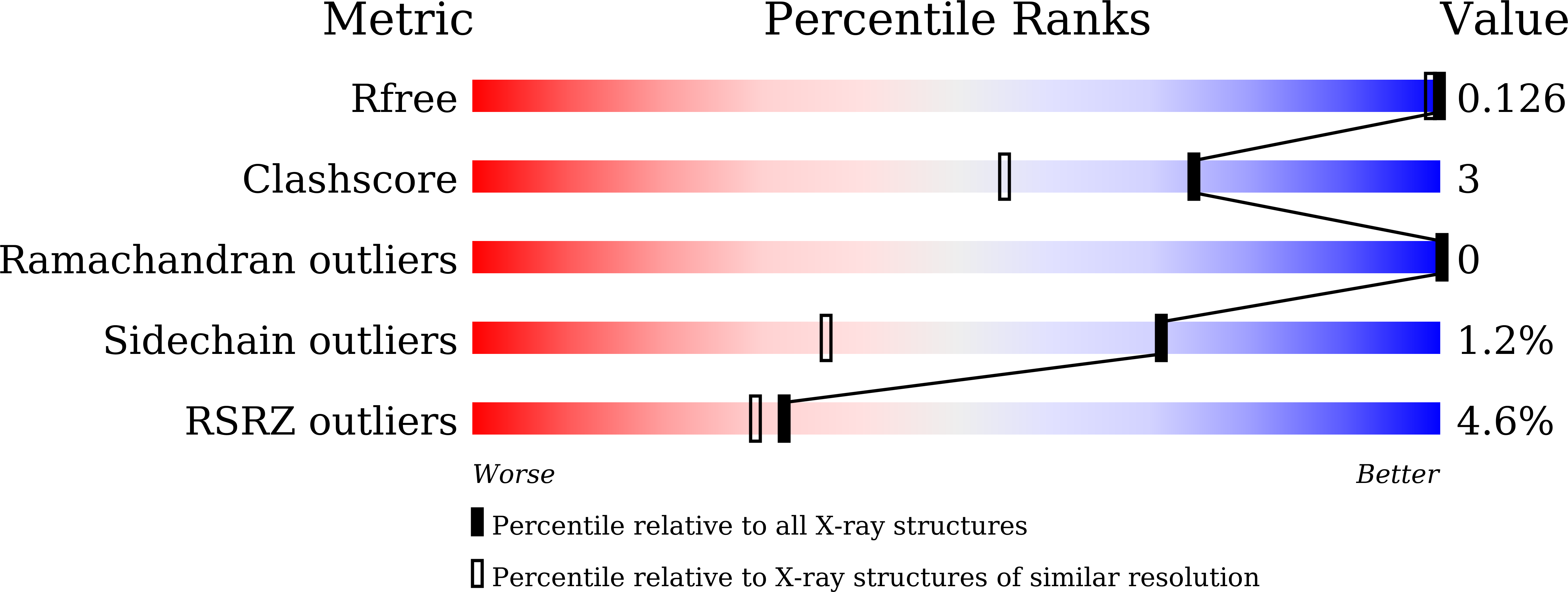
1.24 Å
R-Value Free:
0.12
R-Value Work:
0.11
R-Value Observed:
0.11
Space Group:
P 21 21 21
Macromolecular Entities
Structures with similar UniProt ID
Protein Blast
Polymer Type:polypeptide(L)
Molecule:Leucine aminopeptidase
Gene (Uniprot):FRUB_06987
Chain IDs:A
Chain Length:338
Number of Molecules:1
Biological Source:Fimbriiglobus ruber
Primary Citation
A Unique Carboxylic-Acid Hydrogen-Bond Network (CAHBN) Confers Glutaminyl Cyclase Activity on M28 Family Enzymes.
J.Mol.Biol. 433 166960 166960 (2021)
PMID: 33774034 DOI: 10.1016/j.jmb.2021.166960

Abstact

Proteins with sequence or structure similar to those of di-Zn exopeptidases are usually classified as the M28-family enzymes, including the mammalian-type glutaminyl cyclases (QCs). QC catalyzes protein N-terminal pyroglutamate formation, a posttranslational modification important under many physiological and pathological conditions, and is a drug target for treating neurodegenerative diseases, cancers and inflammatory disorders. Without functional characterization, mammalian QCs and their orthologs remain indistinguishable at the sequence and structure levels from other M28-family proteins, leading to few reported QCs. Here, we show that a low-barrier carboxylic-acid hydrogen-bond network (CAHBN) is required for QC activity and discriminates QCs from M28-family peptidases. We demonstrate that the CAHBN-containing M28 peptidases deposited in the PDB are indeed QCs. Our analyses identify several thousands of QCs from the three domains of life, and we enzymatically and structurally characterize several. For the first time, the interplay between a CAHBN and the binuclear metal-binding center of mammalian QCs is made clear. We found that the presence or absence of CAHBN is a key discriminator for the formation of either the mono-Zn QCs or the di-Zn exopeptidases. Our study helps explain the possible roles of QCs in life.

Legend

Protein

Chemical

Disease

Primary Citation of related structures
Feedback Form
Name
Email
Institute
Feedback