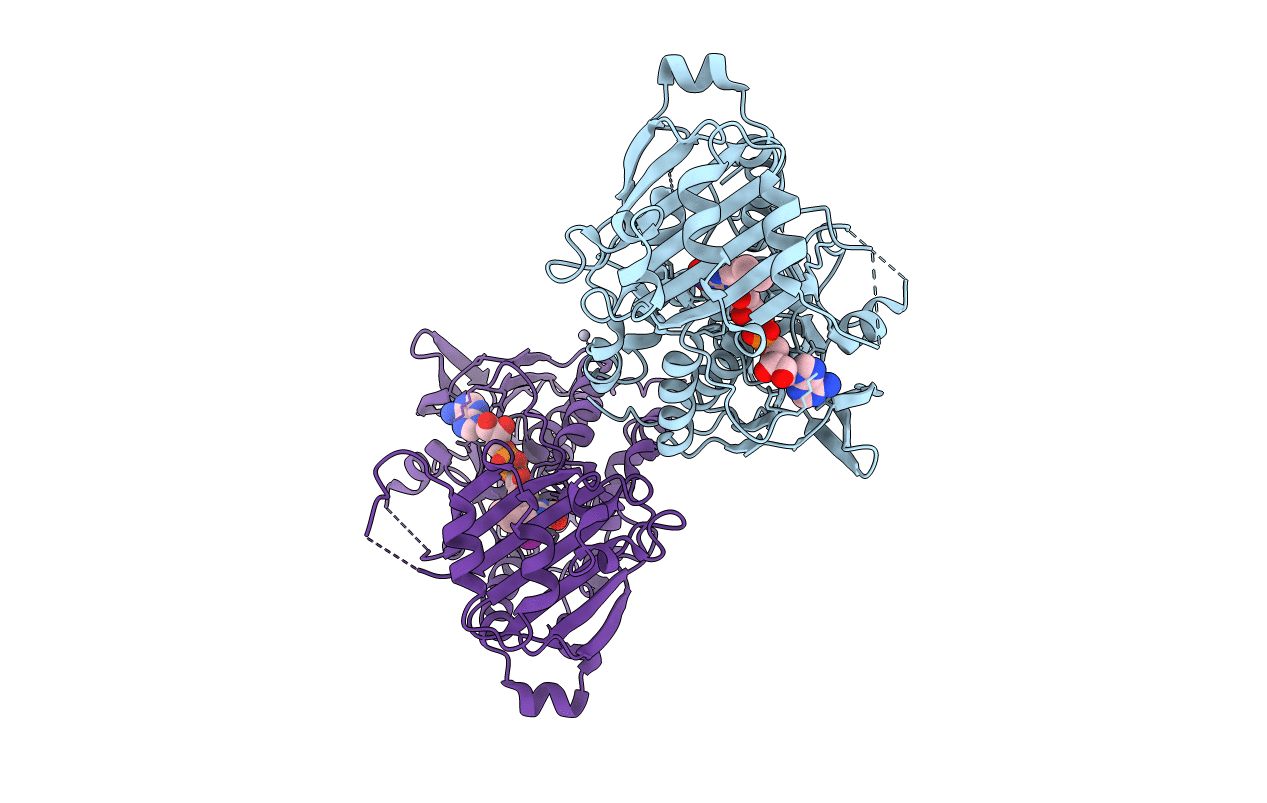
7CP6 image
Deposition Date 2020-08-06
Release Date 2020-12-30
Last Version Date 2024-10-30
Entry Detail
PDB ID:
7CP6
Keywords:
Title:
Crystal structure of FqzB
Biological Source:
Source Organism:
Host Organism:
Method Details:
Experimental Method:
Resolution:
2.20 Å
R-Value Free:
0.23
R-Value Work:
0.21
R-Value Observed:
0.21
Space Group:
P 1 21 1
Macromolecular Entities
Polymer Type:polypeptide(L)
Molecule:MAK1-like monooxygenase
Mutagens:L119I,A140T
Chain IDs:A, B
Chain Length:459
Number of Molecules:2
Biological Source:Aspergillus fumigatus Z5
Primary Citation
Structural and Functional Analyses of a Spiro-Carbon-Forming, Highly Promiscuous Epoxidase from Fungal Natural Product Biosynthesis.
Biochemistry 59 4787 4792 (2020)
PMID: 33332106 DOI: 10.1021/acs.biochem.0c00896

Abstact

Biosynthesis of fungal nonribosomal peptides frequently involves redox enzymes such as flavin-containing monooxygenase (FMO) to introduce complexity into the core chemical structure. One such example is the formation of spiro-carbons catalyzed by various oxidases. Because many chemically complex spiro-carbon-bearing natural products exhibit useful biological activities, understanding the mechanism of spiro-carbon biosynthesis is of great interest. We previously identified FqzB, an FMO from the fumiquinazoline biosynthetic pathway responsible for epoxidation of fumiquinazoline F that crosstalks with the fumitremorgin biosynthetic pathway to form spirotryprostatin A via epoxidation of the precursor fumitremorgin C. What makes FqzB more interesting is its relaxed substrate specificity, where it can accept a range of other substrates, including tryprostatins A and B along with its original substrate fumiquinazoline F. Here, we characterized FqzB crystallographically and examined FqzB and its site-specific mutants kinetically to understand how this promiscuous epoxidase works. Furthermore, the mutagenesis studies as well as computational docking experiments between the FqzB crystal structure and its known substrates spirotryprostatin A and B, as well as fumitremorgin C and fumiquinazoline F, provided insight into potential modes of substrate recognition and the source of broad substrate tolerance exhibited by this epoxidase. This study serves as a foundation for further characterization and engineering of this redox enzyme, which has potential utility as a valuable catalyst with broad substrate tolerance and an ability to introduce chemical complexity into carbon frameworks for chemoenzymatic and biosynthetic applications.

Legend

Protein

Chemical

Disease

Primary Citation of related structures
Feedback Form
Name
Email
Institute
Feedback