7CGW image
Deposition Date 2020-07-02
Release Date 2021-04-07
Last Version Date 2024-11-13
Entry Detail
PDB ID:
7CGW
Title:
Complex structure of PD-1 and tislelizumab Fab
Biological Source:
Source Organism:
Homo sapiens (Taxon ID: 9606)
Host Organism:
Method Details:
Experimental Method:
Resolution:
3.20 Å
R-Value Free:
0.25
R-Value Work:
0.21
R-Value Observed:
0.22
Space Group:
C 2 2 21
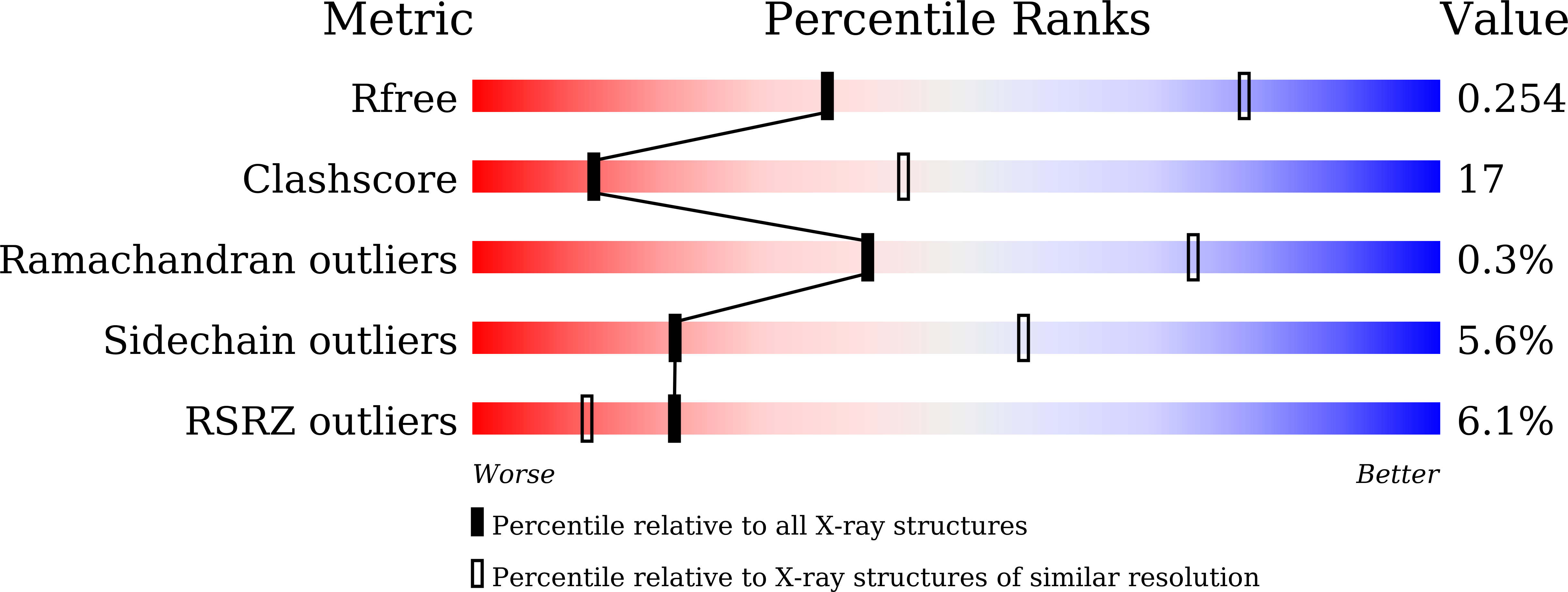
Macromolecular Entities
Polymer Type:polypeptide(L)
Molecule:Heavy chain of tislelizumab Fab
Chain IDs:A, D (auth: H)
Chain Length:228
Number of Molecules:2
Biological Source:Homo sapiens
Polymer Type:polypeptide(L)
Molecule:Light chain of tislelizumab Fab
Chain IDs:B, E (auth: L)
Chain Length:214
Number of Molecules:2
Biological Source:Homo sapiens
Structures with similar UniProt ID
Protein Blast
Polymer Type:polypeptide(L)
Molecule:Programmed cell death protein 1
Gene (Uniprot):PDCD1
Chain IDs:C, F (auth: P)
Chain Length:151
Number of Molecules:2
Biological Source:Homo sapiens
Ligand Molecules
Primary Citation
Tislelizumab uniquely binds to the CC' loop of PD-1 with slow-dissociated rate and complete PD-L1 blockage.
Febs Open Bio 11 782 792 (2021)
PMID: 33527708 DOI: 10.1002/2211-5463.13102

Abstact

Programmed cell death protein 1 (PD-1), an immune checkpoint receptor expressed by activated T, B, and NK cells, is a well-known target for cancer immunotherapy. Tislelizumab (BGB-A317) is an anti-PD-1 antibody that has recently been approved for treatment of Hodgkin's lymphoma and urothelial carcinoma. Here, we show that tislelizumab displayed remarkable antitumor efficacy in a B16F10/GM-CSF mouse model. Structural biology and Surface plasmon resonance (SPR) analyses revealed unique epitopes of tislelizumab, and demonstrated that the CC' loop of PD-1, a region considered to be essential for binding to PD-1 ligand 1 (PD-L1) but not reported as targeted by other therapeutic antibodies, significantly contributes to the binding of tislelizumab. The binding surface of tislelizumab on PD-1 overlaps largely with that of the PD-L1. SPR analysis revealed the extremely slow dissociation rate of tislelizumab from PD-1. Both structural and functional analyses align with the observed ability of tislelizumab to completely block PD-1/PD-L1 interaction, broadening our understanding of the mechanism of action of anti-PD-1 antibodies.

Legend

Protein

Chemical

Disease

Primary Citation of related structures
Feedback Form
Name
Email
Institute
Feedback