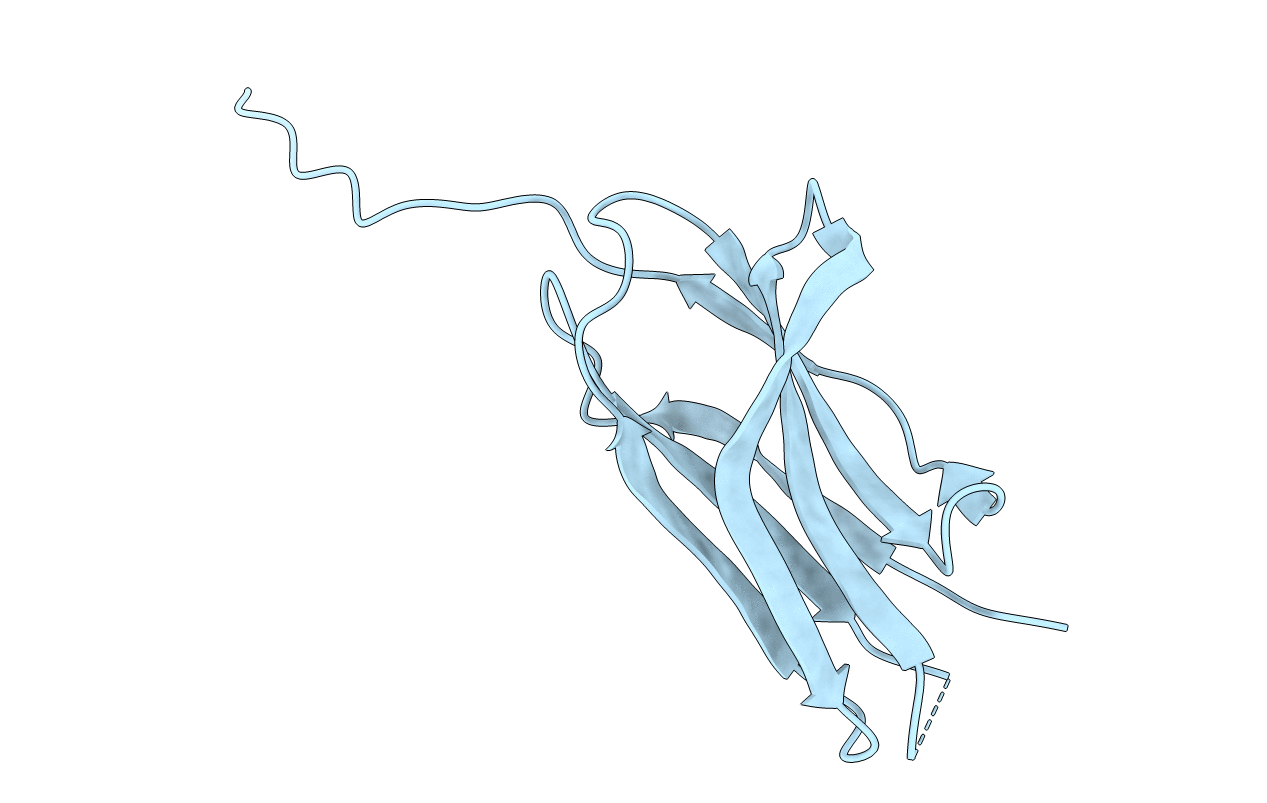
7CG5 image
Deposition Date 2020-06-30
Release Date 2021-06-30
Last Version Date 2025-09-24
Entry Detail
PDB ID:
7CG5
Keywords:
Title:
Structure of the sensor domain (long construct) of the anti-sigma factor RsgI4 in Pseudobacteroides cellulosolvens
Biological Source:
Method Details:
Experimental Method:
Resolution:
2.85 Å
R-Value Free:
0.28
R-Value Work:
0.24
R-Value Observed:
0.24
Space Group:
H 3 2
Macromolecular Entities
Structures with similar UniProt ID
Protein Blast
Polymer Type:polypeptide(L)
Molecule:Anti-sigma factor RsgI, N-terminal
Gene (Uniprot):Bccel_2225
Chain IDs:A
Chain Length:132
Number of Molecules:1
Biological Source:Pseudobacteroides cellulosolvens ATCC 35603 = DSM 2933
Primary Citation
Unique Fn3-like biosensor in sigma I /anti-sigma I factors for regulatory expression of major cellulosomal scaffoldins in Pseudobacteroides cellulosolvens.
Protein Sci. 33 e5193 e5193 (2024)
PMID: 39470320 DOI: 10.1002/pro.5193

Abstact

Lignocellulolytic clostridia employ multiple pairs of alternative σ/anti-σ (SigI/RsgI) factors to regulate cellulosomal components for substrate-specific degradation of cellulosic biomass. The current model has proposed that RsgIs use a sensor domain to bind specific extracellular lignocellulosic components and activate cognate SigIs to initiate expression of corresponding cellulosomal enzyme genes, while expression of scaffoldins can be initiated by several different SigIs. Pseudobacteroides cellulosolvens contains the most complex known cellulosome system and the highest number of SigI-RsgI regulons yet discovered. However, the function of many RsgI sensor domains and their relationship with the various enzyme types are not fully understood. Here, we report that RsgI4 from P. cellulosolvens employs a C-terminal module that bears distant similarity to the fibronectin type III (Fn3) domain and serves as the sensor domain. Substrate-binding analysis revealed that the Fn3-like domain of RsgI4 represents a novel carbohydrate-binding module (CBM) that binds to a wide range of polysaccharide types. Structure determination further revealed that the Fn3-like domain belongs to the type B group of CBMs with a predicted concave face for substrate binding. Promoter sequence analysis of cellulosomal genes revealed that SigI4 is responsible for cellulosomal regulation of major scaffoldins rather than enzymes, consistent with the broad substrate specificity of the RsgI4 sensor domain. Notably, scaffoldins are invariably required as cellulosome components regardless of the substrate type. These findings suggest that the intricate cellulosome system of P. cellulosolvens comprises a more elaborate regulation mechanism than other bacteria and thus expands the paradigm of cellulosome regulation.

Legend

Protein

Chemical

Disease

Primary Citation of related structures
Feedback Form
Name
Email
Institute
Feedback