7C7Z image
Deposition Date 2020-05-27
Release Date 2020-08-12
Last Version Date 2023-11-29
Entry Detail
PDB ID:
7C7Z
Title:
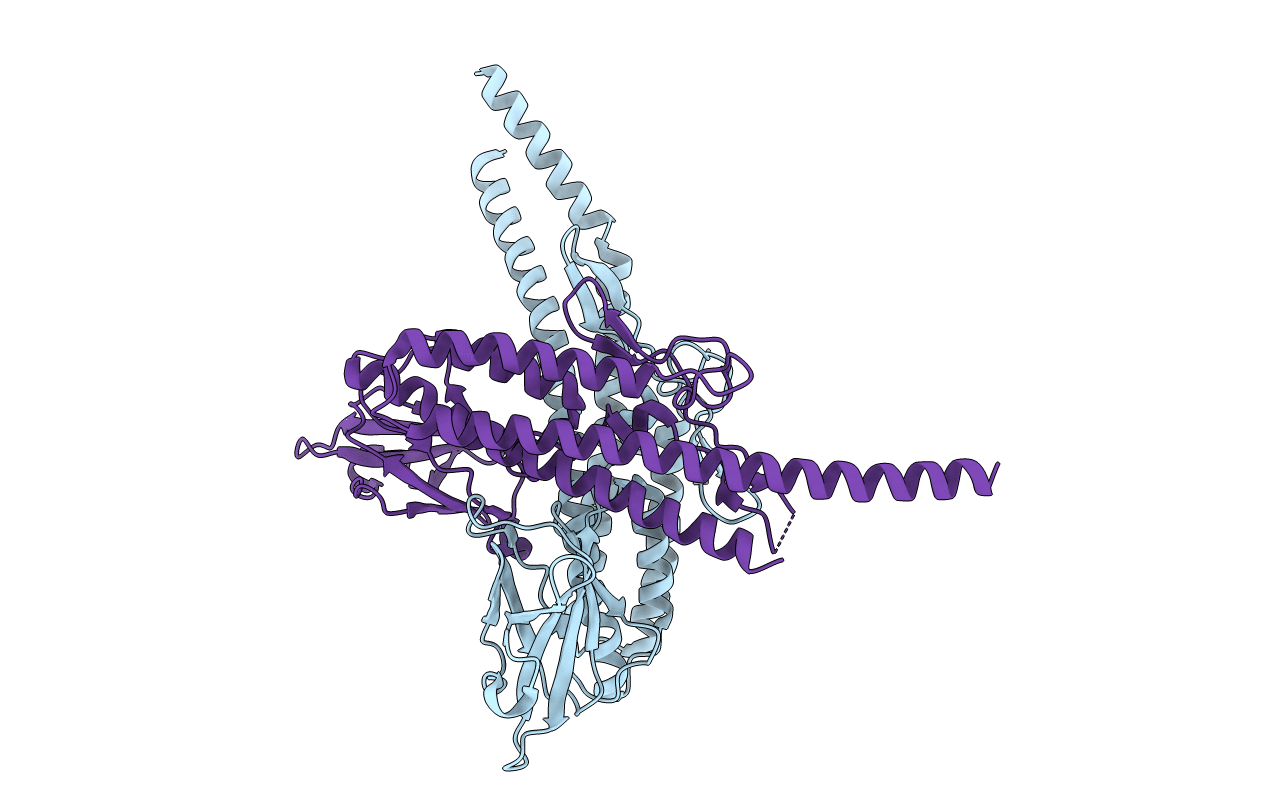
Crystal structure of the flagellar junction protein FlgL from Legionella pneumophila
Biological Source:
Source Organism:
Method Details:
Experimental Method:
Resolution:
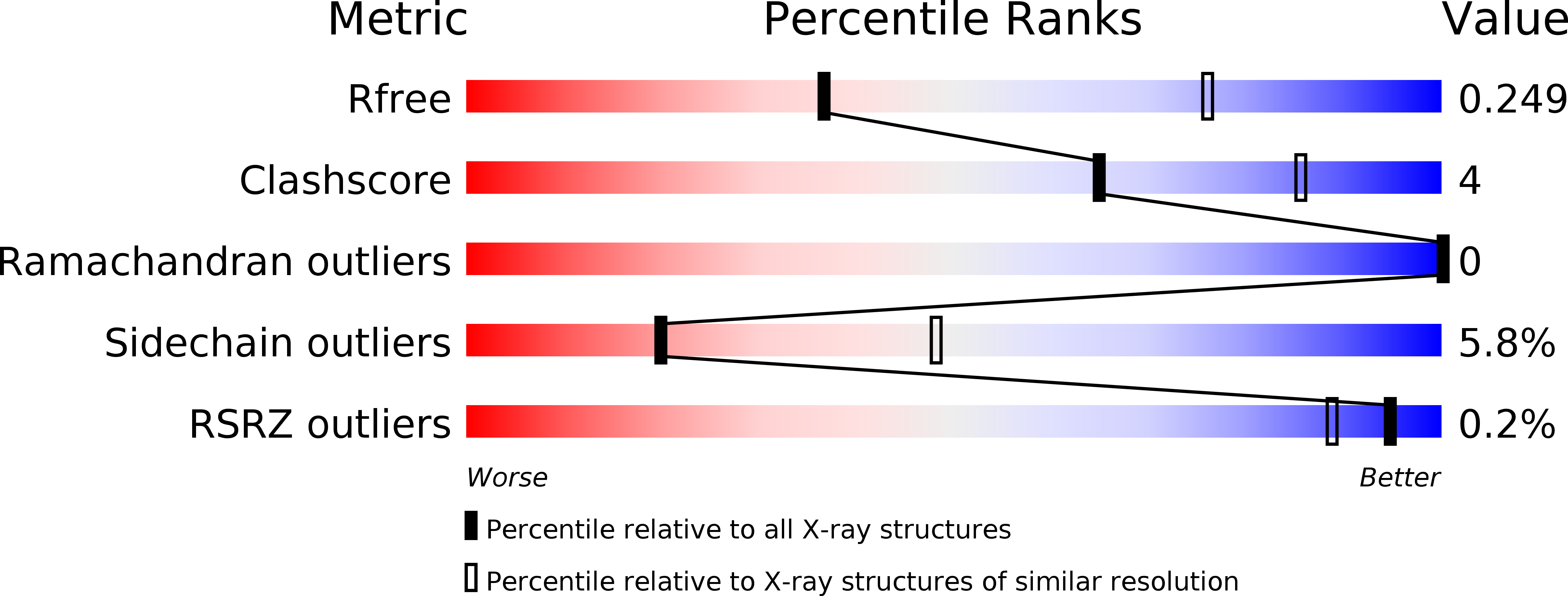
3.06 Å
R-Value Free:
0.25
R-Value Work:
0.22
R-Value Observed:
0.22
Space Group:
P 41 21 2
Macromolecular Entities
Structures with similar UniProt ID
Protein Blast
Polymer Type:polypeptide(L)
Molecule:Flagellar hook-associated protein 3
Chain IDs:A, B
Chain Length:338
Number of Molecules:2
Biological Source:Legionella pneumophila
Primary Citation
Structural study of the flagellar junction protein FlgL from Legionella pneumophila.
Biochem.Biophys.Res.Commun. 529 513 518 (2020)
PMID: 32703460 DOI: 10.1016/j.bbrc.2020.06.012

Abstact

Legionella pneumophila is a flagellated pathogenic bacterium that causes atypical pneumonia called Legionnaires' disease. The flagellum plays a key role in the pathogenesis of L. pneumophila in the host. The protein FlgL forms a junction between the flagellar hook and filament and has been reported to elicit the host humoral immune response. To provide structural insights into FlgL-mediated junction assembly and FlgL-based vaccine design, we performed structural and serological studies on L. pneumophila FlgL (lpFlgL). The crystal structure of a truncated lpFlgL protein that consists of the D1 and D2 domains was determined at 3.06 Å resolution. The D1 domain of lpFlgL adopts a primarily helical, rod-shaped structure, and the D2 domain folds into a β-sandwich structure that is affixed to the upper region of the D1 domain. The D1 domain of lpFlgL exhibits structural similarity to the flagellar filament protein flagellin, allowing us to propose a structural model of the lpFlgL junction based on the polymeric structure of flagellin. Furthermore, the D1 domain of lpFlgL exhibited substantially higher protein stability than the D2 domain and was responsible for most of the antigenicity of lpFlgL, suggesting that the D1 domain of lpFlgL would be a suitable target for the development of an anti-L. pneumophila vaccine.

Legend

Protein

Chemical

Disease

Primary Citation of related structures
Feedback Form
Name
Email
Institute
Feedback