7C6Q image
Deposition Date 2020-05-22
Release Date 2021-05-26
Last Version Date 2023-11-29
Entry Detail
PDB ID:
7C6Q
Keywords:
Title:
Novel natural PPARalpha agonist with a unique binding mode
Biological Source:
Source Organism:
Homo sapiens (Taxon ID: 9606)
Host Organism:
Method Details:
Experimental Method:
Resolution:
2.76 Å
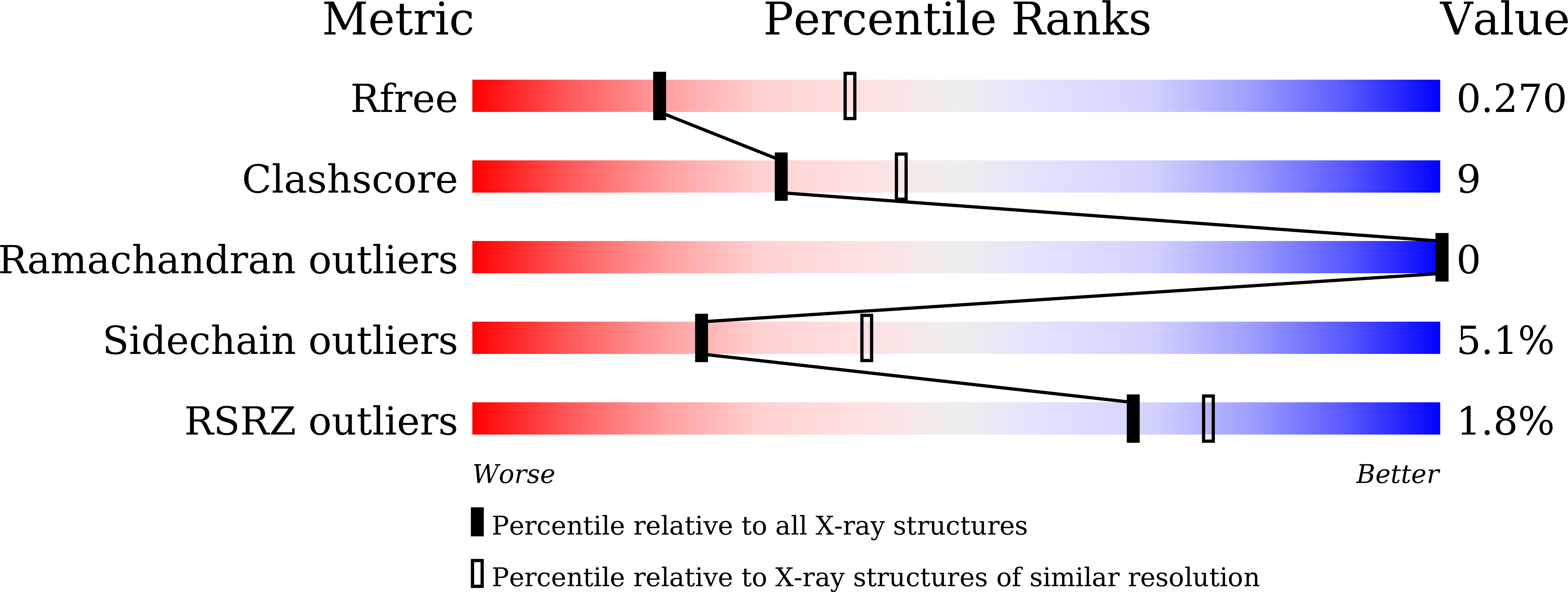
R-Value Free:
0.26
R-Value Work:
0.19
R-Value Observed:
0.19
Space Group:
P 21 21 21
Macromolecular Entities
Structures with similar UniProt ID
Protein Blast
Polymer Type:polypeptide(L)
Molecule:Peroxisome proliferator-activated receptor alpha
Gene (Uniprot):PPARA
Chain IDs:A
Chain Length:273
Number of Molecules:1
Biological Source:Homo sapiens
Structures with similar UniProt ID
Protein Blast
Polymer Type:polypeptide(L)
Molecule:LYS-ILE-LEU-HIS-ARG-LEU-LEU-GLN
Chain IDs:B
Chain Length:18
Number of Molecules:1
Biological Source:Homo sapiens
Ligand Molecules
Primary Citation
Structural Basis for PPARs Activation by The Dual PPAR alpha / gamma Agonist Sanguinarine: A Unique Mode of Ligand Recognition.
Molecules 26 ? ? (2021)
PMID: 34641558 DOI: 10.3390/molecules26196012

Abstact

Peroxisome proliferator-activated receptors (PPARs) play crucial roles in glucose and lipid metabolism and inflammation. Sanguinarine is a natural product that is isolated from Sanguinaria Canadensis, a potential therapeutic agent for intervention in chronic diseases. In this study, biochemical and cell-based promoter-reporter gene assays revealed that sanguinarine activated both PPARα and PPARγ, and enhanced their transcriptional activity; thus, sanguinarine was identified as a dual agonist of PPARα/γ. Similar to fenofibrate, sanguinarine upregulates the expression of PPARα-target genes in hepatocytes. Sanguinarine also modulates the expression of key PPARγ-target genes and promotes adipocyte differentiation, but with a lower adipogenic activity compared with rosiglitazone. We report the crystal structure of sanguinarine bound to PPARα, which reveals a unique ligand-binding mode of sanguinarine, dissimilar to the classic Y-shaped binding pocket, which may represent a new pharmacophore that can be optimized for selectively targeting PPARα. Further structural and functional studies uncover the molecular basis for the selectivity of sanguinarine toward PPARα/γ among all three PPARs. In summary, our study identifies a PPARα/γ dual agonist with a unique ligand-binding mode, and provides a promising and viable novel template for the design of dual-targeting PPARs ligands.

Legend

Protein

Chemical

Disease

Primary Citation of related structures
Feedback Form
Name
Email
Institute
Feedback