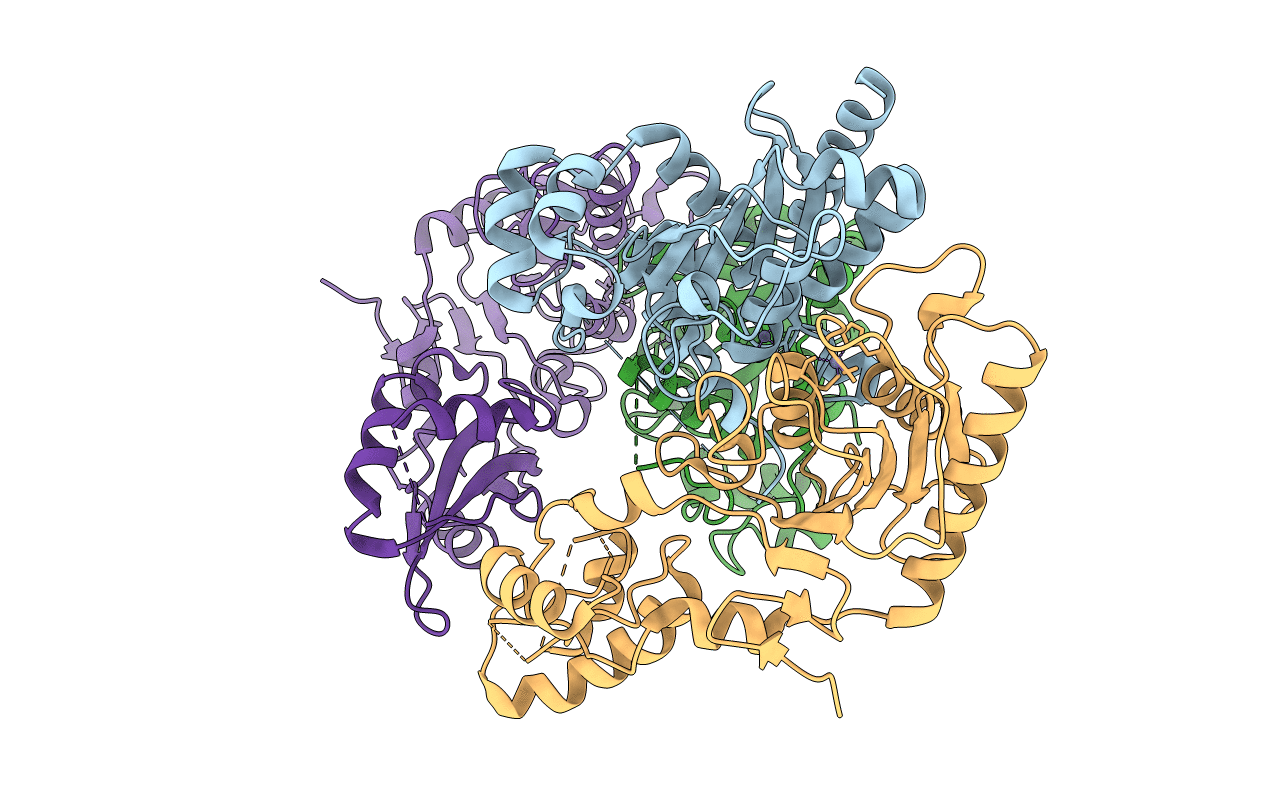
7BV5 image
Deposition Date 2020-04-09
Release Date 2020-11-18
Last Version Date 2023-11-29
Entry Detail
PDB ID:
7BV5
Keywords:
Title:
Crystal structure of the yeast heterodimeric ADAT2/3
Biological Source:
Method Details:
Experimental Method:
Resolution:
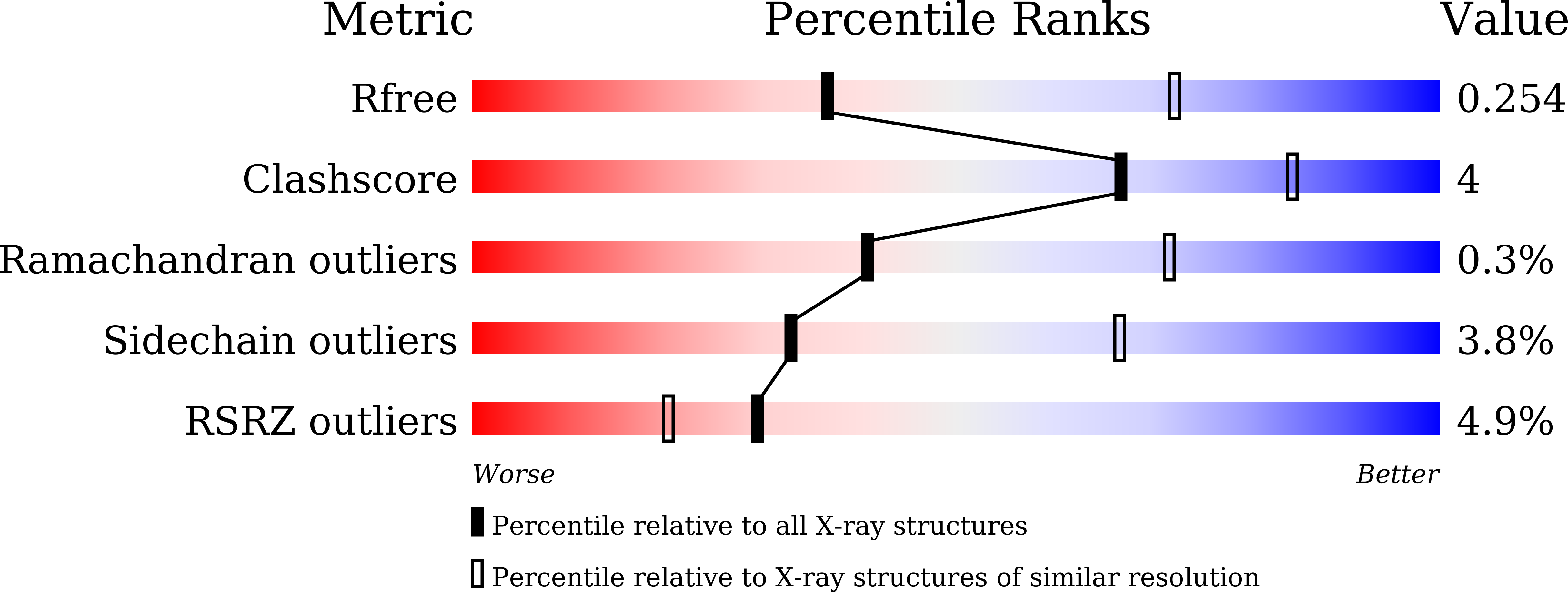
2.80 Å
R-Value Free:
0.25
R-Value Work:
0.19
R-Value Observed:
0.20
Space Group:
P 21 21 2
Macromolecular Entities
Structures with similar UniProt ID
Protein Blast
Polymer Type:polypeptide(L)
Molecule:tRNA-specific adenosine deaminase subunit TAD2
Gene (Uniprot):TAD2
Chain IDs:A, B
Chain Length:253
Number of Molecules:2
Biological Source:Saccharomyces cerevisiae (strain ATCC 204508 / S288c)
Structures with similar UniProt ID
Protein Blast
Polymer Type:polypeptide(L)
Molecule:tRNA-specific adenosine deaminase subunit TAD3
Gene (Uniprot):TAD3
Chain IDs:C, D
Chain Length:328
Number of Molecules:2
Biological Source:Saccharomyces cerevisiae (strain ATCC 204508 / S288c)
Ligand Molecules
Primary Citation
Crystal structure of the yeast heterodimeric ADAT2/3 deaminase.
Bmc Biol. 18 189 189 (2020)
PMID: 33272269 DOI: 10.1186/s12915-020-00920-2

Abstact

BACKGROUND The adenosine-to-inosine (A-to-I) editing in anticodons of tRNAs is critical for wobble base-pairing during translation. This modification is produced via deamination on A34 and catalyzed by the adenosine deaminase acting on tRNA (ADAT) enzyme. Eukaryotic ADATs are heterodimers composed of the catalytic subunit ADAT2 and the structural subunit ADAT3, but their molecular assemblies and catalytic mechanisms are largely unclear. RESULTS Here, we report a 2.8-Å crystal structure of Saccharomyces cerevisiae ADAT2/3 (ScADAT2/3), revealing its heterodimeric assembly and substrate recognition mechanism. While each subunit clearly contains a domain resembling their prokaryotic homolog TadA, suggesting an evolutionary gene duplication event, they also display accessory domains for additional structural or functional purposes. The N-lobe of ScADAT3 exhibits a positively charged region with a potential role in the recognition and binding of tRNA, supported by our biochemical analysis. Interestingly, ScADAT3 employs its C-terminus to block tRNA's entry into its pseudo-active site and thus inactivates itself for deamination despite the preservation of a zinc-binding site, a mechanism possibly shared only among yeasts. CONCLUSIONS Combining the structural with biochemical, bioinformatic, and in vivo functional studies, we propose a stepwise model for the pathway of deamination by ADAT2/3. Our work provides insight into the molecular mechanism of the A-to-I editing by the eukaryotic ADAT heterodimer, especially the role of ADAT3 in catalysis.

Legend

Protein

Chemical

Disease

Primary Citation of related structures
Feedback Form
Name
Email
Institute
Feedback