7BJW image
Deposition Date 2021-01-14
Release Date 2021-06-09
Last Version Date 2024-10-23
Entry Detail
PDB ID:
7BJW
Title:
14-3-3 sigma with RelA/p65 binding site pS45 and covalently bound TCF521-154
Biological Source:
Source Organism:
Homo sapiens (Taxon ID: 9606)
Host Organism:
Method Details:
Experimental Method:
Resolution:
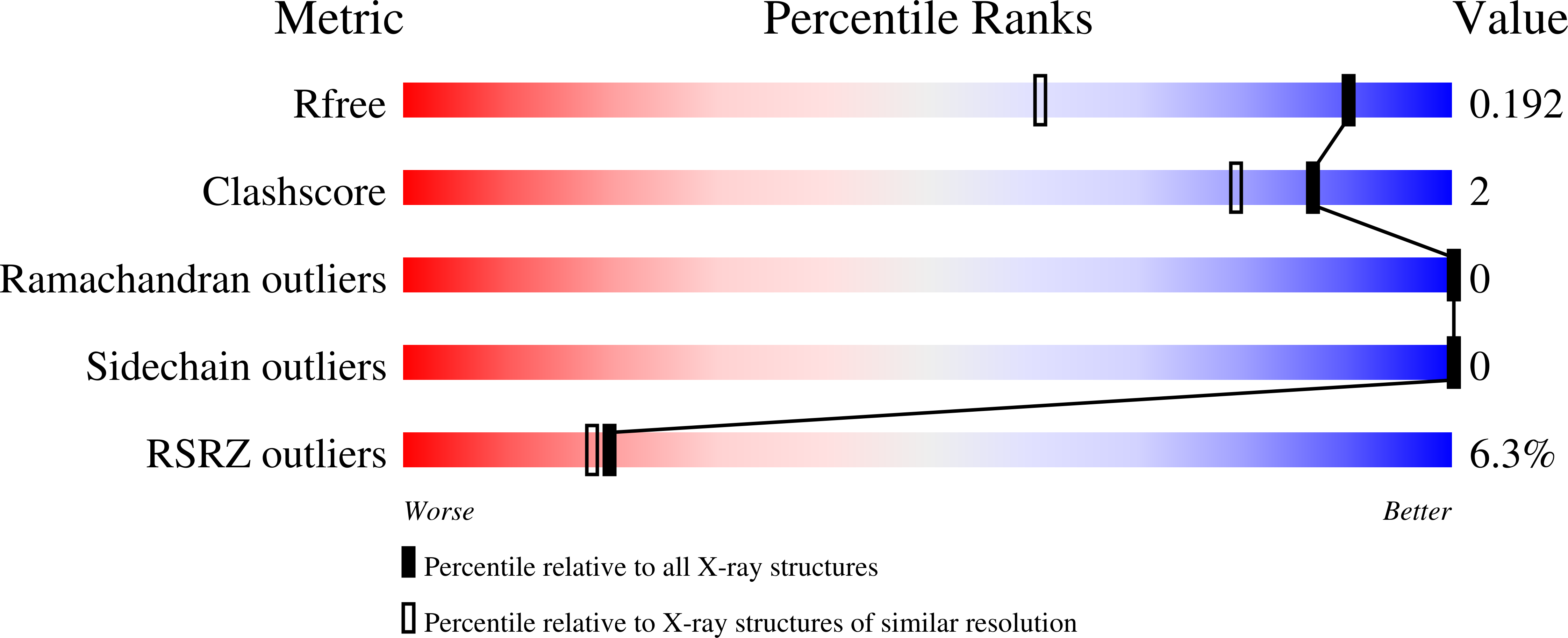
1.40 Å
R-Value Free:
0.19
R-Value Work:
0.17
R-Value Observed:
0.17
Space Group:
C 2 2 21
Macromolecular Entities
Structures with similar UniProt ID
Protein Blast
Polymer Type:polypeptide(L)
Molecule:14-3-3 protein sigma
Gene (Uniprot):SFN
Chain IDs:A
Chain Length:253
Number of Molecules:1
Biological Source:Homo sapiens
Structures with similar UniProt ID
Protein Blast
Polymer Type:polypeptide(L)
Molecule:Transcription factor p65
Gene (Uniprot):RELA
Chain IDs:B (auth: P)
Chain Length:13
Number of Molecules:1
Biological Source:Homo sapiens
Modified Residue
Compound ID Chain ID Parent Comp ID Details 2D Image
CSO A CYS modified residue
SEP B SER modified residue
Ligand Molecules
Primary Citation
An Exploration of Chemical Properties Required for Cooperative Stabilization of the 14-3-3 Interaction with NF-kappa B-Utilizing a Reversible Covalent Tethering Approach.
J.Med.Chem. 64 8423 8436 (2021)
PMID: 34076416 DOI: 10.1021/acs.jmedchem.1c00401

Abstact

Protein-protein modulation has emerged as a proven approach to drug discovery. While significant progress has been gained in developing protein-protein interaction (PPI) inhibitors, the orthogonal approach of PPI stabilization lacks established methodologies for drug design. Here, we report the systematic ″bottom-up″ development of a reversible covalent PPI stabilizer. An imine bond was employed to anchor the stabilizer at the interface of the 14-3-3/p65 complex, leading to a molecular glue that elicited an 81-fold increase in complex stabilization. Utilizing protein crystallography and biophysical assays, we deconvoluted how chemical properties of a stabilizer translate to structural changes in the ternary 14-3-3/p65/molecular glue complex. Furthermore, we explore how this leads to high cooperativity and increased stability of the complex.

Legend

Protein

Chemical

Disease

Primary Citation of related structures
Feedback Form
Name
Email
Institute
Feedback