7BAG image
Deposition Date 2020-12-15
Release Date 2022-01-12
Last Version Date 2024-02-07
Entry Detail
PDB ID:
7BAG
Keywords:
Title:
C3b in complex with CP40
Biological Source:
Source Organism:
Method Details:
Experimental Method:
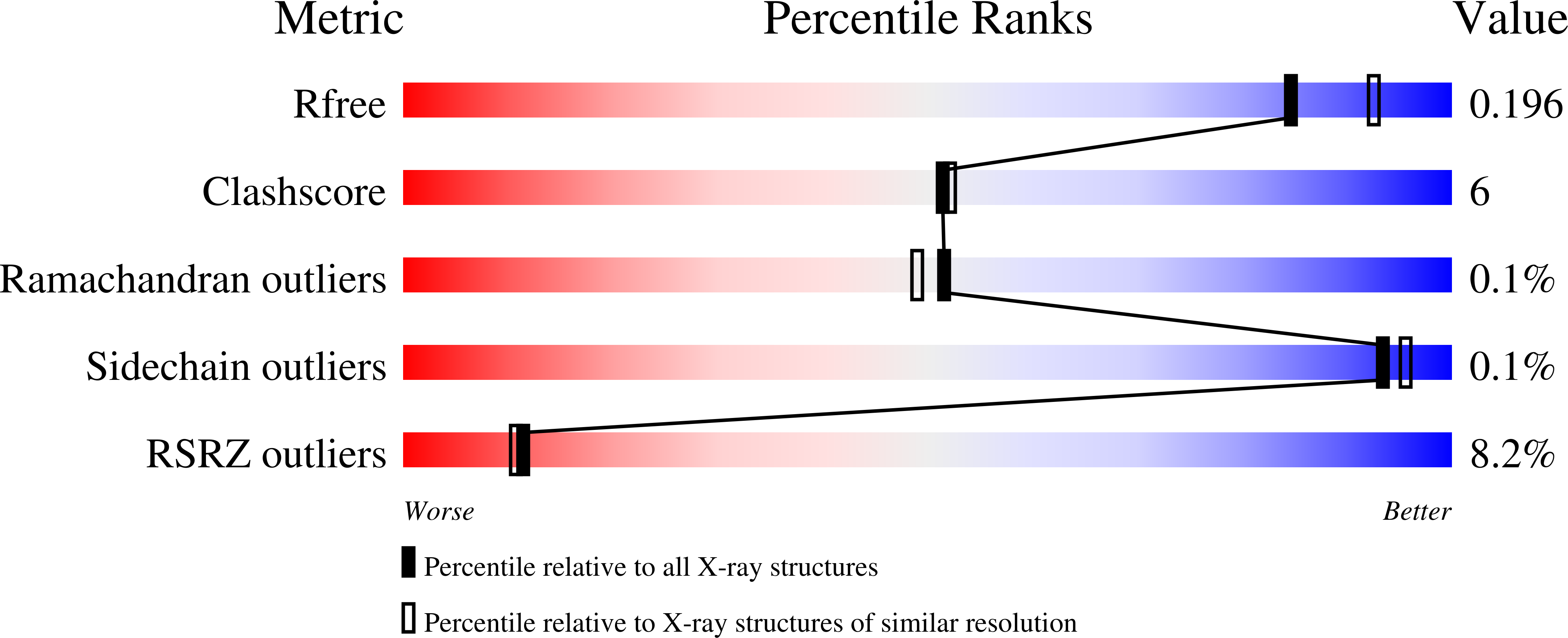
Resolution:
2.00 Å
R-Value Free:
0.22
R-Value Work:
0.19
R-Value Observed:
0.19
Space Group:
P 1 21 1
Macromolecular Entities
Structures with similar UniProt ID
Protein Blast
Polymer Type:polypeptide(L)
Molecule:Complement C3
Gene (Uniprot):C3
Chain IDs:A
Chain Length:645
Number of Molecules:1
Biological Source:Homo sapiens
Structures with similar UniProt ID
Protein Blast
Polymer Type:polypeptide(L)
Molecule:Complement C3
Gene (Uniprot):C3
Chain IDs:B
Chain Length:915
Number of Molecules:1
Biological Source:Homo sapiens
Polymer Type:polypeptide(L)
Molecule:Compstatin CP40
Chain IDs:C
Chain Length:14
Number of Molecules:1
Biological Source:synthetic construct
Primary Citation
Insight into mode-of-action and structural determinants of the compstatin family of clinical complement inhibitors.
Nat Commun 13 5519 5519 (2022)
PMID: 36127336 DOI: 10.1038/s41467-022-33003-7

Abstact

With the addition of the compstatin-based complement C3 inhibitor pegcetacoplan, another class of complement targeted therapeutics have recently been approved. Moreover, compstatin derivatives with enhanced pharmacodynamic and pharmacokinetic profiles are in clinical development (e.g., Cp40/AMY-101). Despite this progress, the target binding and inhibitory modes of the compstatin family remain incompletely described. Here, we present the crystal structure of Cp40 complexed with its target C3b at 2.0-Å resolution. Structure-activity-relationship studies rationalize the picomolar affinity and long target residence achieved by lead optimization, and reveal a role for structural water in inhibitor binding. We provide explanations for the narrow species specificity of this drug class and demonstrate distinct target selection modes between clinical compstatin derivatives. Functional studies provide further insight into physiological complement activation and corroborate the mechanism of its compstatin-mediated inhibition. Our study may thereby guide the application of existing and development of next-generation compstatin analogs.

Legend

Protein

Chemical

Disease

Primary Citation of related structures
Feedback Form
Name
Email
Institute
Feedback