7B74 image
Deposition Date 2020-12-09
Release Date 2021-11-17
Last Version Date 2024-02-07
Entry Detail
PDB ID:
7B74
Title:
Chimeric Streptavidin With A Dimerization Domain For Artificial Transfer Hydrogenation
Biological Source:
Method Details:
Experimental Method:
Resolution:
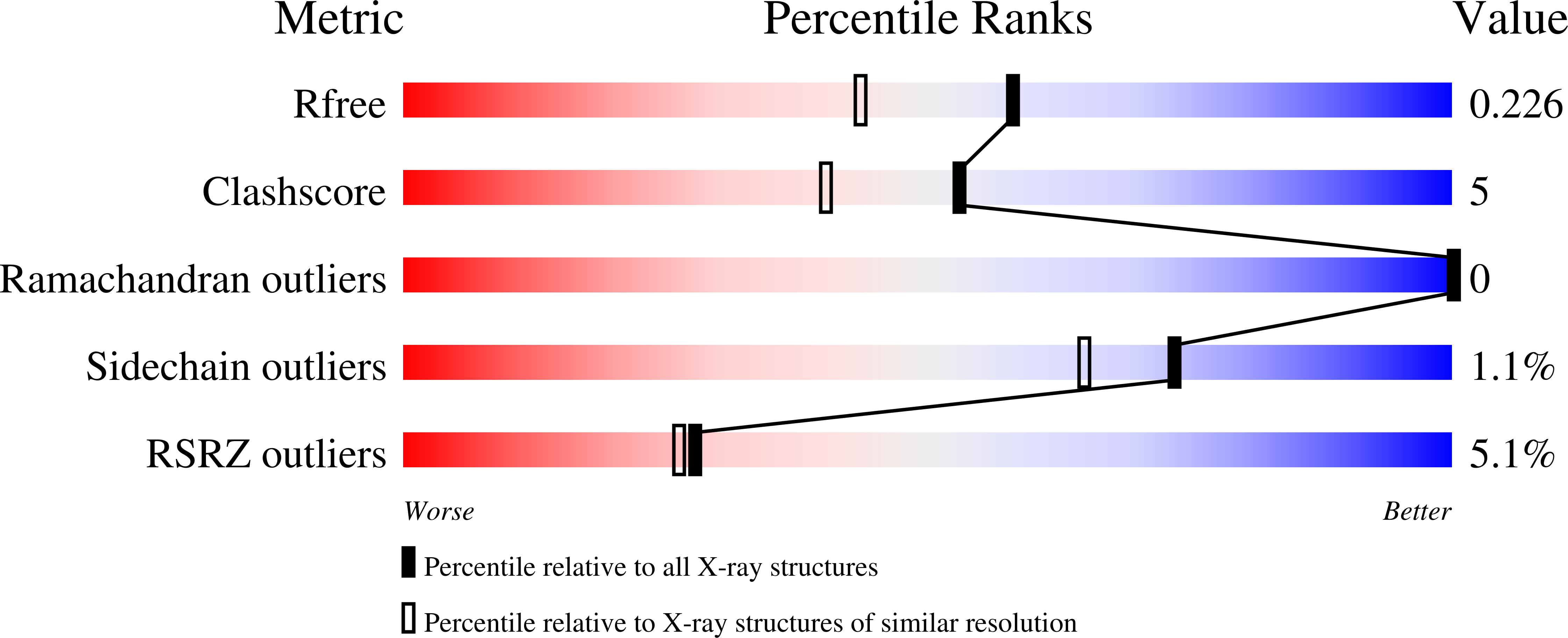
1.85 Å
R-Value Free:
0.21
R-Value Work:
0.19
Space Group:
P 1 21 1
Macromolecular Entities
Protein Blast
Polymer Type:polypeptide(L)
Molecule:Streptavidin,Superoxide dismutase [Cu-Zn],Streptavidin
Gene (Uniprot):sodC
Chain IDs:A (auth: AAA), B (auth: BBB), C (auth: CCC), D (auth: DDD)
Chain Length:194
Number of Molecules:4
Biological Source:Streptomyces avidinii, Mycobacterium bovis (strain ATCC BAA-935 / AF2122/97)
Ligand Molecules
Primary Citation
Spiers Memorial Lecture: Shielding the active site: a streptavidin superoxide-dismutase chimera as a host protein for asymmetric transfer hydrogenation.
Faraday Disc.Chem.Soc ? ? ? (2023)
PMID: 36924204 DOI: 10.1039/d3fd00034f

Abstact

By anchoring a metal cofactor within a host protein, so-called artificial metalloenzymes can be generated. Such hybrid catalysts combine the versatility of transition metals in catalyzing new-to-nature reactions with the power of genetic-engineering to evolve proteins. With the aim of gaining better control over second coordination-sphere interactions between a streptavidin host-protein (Sav) and a biotinylated cofactor, we engineered a hydrophobic dimerization domain, borrowed from superoxide dismutase C (SOD), on Sav's biotin-binding vestibule. The influence of the SOD dimerization domain (DD) on the performance of an asymmetric transfer hydrogenase (ATHase) resulting from anchoring a biotinylated Cp*Ir-cofactor - [Cp*Ir(biot-p-L)Cl] (1-Cl) - within Sav-SOD is reported herein. We show that, depending on the nature of the residue at position Sav S112, the introduction of the SOD DD on the biotin-binding vestibule leads to an inversion of configuration of the reduction product, as well as a fivefold increase in catalytic efficiency. The findings are rationalized by QM/MM calculations, combined with X-ray crystallography.

Legend

Protein

Chemical

Disease

Primary Citation of related structures
Feedback Form
Name
Email
Institute
Feedback