7B5D image
Deposition Date 2020-12-03
Release Date 2021-02-10
Last Version Date 2024-10-23
Entry Detail
PDB ID:
7B5D
Title:
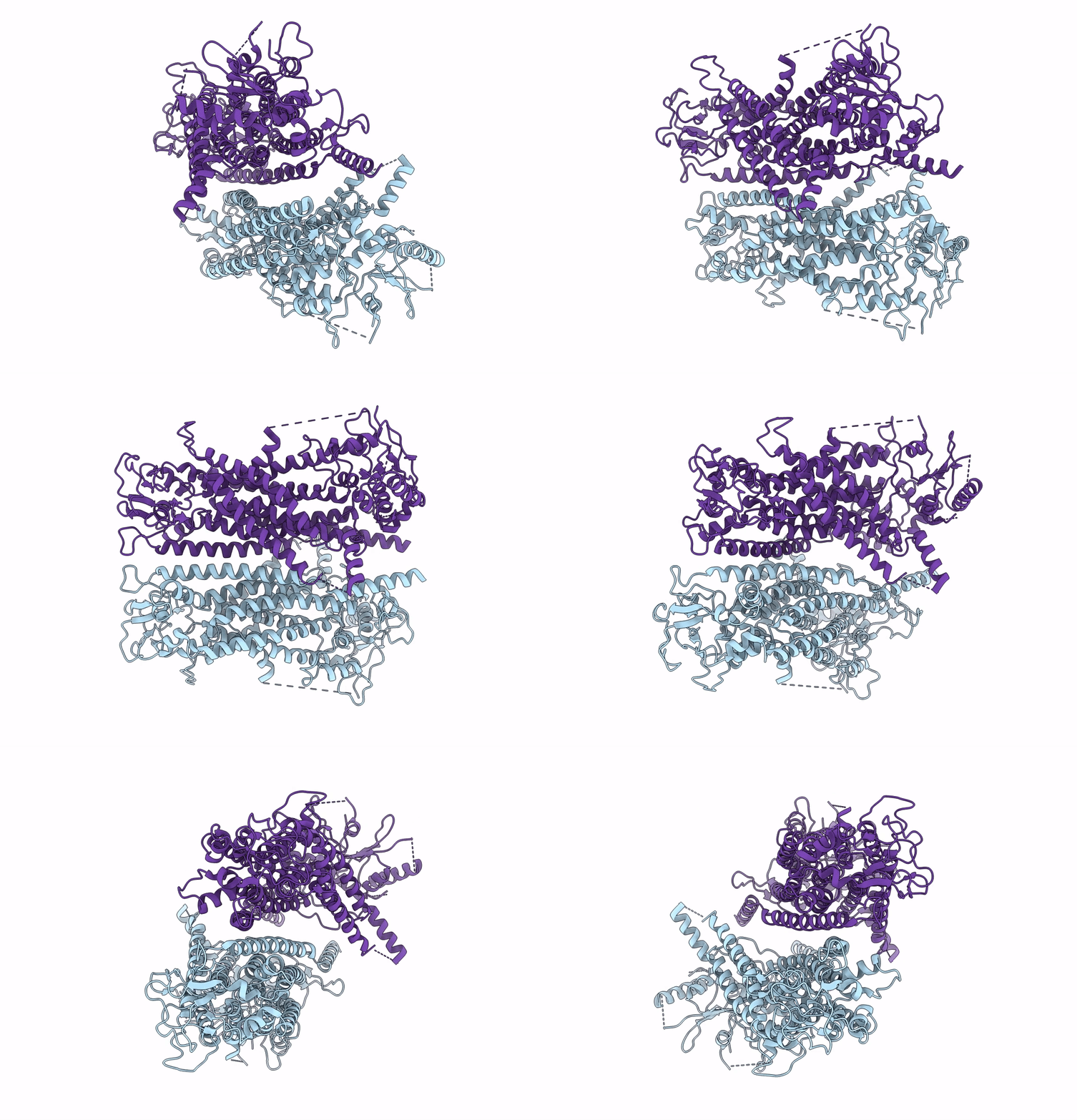
Structure of calcium-free mTMEM16A(ac)-I551A chloride channel at 3.3 A resolution
Biological Source:
Source Organism:
Mus musculus (Taxon ID: 10090)
Host Organism:
Method Details:
Experimental Method:
Resolution:
3.30 Å
Aggregation State:
PARTICLE
Reconstruction Method:
SINGLE PARTICLE
Macromolecular Entities
Structures with similar UniProt ID
Protein Blast
Polymer Type:polypeptide(L)
Molecule:Anoctamin-1
Gene (Uniprot):Ano1
Mutagens:I551A
Chain IDs:A, B
Chain Length:960
Number of Molecules:2
Biological Source:Mus musculus
Ligand Molecules
Primary Citation
Gating the pore of the calcium-activated chloride channel TMEM16A.
Nat Commun 12 785 785 (2021)
PMID: 33542223 DOI: 10.1038/s41467-020-20787-9

Abstact

The binding of cytoplasmic Ca2+ to the anion-selective channel TMEM16A triggers a conformational change around its binding site that is coupled to the release of a gate at the constricted neck of an hourglass-shaped pore. By combining mutagenesis, electrophysiology, and cryo-electron microscopy, we identified three hydrophobic residues at the intracellular entrance of the neck as constituents of this gate. Mutation of each of these residues increases the potency of Ca2+ and results in pronounced basal activity. The structure of an activating mutant shows a conformational change of an α-helix that contributes to Ca2+ binding as a likely cause for the basal activity. Although not in physical contact, the three residues are functionally coupled to collectively contribute to the stabilization of the gate in the closed conformation of the pore, thus explaining the low open probability of the channel in the absence of Ca2+.

Legend

Protein

Chemical

Disease

Primary Citation of related structures
Feedback Form
Name
Email
Institute
Feedback