7B0C image
Deposition Date 2020-11-19
Release Date 2022-06-01
Last Version Date 2024-01-31
Entry Detail
PDB ID:
7B0C
Title:
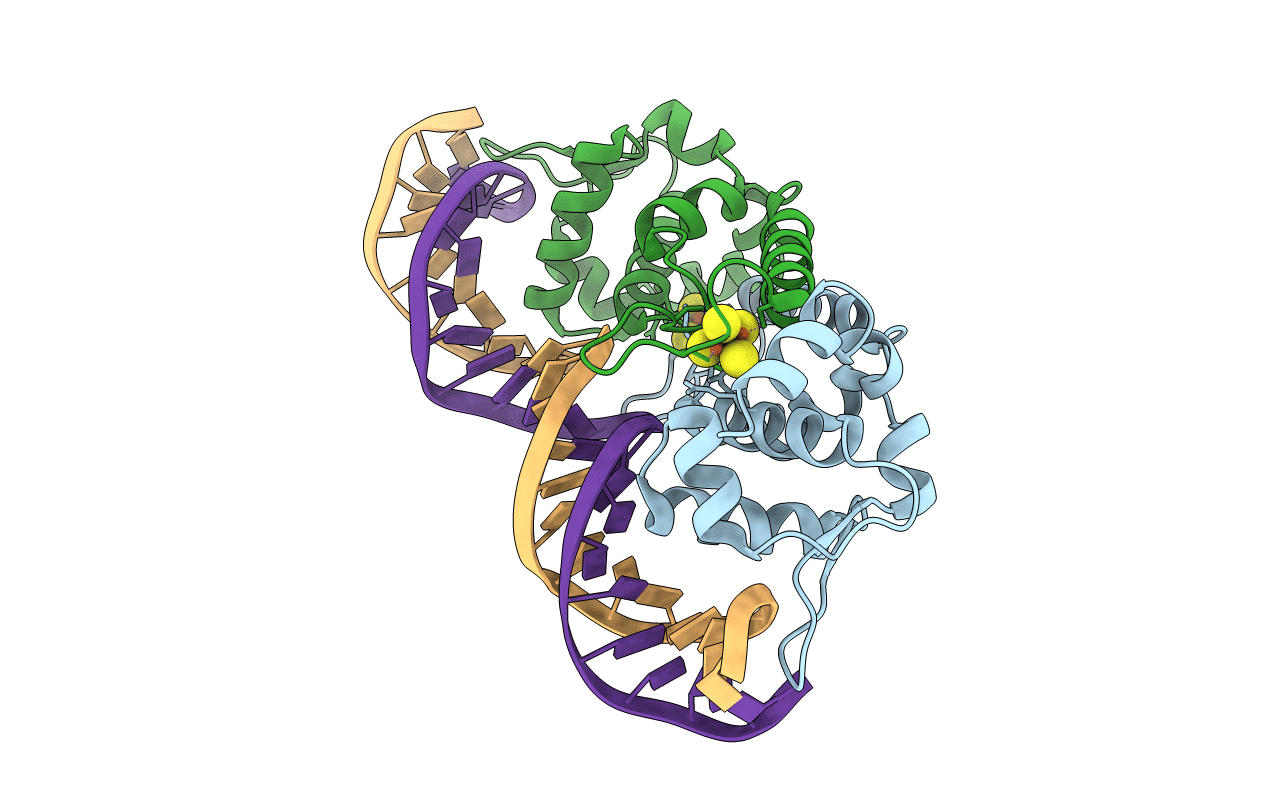
[4Fe-4S]-NsrR complexed to 23-bp HmpA1 operator fragment
Biological Source:
Source Organism:
Host Organism:
Method Details:
Experimental Method:
Resolution:
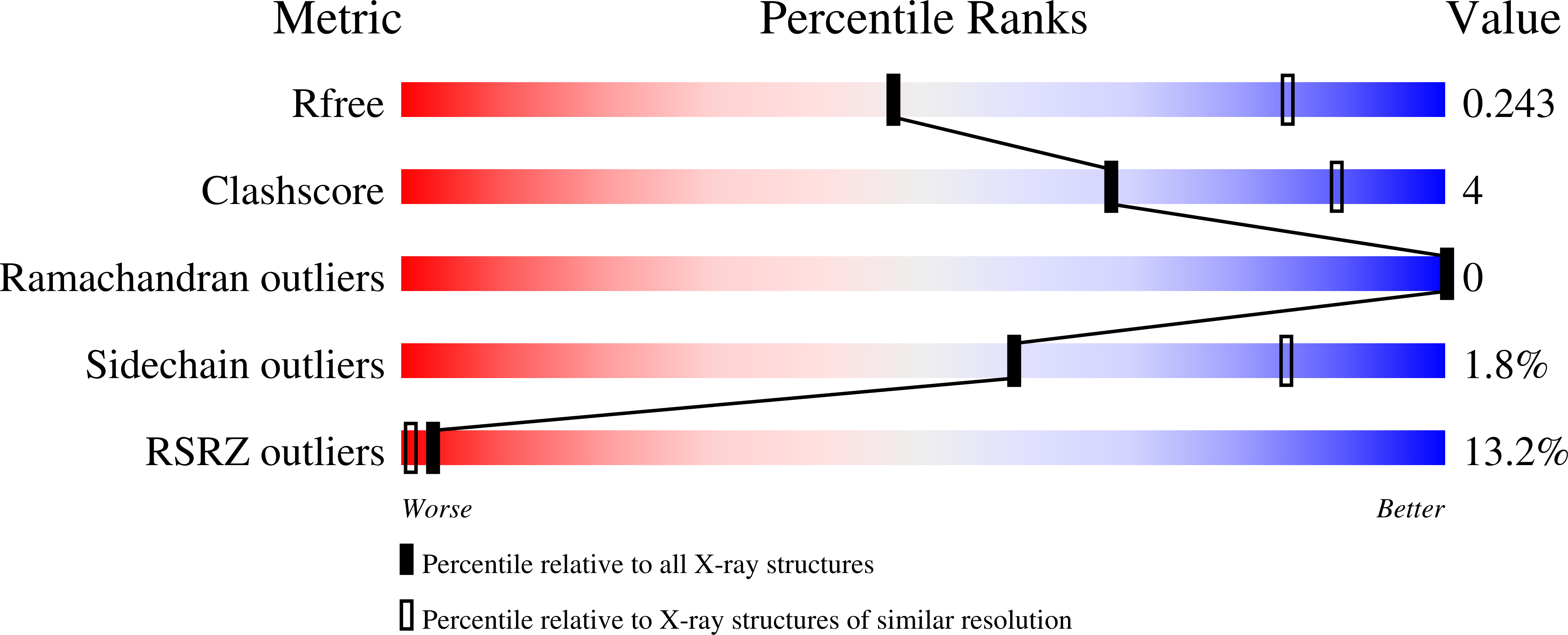
3.00 Å
R-Value Free:
0.23
R-Value Work:
0.21
R-Value Observed:
0.22
Space Group:
P 65
Macromolecular Entities
Structures with similar UniProt ID
Protein Blast
Polymer Type:polypeptide(L)
Molecule:HTH-type transcriptional repressor NsrR
Gene (Uniprot):nsrR
Chain IDs:A, B
Chain Length:161
Number of Molecules:2
Biological Source:Streptomyces coelicolor A3(2)
Polymer Type:polydeoxyribonucleotide
Molecule:DNA (5'-D(P*AP*AP*CP*AP*CP*GP*AP*AP*TP*AP*TP*CP*AP*TP*CP*TP*AP*CP*CP*AP*AP*TP*T)-3')
Chain IDs:C
Chain Length:23
Number of Molecules:1
Biological Source:Streptomyces coelicolor A3(2)
Polymer Type:polydeoxyribonucleotide
Molecule:DNA (5'-D(P*AP*AP*TP*TP*GP*GP*TP*AP*GP*AP*TP*GP*AP*TP*AP*TP*TP*CP*GP*TP*GP*TP*T)-3')
Chain IDs:D
Chain Length:23
Number of Molecules:1
Biological Source:Streptomyces coelicolor A3(2)
Ligand Molecules
Primary Citation
Structural determinants of DNA recognition by the NO sensor NsrR and related Rrf2-type [FeS]-transcription factors.
Commun Biol 5 769 769 (2022)
PMID: 35908109 DOI: 10.1038/s42003-022-03745-7

Abstact

Several transcription factors of the Rrf2 family use an iron-sulfur cluster to regulate DNA binding through effectors such as nitric oxide (NO), cellular redox status and iron levels. [4Fe-4S]-NsrR from Streptomyces coelicolor (ScNsrR) modulates expression of three different genes via reaction and complex formation with variable amounts of NO, which results in detoxification of this gas. Here, we report the crystal structure of ScNsrR complexed with an hmpA1 gene operator fragment and compare it with those previously reported for [2Fe-2S]-RsrR/rsrR and apo-IscR/hyA complexes. Important structural differences reside in the variation of the DNA minor and major groove widths. In addition, different DNA curvatures and different interactions with the protein sensors are observed. We also report studies of NsrR binding to four hmpA1 variants, which indicate that flexibility in the central region is not a key binding determinant. Our study explores the promotor binding specificities of three closely related transcriptional regulators.

Legend

Protein

Chemical

Disease

Primary Citation of related structures
Feedback Form
Name
Email
Institute
Feedback