7AX4 image
Deposition Date 2020-11-09
Release Date 2021-04-14
Last Version Date 2024-05-15
Entry Detail
PDB ID:
7AX4
Title:
Human TYK2 pseudokinase domain (575-869) in complex with 5-(4-Fluoro-phenyl)-2-ureido-thiophene-3-carboxylic acid amide.
Biological Source:
Source Organism:
Homo sapiens (Taxon ID: 9606)
Method Details:
Experimental Method:
Resolution:
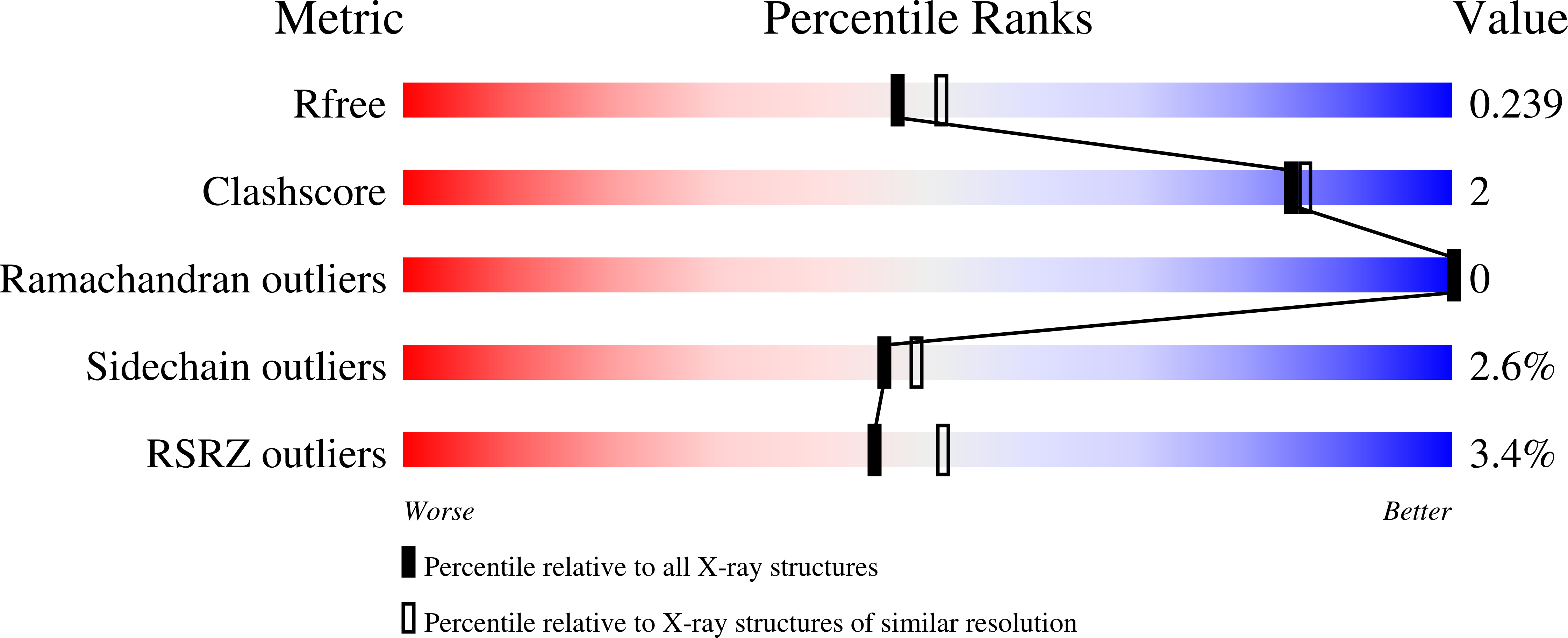
2.12 Å
R-Value Free:
0.22
R-Value Work:
0.18
R-Value Observed:
0.18
Space Group:
P 1 21 1
Macromolecular Entities
Structures with similar UniProt ID
Protein Blast
Polymer Type:polypeptide(L)
Molecule:Non-receptor tyrosine-protein kinase TYK2
Gene (Uniprot):TYK2
Chain IDs:A, B
Chain Length:295
Number of Molecules:2
Biological Source:Homo sapiens
Primary Citation
Reducing False Positives through the Application of Fluorescence Lifetime Technology: A Comparative Study Using TYK2 Kinase as a Model System.
SLAS Discov 26 663 675 (2021)
PMID: 33783261 DOI: 10.1177/24725552211002472

Abstact

The predominant assay detection methodologies used for enzyme inhibitor identification during early-stage drug discovery are fluorescence-based. Each fluorophore has a characteristic fluorescence decay, known as the fluorescence lifetime, that occurs throughout a nanosecond-to-millisecond timescale. The measurement of fluorescence lifetime as a reporter for biological activity is less common than fluorescence intensity, even though the latter has numerous issues that can lead to false-positive readouts. The confirmation of hit compounds as true inhibitors requires additional assays, cost, and time to progress from hit identification to lead drug-candidate optimization. To explore whether the use of fluorescence lifetime technology (FLT) can offer comparable benefits to label-free-based approaches such as RapidFire mass spectroscopy (RF-MS) and a superior readout compared to time-resolved fluorescence resonance energy transfer (TR-FRET), three equivalent assays were developed against the clinically validated tyrosine kinase 2 (TYK2) and screened against annotated compound sets. FLT provided a marked decrease in the number of false-positive hits when compared to TR-FRET. Further cellular screening confirmed that a number of potential inhibitors directly interacted with TYK2 and inhibited the downstream phosphorylation of the signal transducer and activator of transcription 4 protein (STAT4).

Legend

Protein

Chemical

Disease

Primary Citation of related structures
Feedback Form
Name
Email
Institute
Feedback