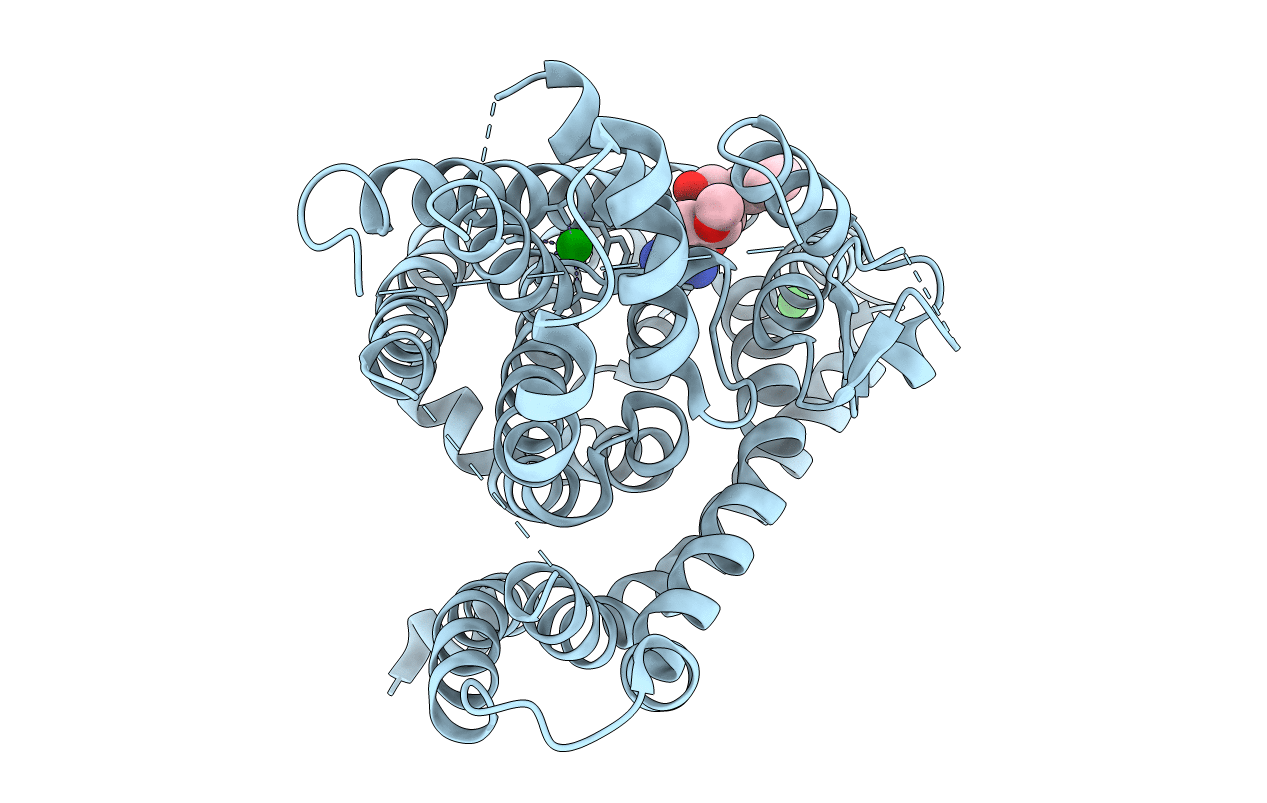
7AWL image
Deposition Date 2020-11-08
Release Date 2021-10-13
Last Version Date 2024-01-31
Entry Detail
PDB ID:
7AWL
Title:
Structure of the thermostabilized EAAT1 cryst-II mutant in complex with barium and the allosteric inhibitor UCPH101
Biological Source:
Source Organism:
Homo sapiens (Taxon ID: 9606)
Host Organism:
Method Details:
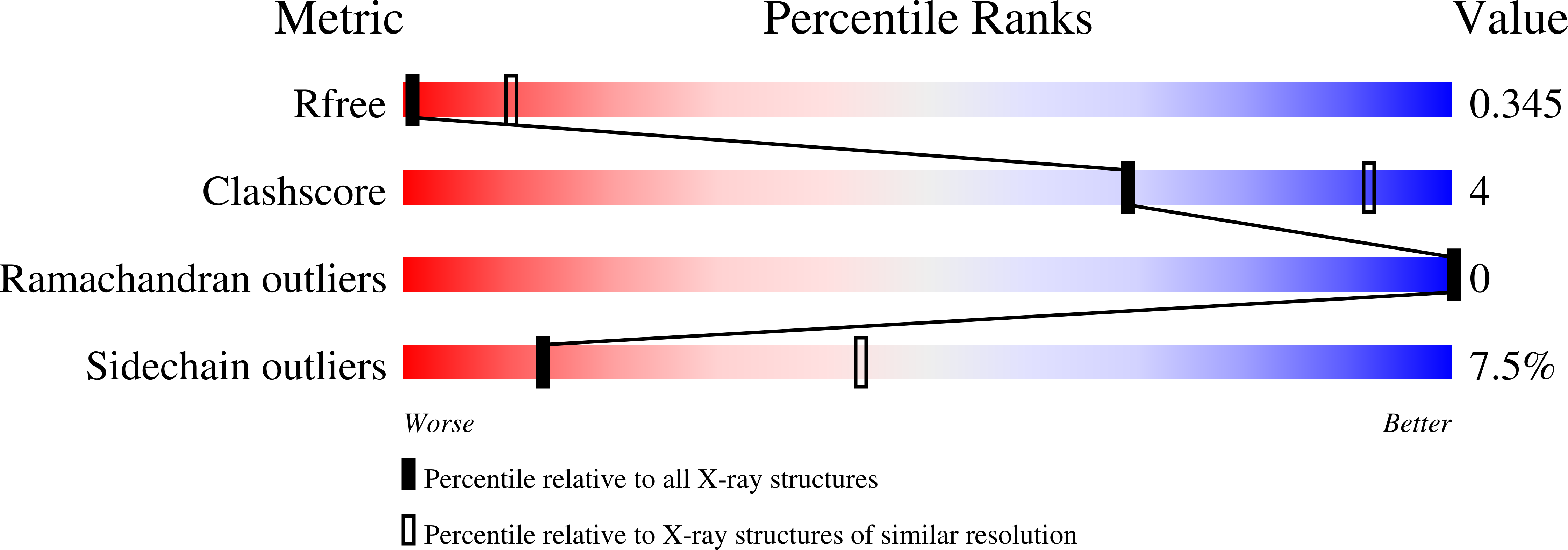
Experimental Method:
Resolution:
3.70 Å
R-Value Free:
0.28
R-Value Work:
0.23
R-Value Observed:
0.24
Space Group:
P 63
Macromolecular Entities
Protein Blast
Polymer Type:polypeptide(L)
Molecule:Excitatory amino acid transporter 1, Neutral amino acid transporter, Excitatory amino acid transporter, Transporter protein
Chain IDs:A
Chain Length:522
Number of Molecules:1
Biological Source:Homo sapiens
Primary Citation
The ion-coupling mechanism of human excitatory amino acid transporters.
Embo J. 41 e108341 e108341 (2022)
PMID: 34747040 DOI: 10.15252/embj.2021108341

Abstact

Excitatory amino acid transporters (EAATs) maintain glutamate gradients in the brain essential for neurotransmission and to prevent neuronal death. They use ionic gradients as energy source and co-transport transmitter into the cytoplasm with Na+ and H+ , while counter-transporting K+ to re-initiate the transport cycle. However, the molecular mechanisms underlying ion-coupled transport remain incompletely understood. Here, we present 3D X-ray crystallographic and cryo-EM structures, as well as thermodynamic analysis of human EAAT1 in different ion bound conformations, including elusive counter-transport ion bound states. Binding energies of Na+ and H+ , and unexpectedly Ca2+ , are coupled to neurotransmitter binding. Ca2+ competes for a conserved Na+ site, suggesting a regulatory role for Ca2+ in glutamate transport at the synapse, while H+ binds to a conserved glutamate residue stabilizing substrate occlusion. The counter-transported ion binding site overlaps with that of glutamate, revealing the K+ -based mechanism to exclude the transmitter during the transport cycle and to prevent its neurotoxic release on the extracellular side.

Legend

Protein

Chemical

Disease

Primary Citation of related structures
Feedback Form
Name
Email
Institute
Feedback