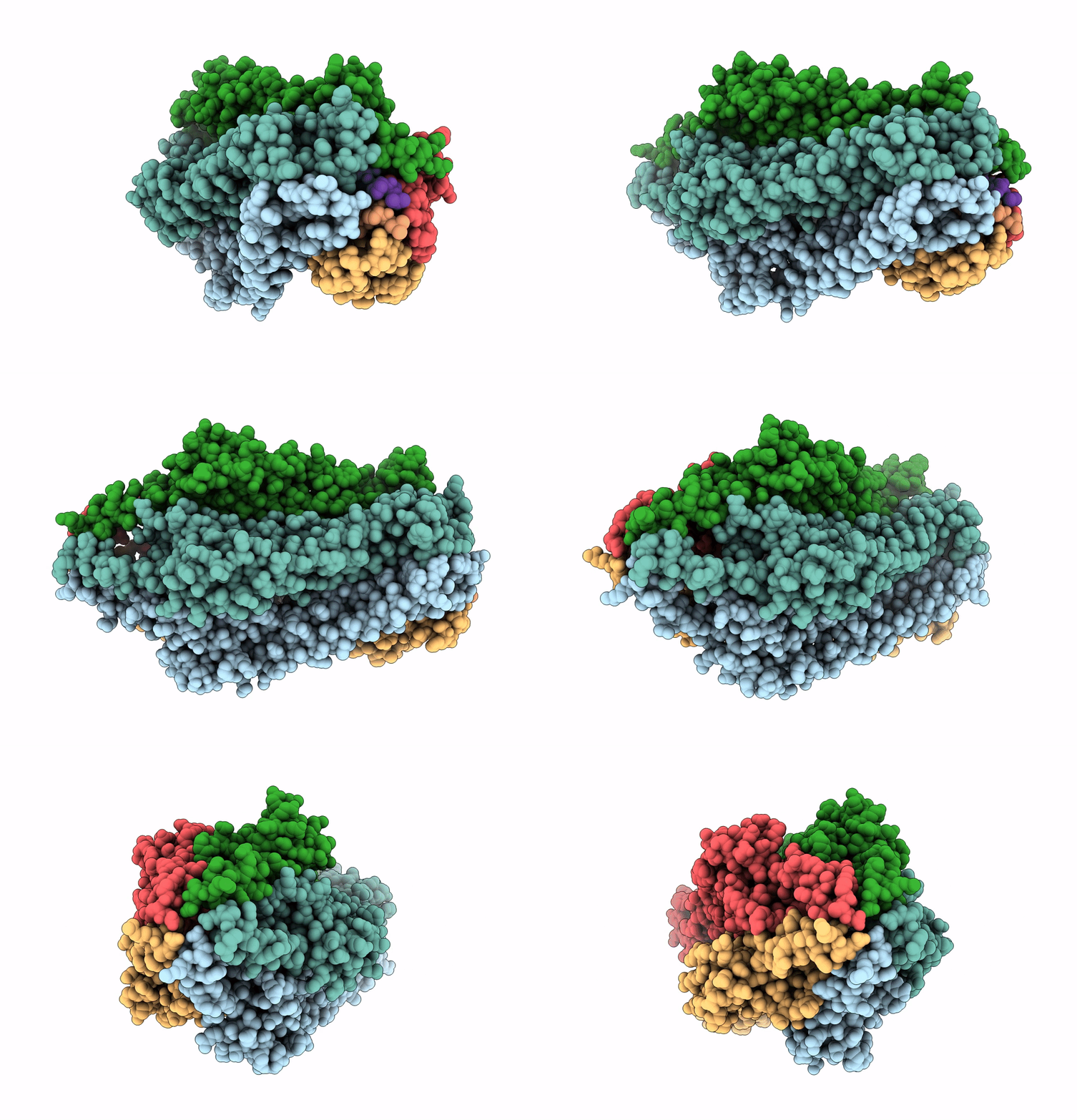
7AJQ image
Deposition Date 2020-09-29
Release Date 2021-10-06
Last Version Date 2024-07-10
Entry Detail
PDB ID:
7AJQ
Keywords:
Title:
cryo-EM structure of ExbBD from Serratia Marcescens
Biological Source:
Source Organism:
Host Organism:
Method Details:
Experimental Method:
Resolution:
4.00 Å
Aggregation State:
PARTICLE
Reconstruction Method:
SINGLE PARTICLE
Macromolecular Entities
Polymer Type:polypeptide(L)
Molecule:Biopolymer transport protein ExbB
Chain IDs:A, B, C, D, E
Chain Length:281
Number of Molecules:5
Biological Source:Serratia marcescens
Structures with similar UniProt ID
Protein Blast
Polymer Type:polypeptide(L)
Molecule:Biopolymer transport protein ExbD
Gene (Uniprot):exbD
Chain IDs:F, G
Chain Length:146
Number of Molecules:2
Biological Source:Serratia marcescens
Ligand Molecules
Primary Citation
Structural and molecular determinants for the interaction of ExbB from Serratia marcescens and HasB, a TonB paralog.
Commun Biol 5 355 355 (2022)
PMID: 35418619 DOI: 10.1038/s42003-022-03306-y

Abstact

ExbB and ExbD are cytoplasmic membrane proteins that associate with TonB to convey the energy of the proton-motive force to outer membrane receptors in Gram-negative bacteria for iron uptake. The opportunistic pathogen Serratia marcescens (Sm) possesses both TonB and a heme-specific TonB paralog, HasB. ExbBSm has a long periplasmic extension absent in other bacteria such as E. coli (Ec). Long ExbB's are found in several genera of Alphaproteobacteria, most often in correlation with a hasB gene. We investigated specificity determinants of ExbBSm and HasB. We determined the cryo-EM structures of ExbBSm and of the ExbB-ExbDSm complex from S. marcescens. ExbBSm alone is a stable pentamer, and its complex includes two ExbD monomers. We showed that ExbBSm extension interacts with HasB and is involved in heme acquisition and we identified key residues in the membrane domain of ExbBSm and ExbBEc, essential for function and likely involved in the interaction with TonB/HasB. Our results shed light on the class of inner membrane energy machinery formed by ExbB, ExbD and HasB.

Legend

Protein

Chemical

Disease

Primary Citation of related structures
Feedback Form
Name
Email
Institute
Feedback