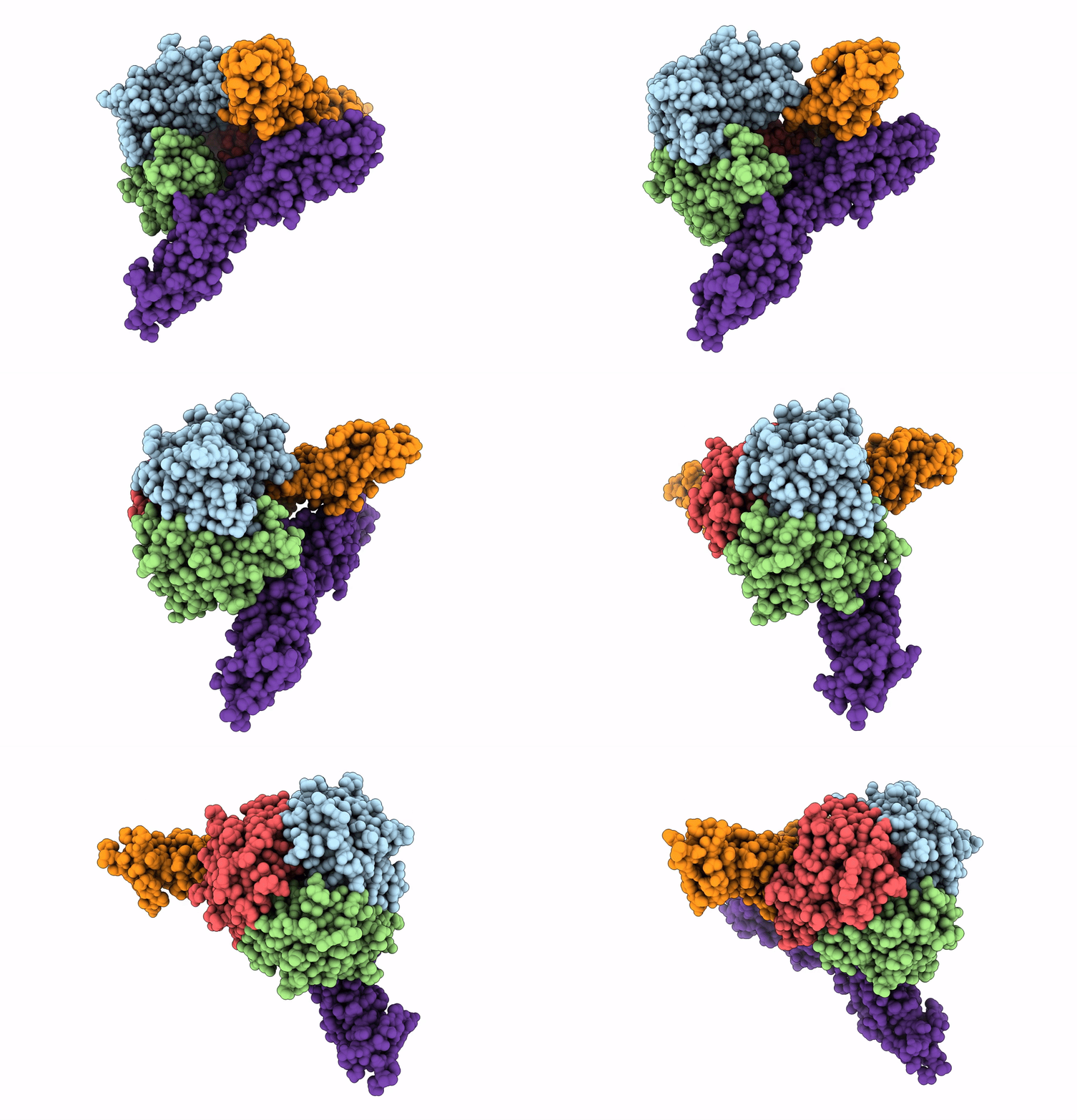
7AGG image
Deposition Date 2020-09-22
Release Date 2020-10-14
Last Version Date 2025-07-09
Entry Detail
PDB ID:
7AGG
Keywords:
Title:
HAd7 knob in complex with 2 EC2-EC3 modules of DSG-2
Biological Source:
Source Organism:
Host Organism:
Method Details:
Experimental Method:
Resolution:
3.30 Å
Aggregation State:
PARTICLE
Reconstruction Method:
SINGLE PARTICLE
Macromolecular Entities
Structures with similar UniProt ID
Protein Blast
Polymer Type:polypeptide(L)
Molecule:Fiber
Chain IDs:A, C (auth: B), D (auth: C)
Chain Length:213
Number of Molecules:3
Biological Source:Human adenovirus B serotype 7
Structures with similar UniProt ID
Protein Blast
Polymer Type:polypeptide(L)
Molecule:Desmoglein-2
Gene (Uniprot):DSG2
Chain IDs:B (auth: D), E (auth: F)
Chain Length:243
Number of Molecules:2
Biological Source:Homo sapiens
Ligand Molecules
Primary Citation
Binding Mechanism Elucidation of the Acute Respiratory Disease Causing Agent Adenovirus of Serotype 7 to Desmoglein-2.
Viruses 12 ? ? (2020)
PMID: 32992715 DOI: 10.3390/v12101075

Abstact

The study of viruses causing acute respiratory distress syndromes (ARDS) is more essential than ever at a time when a virus can create a global pandemic in a matter of weeks. Among human adenoviruses, adenovirus of serotype 7 (HAdV7) is one of the most virulent serotypes. This virus regularly re-emerges in Asia and has just been the cause of several deaths in the United States. A critical step of the virus life cycle is the attachment of the knob domain of the fiber (HAd7K) to the cellular receptor desmoglein-2 (DSG2). Complexes between the fiber knob and two extracellular domains of DSG2 have been produced. Their characterization by biochemical and biophysical methods show that these two domains are sufficient for the interaction and that the trimeric HAd7K could accommodate up to three DSG2 receptor molecules. The cryo-electron microscopy (cryo-EM) structure of these complexes at 3.1 Å resolution confirmed the biochemical data, and allowed the identification of the critical amino acid residues for this interaction, which shows similarities with other DSG2 interacting adenoviruses, despite a low homology in the primary sequences.

Legend

Protein

Chemical

Disease

Primary Citation of related structures
Feedback Form
Name
Email
Institute
Feedback