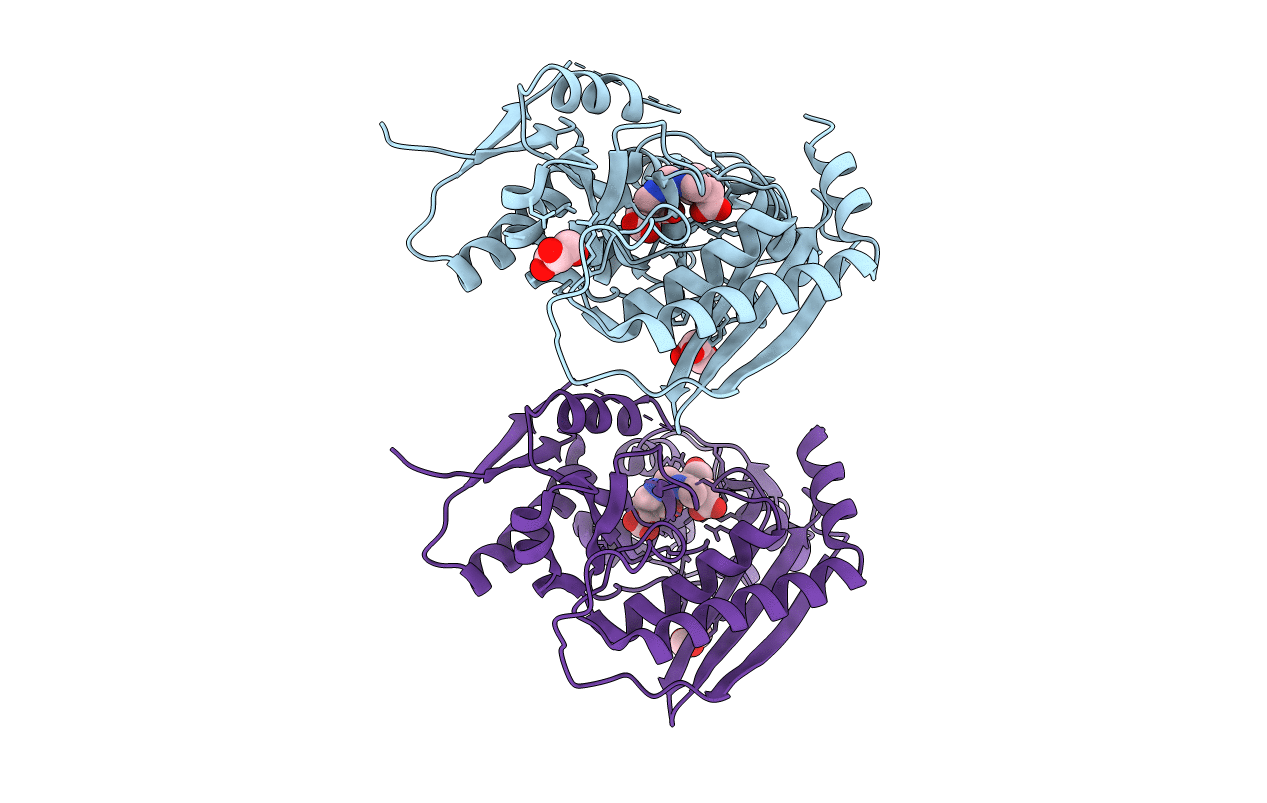
7AAJ image
Deposition Date 2020-09-04
Release Date 2021-02-17
Last Version Date 2024-01-31
Entry Detail
PDB ID:
7AAJ
Keywords:
Title:
Human porphobilinogen deaminase in complex with cofactor
Biological Source:
Source Organism:
Homo sapiens (Taxon ID: 9606)
Host Organism:
Method Details:
Experimental Method:
Resolution:
1.80 Å
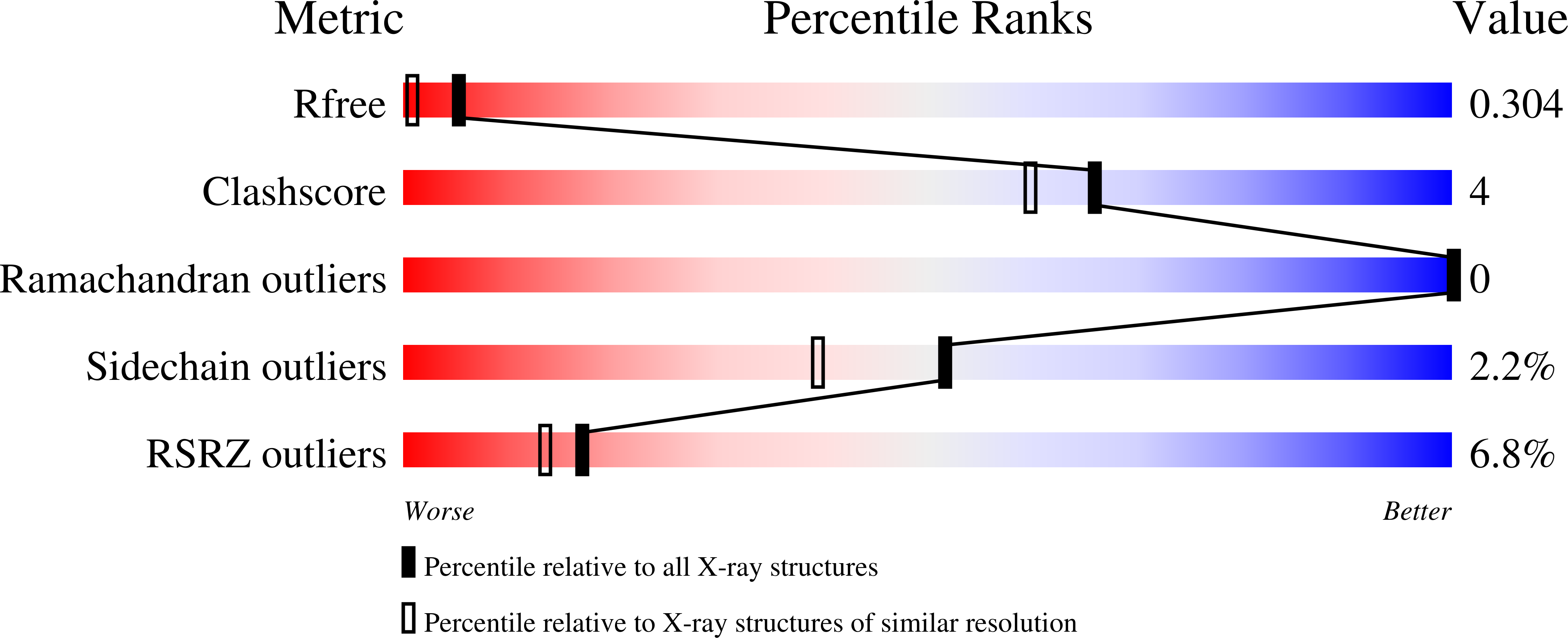
R-Value Free:
0.29
R-Value Work:
0.24
R-Value Observed:
0.25
Space Group:
P 21 21 21
Macromolecular Entities
Structures with similar UniProt ID
Protein Blast
Polymer Type:polypeptide(L)
Molecule:Porphobilinogen deaminase
Gene (Uniprot):HMBS
Chain IDs:A (auth: B), B (auth: A)
Chain Length:363
Number of Molecules:2
Biological Source:Homo sapiens
Primary Citation
Characterization of porphobilinogen deaminase mutants reveals that arginine-173 is crucial for polypyrrole elongation mechanism.
Iscience 24 102152 102152 (2021)
PMID: 33665570 DOI: 10.1016/j.isci.2021.102152

Abstact

Porphobilinogen deaminase (PBGD), the third enzyme in the heme biosynthesis, catalyzes the sequential coupling of four porphobilinogen (PBG) molecules into a heme precursor. Mutations in PBGD are associated with acute intermittent porphyria (AIP), a rare metabolic disorder. We used Fourier transform ion cyclotron resonance mass spectrometry (FT-ICR MS) to demonstrate that wild-type PBGD and AIP-associated mutant R167W both existed as holoenzymes (Eholo) covalently attached to the dipyrromethane cofactor, and three intermediate complexes, ES, ES2, and ES3, where S represents PBG. In contrast, only ES2 was detected in AIP-associated mutant R173W, indicating that the formation of ES3 is inhibited. The R173W crystal structure in the ES2-state revealed major rearrangements of the loops around the active site, compared to wild-type PBGD in the Eholo-state. These results contribute to elucidating the structural pathogenesis of two common AIP-associated mutations and reveal the important structural role of Arg173 in the polypyrrole elongation mechanism.

Legend

Protein

Chemical

Disease

Primary Citation of related structures
Feedback Form
Name
Email
Institute
Feedback