7A00 image
Deposition Date 2020-08-05
Release Date 2021-07-07
Last Version Date 2024-11-06
Entry Detail
PDB ID:
7A00
Title:
Crystal structure of Shank1 PDZ in complex with L6F mutant of the C-terminal hexapeptide from GKAP
Biological Source:
Source Organism:
Homo sapiens (Taxon ID: 9606)
Host Organism:
Method Details:
Experimental Method:
Resolution:
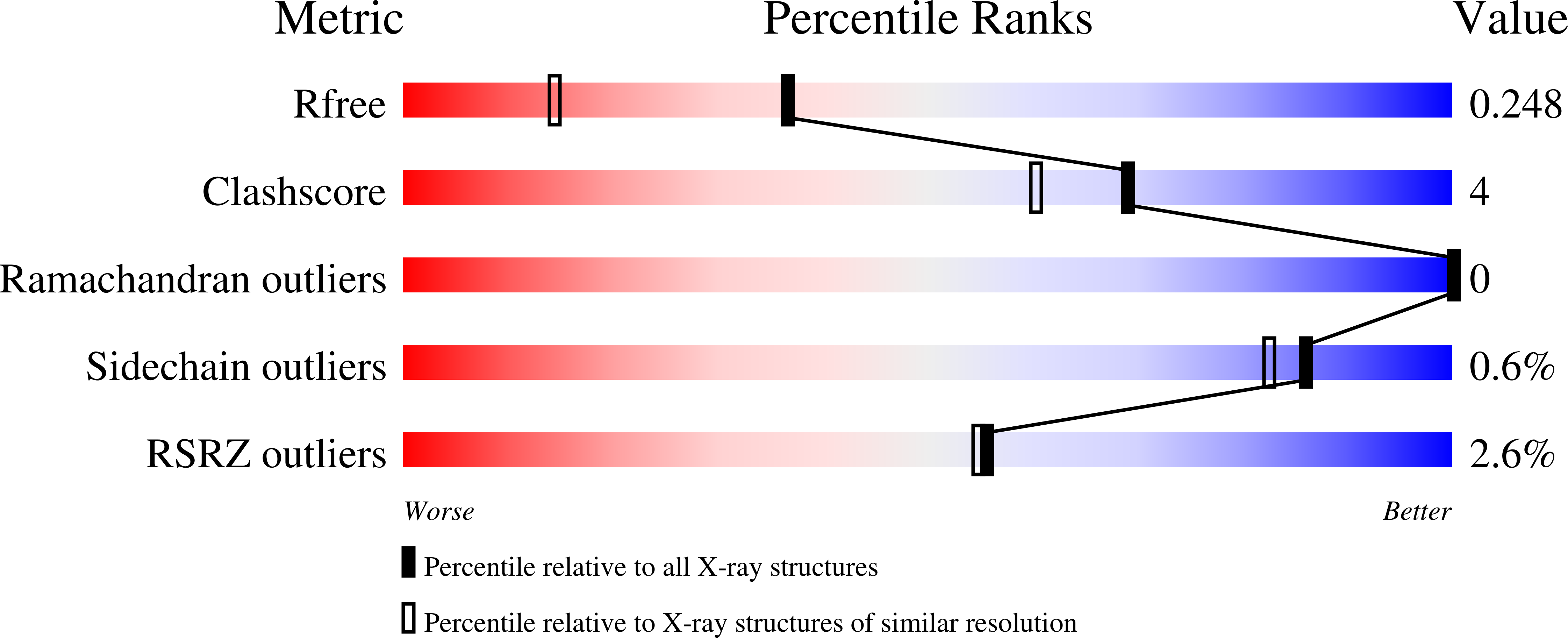
1.78 Å
R-Value Free:
0.24
R-Value Work:
0.21
R-Value Observed:
0.21
Space Group:
P 21 21 21
Macromolecular Entities
Structures with similar UniProt ID
Protein Blast
Polymer Type:polypeptide(L)
Molecule:SH3 and multiple ankyrin repeat domains protein 1
Gene (Uniprot):SHANK1
Chain IDs:A, B
Chain Length:112
Number of Molecules:2
Biological Source:Homo sapiens
Polymer Type:polypeptide(L)
Molecule:L6F mutant of C-terminal hexapeptide from Guanylate kinase-associated protein
Chain IDs:C, D
Chain Length:7
Number of Molecules:2
Biological Source:Homo sapiens
Primary Citation
Query-guided protein-protein interaction inhibitor discovery.
Chem Sci 12 4753 4762 (2021)
PMID: 34163731 DOI: 10.1039/d1sc00023c

Abstact

Protein-protein interactions (PPIs) are central to biological mechanisms, and can serve as compelling targets for drug discovery. Yet, the discovery of small molecule inhibitors of PPIs remains challenging given the large and typically shallow topography of the interacting protein surfaces. Here, we describe a general approach to the discovery of orthosteric PPI inhibitors that mimic specific secondary protein structures. Initially, hot residues at protein-protein interfaces are identified in silico or from experimental data, and incorporated into secondary structure-based queries. Virtual libraries of small molecules are then shape-matched against the queries, and promising ligands docked to target proteins. The approach is exemplified experimentally using two unrelated PPIs that are mediated by an α-helix (p53/hDM2) and a β-strand (GKAP/SHANK1-PDZ). In each case, selective PPI inhibitors are discovered with low μM activity as determined by a combination of fluorescence anisotropy and 1H-15N HSQC experiments. In addition, hit expansion yields a series of PPI inhibitors with defined structure-activity relationships. It is envisaged that the generality of the approach will enable discovery of inhibitors of a wide range of unrelated secondary structure-mediated PPIs.

Legend

Protein

Chemical

Disease

Primary Citation of related structures
Feedback Form
Name
Email
Institute
Feedback