6ZZN image
Deposition Date 2020-08-04
Release Date 2021-08-18
Last Version Date 2024-01-31
Entry Detail
PDB ID:
6ZZN
Keywords:
Title:
Crystal structure of the cubic catalytic core of the Mycobacterium tuberculosis branched-chain alphaketoacid acyltransferase component (E2b).
Biological Source:
Source Organism:
Method Details:
Experimental Method:
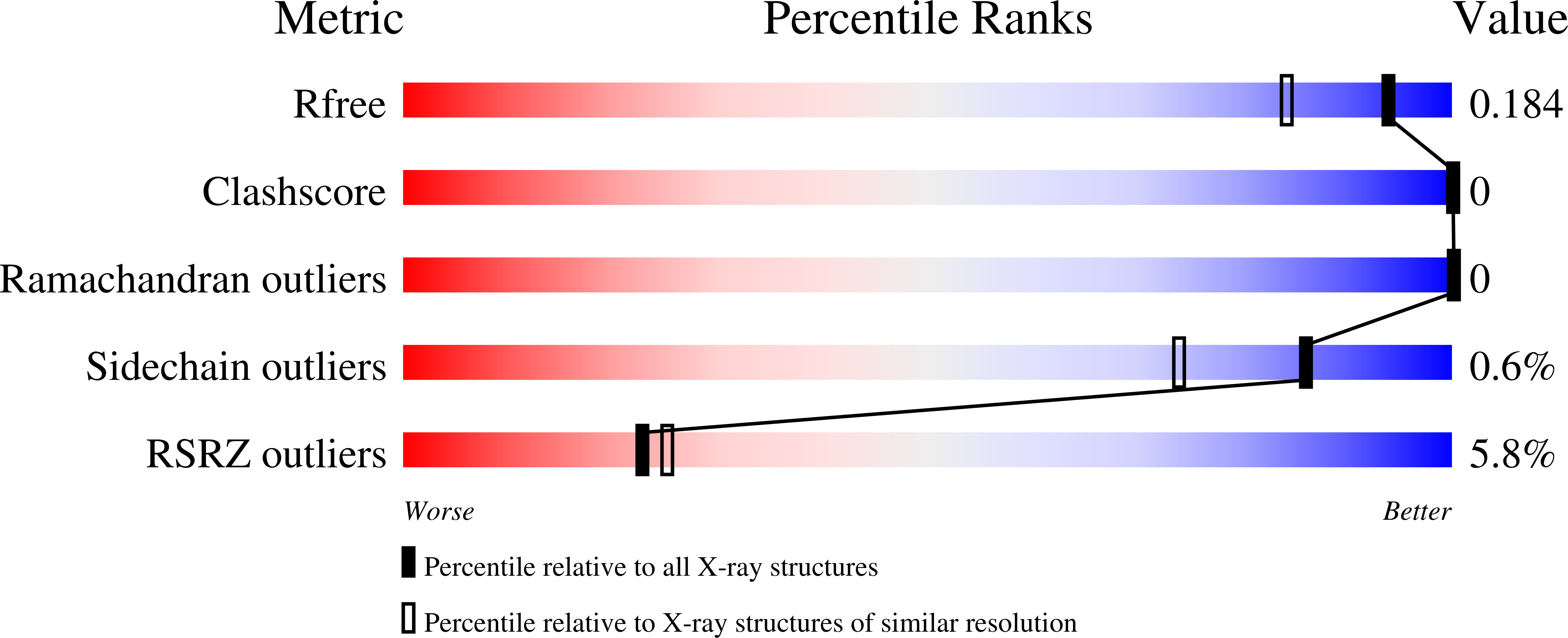
Resolution:
1.50 Å
R-Value Free:
0.19
R-Value Work:
0.18
R-Value Observed:
0.18
Space Group:
F 4 3 2
Macromolecular Entities
Structures with similar UniProt ID
Protein Blast
Polymer Type:polypeptide(L)
Molecule:Dihydrolipoyllysine-residue acyltransferase component of branched-chain alpha-ketoacid dehydrogenase complex
Gene (Uniprot):bkdC
Chain IDs:A
Chain Length:231
Number of Molecules:1
Biological Source:Mycobacterium tuberculosis H37Rv
Primary Citation
Actinobacteria challenge the paradigm: A unique protein architecture for a well-known, central metabolic complex.
Proc.Natl.Acad.Sci.USA 118 ? ? (2021)
PMID: 34819376 DOI: 10.1073/pnas.2112107118

Abstact

α-oxoacid dehydrogenase complexes are large, tripartite enzymatic machineries carrying out key reactions in central metabolism. Extremely conserved across the tree of life, they have been, so far, all considered to be structured around a high-molecular weight hollow core, consisting of up to 60 subunits of the acyltransferase component. We provide here evidence that Actinobacteria break the rule by possessing an acetyltranferase component reduced to its minimally active, trimeric unit, characterized by a unique C-terminal helix bearing an actinobacterial specific insertion that precludes larger protein oligomerization. This particular feature, together with the presence of an odhA gene coding for both the decarboxylase and the acyltransferase domains on the same polypetide, is spread over Actinobacteria and reflects the association of PDH and ODH into a single physical complex. Considering the central role of the pyruvate and 2-oxoglutarate nodes in central metabolism, our findings pave the way to both therapeutic and metabolic engineering applications.

Legend

Protein

Chemical

Disease

Primary Citation of related structures
Feedback Form
Name
Email
Institute
Feedback