6ZYF image
Deposition Date 2020-07-31
Release Date 2021-03-10
Last Version Date 2024-11-20
Entry Detail
PDB ID:
6ZYF
Title:
Notum_Ghrelin complex
Biological Source:
Source Organism:
Homo sapiens (Taxon ID: 9606)
Host Organism:
Method Details:
Experimental Method:
Resolution:
2.19 Å
R-Value Free:
0.25
R-Value Work:
0.23
R-Value Observed:
0.23
Space Group:
P 21 21 2
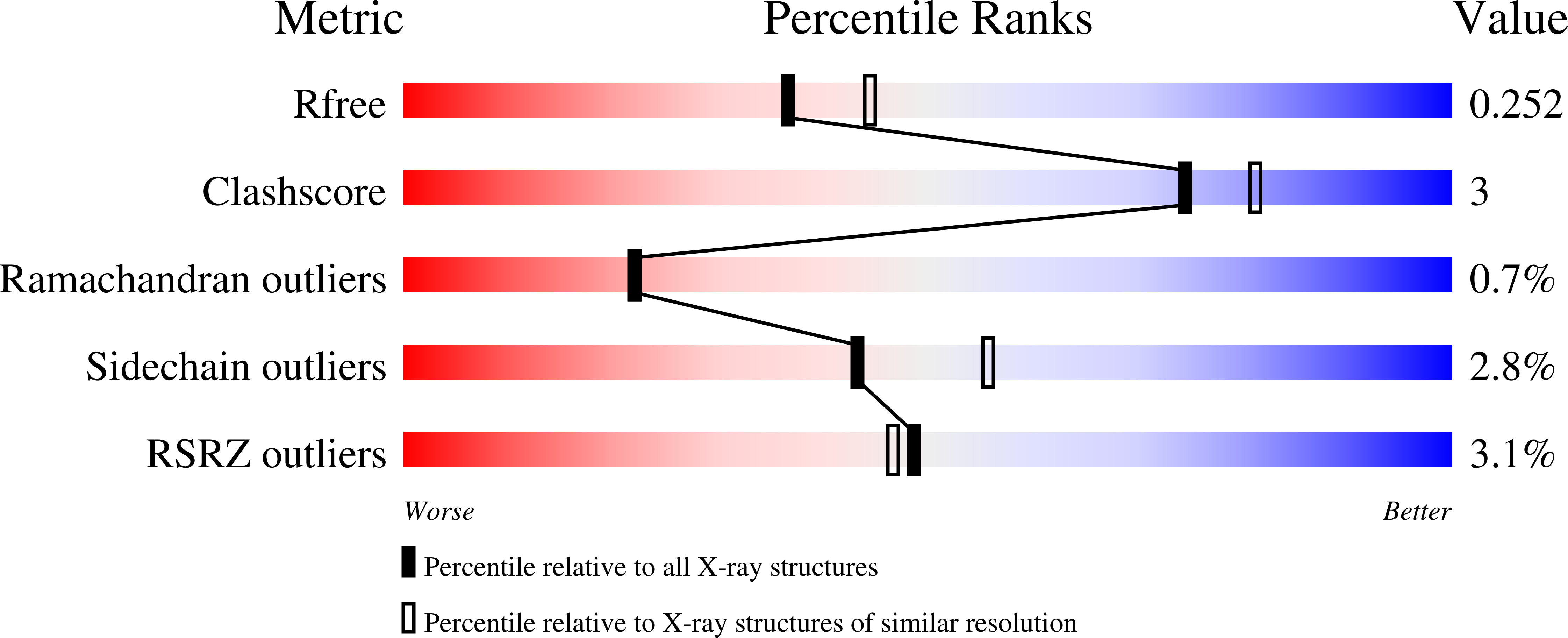
Macromolecular Entities
Structures with similar UniProt ID
Protein Blast
Polymer Type:polypeptide(L)
Molecule:Palmitoleoyl-protein carboxylesterase NOTUM
Gene (Uniprot):NOTUM
Chain IDs:A, B
Chain Length:383
Number of Molecules:2
Biological Source:Homo sapiens
Primary Citation
Notum deacylates octanoylated ghrelin.
Mol Metab 49 101201 101201 (2021)
PMID: 33647468 DOI: 10.1016/j.molmet.2021.101201

Abstact

OBJECTIVES The only proteins known to be modified by O-linked lipidation are Wnts and ghrelin, and enzymatic removal of this post-translational modification inhibits ligand activity. Indeed, the Wnt-deacylase activity of Notum is the basis of its ability to act as a feedback inhibitor of Wnt signalling. Whether Notum also deacylates ghrelin has not been determined. METHODS We used mass spectrometry to assay ghrelin deacylation by Notum and co-crystallisation to reveal enzyme-substrate interactions at the atomic level. CRISPR/Cas technology was used to tag endogenous Notum and assess its localisation in mice while liver-specific Notum knock-out mice allowed us to investigate the physiological role of Notum in modulating the level of ghrelin deacylation. RESULTS Mass spectrometry detected the removal of octanoyl from ghrelin by purified active Notum but not by an inactive mutant. The 2.2 Å resolution crystal structure of the Notum-ghrelin complex showed that the octanoyl lipid was accommodated in the hydrophobic pocket of the Notum. The knock-in allele expressing HA-tagged Notum revealed that Notum was produced in the liver and present in the bloodstream, albeit at a low level. Liver-specific inactivation of Notum in animals fed a high-fat diet led to a small but significant increase in acylated ghrelin in the circulation, while no such increase was seen in wild-type animals on the same diet. CONCLUSIONS Overall, our data demonstrate that Notum can act as a ghrelin deacylase, and that this may be physiologically relevant under high-fat diet conditions. Our study therefore adds Notum to the list of enzymes, including butyrylcholinesterase and other carboxylesterases, that modulate the acylation state of ghrelin. The contribution of multiple enzymes could help tune the activity of this important hormone to a wide range of physiological conditions.

Legend

Protein

Chemical

Disease

Primary Citation of related structures
Feedback Form
Name
Email
Institute
Feedback