6ZJC image
Deposition Date 2020-06-28
Release Date 2020-11-18
Last Version Date 2024-01-31
Entry Detail
PDB ID:
6ZJC
Keywords:
Title:
Crystal structure of Equus ferus caballus glutathione transferase A3-3 in complex with glutathione and triethyltin
Biological Source:
Source Organism(s):
Equus caballus (Taxon ID: 9796)
Expression System(s):
Method Details:
Experimental Method:
Resolution:
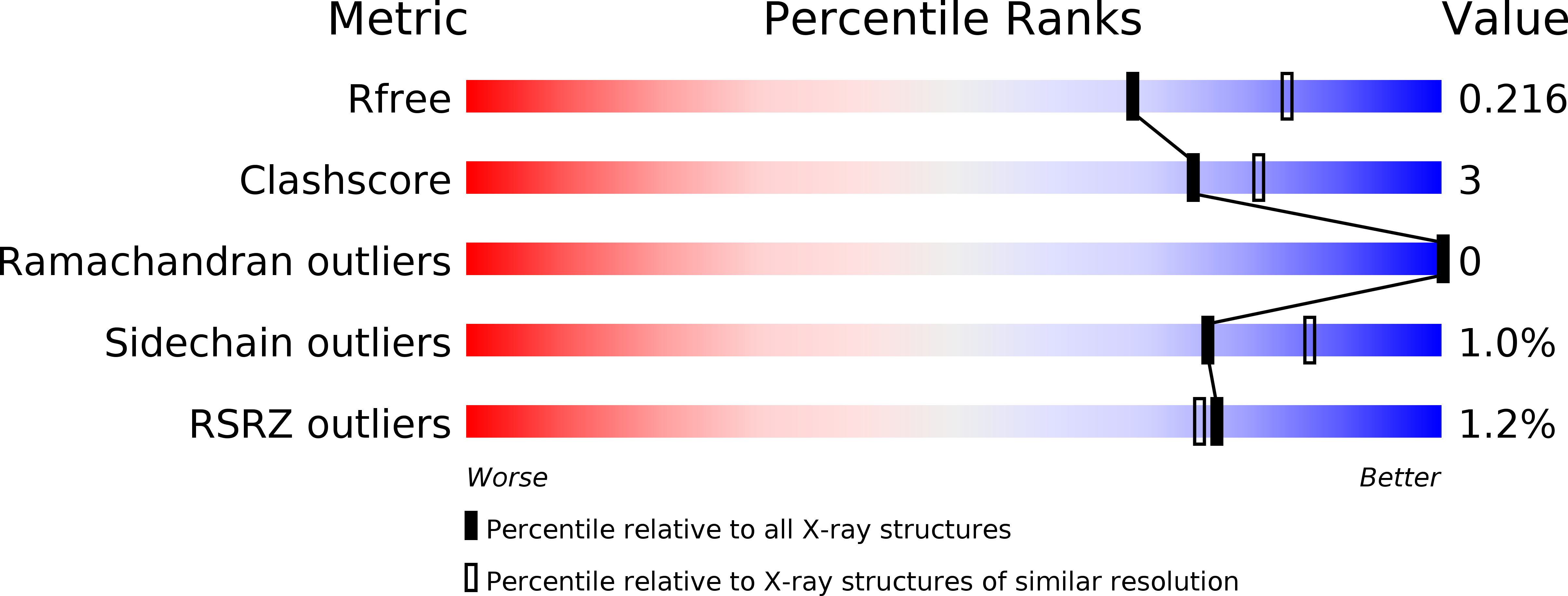
2.20 Å
R-Value Free:
0.20
R-Value Work:
0.17
R-Value Observed:
0.17
Space Group:
P 1
Macromolecular Entities
Structures with similar UniProt ID
Protein Blast
Polymer Type:polypeptide(L)
Molecule:Glutathione S-transferase
Gene (Uniprot):GSTA3
Chain IDs:A (auth: B), B (auth: A), C (auth: D), D (auth: C)
Chain Length:222
Number of Molecules:4
Biological Source:Equus caballus
Primary Citation
Structural and functional analysis of the inhibition of equine glutathione transferase A3-3 by organotin endocrine disrupting pollutants.
Environ Pollut 268 115960 115960 (2021)
PMID: 33162212 DOI: 10.1016/j.envpol.2020.115960

Abstact

Organotin compounds are highly toxic environmental pollutants with neurotoxic and endocrine-disrupting effects. They are potent inhibitors of glutathione transferases (GSTs), thus impeding their detoxication and antioxidant functions. Several GSTs, including equine GST A3-3 (EcaGST A3-3), exhibit steroid double-bond isomerase activity and are involved in the biosynthesis of testosterone and progesterone. We have performed enzyme kinetics analyses of the inhibition of EcaGST A3-3 by organotin compounds. We have also solved crystal structures of EcaGST A3-3 in complexes with glutathione, and with glutathione together with covalently bound triethyltin. Our structural data indicate that the tin atom forms strong bonds with a covalent character not only with the glutathione, but also with a tyrosyl residue of the enzyme itself, thereby preventing the release of the glutathione-organotin adduct and completely blocking the enzyme function. This work presents a structural basis for the general mechanism of GST inhibition by organotin compounds and contributes to the understanding of their neurotoxic and endocrine disrupting effects.

Legend

Protein

Chemical

Disease

Primary Citation of related structures
Feedback Form
Name
Email
Institute
Feedback