6YXM image
Deposition Date 2020-05-03
Release Date 2021-05-12
Last Version Date 2024-10-16
Entry Detail
PDB ID:
6YXM
Keywords:
Title:
Crystal structure of ACPA 1F2 in complex with CII-C-39-CIT
Biological Source:
Source Organism:
Homo sapiens (Taxon ID: 9606)
Host Organism:
Method Details:
Experimental Method:
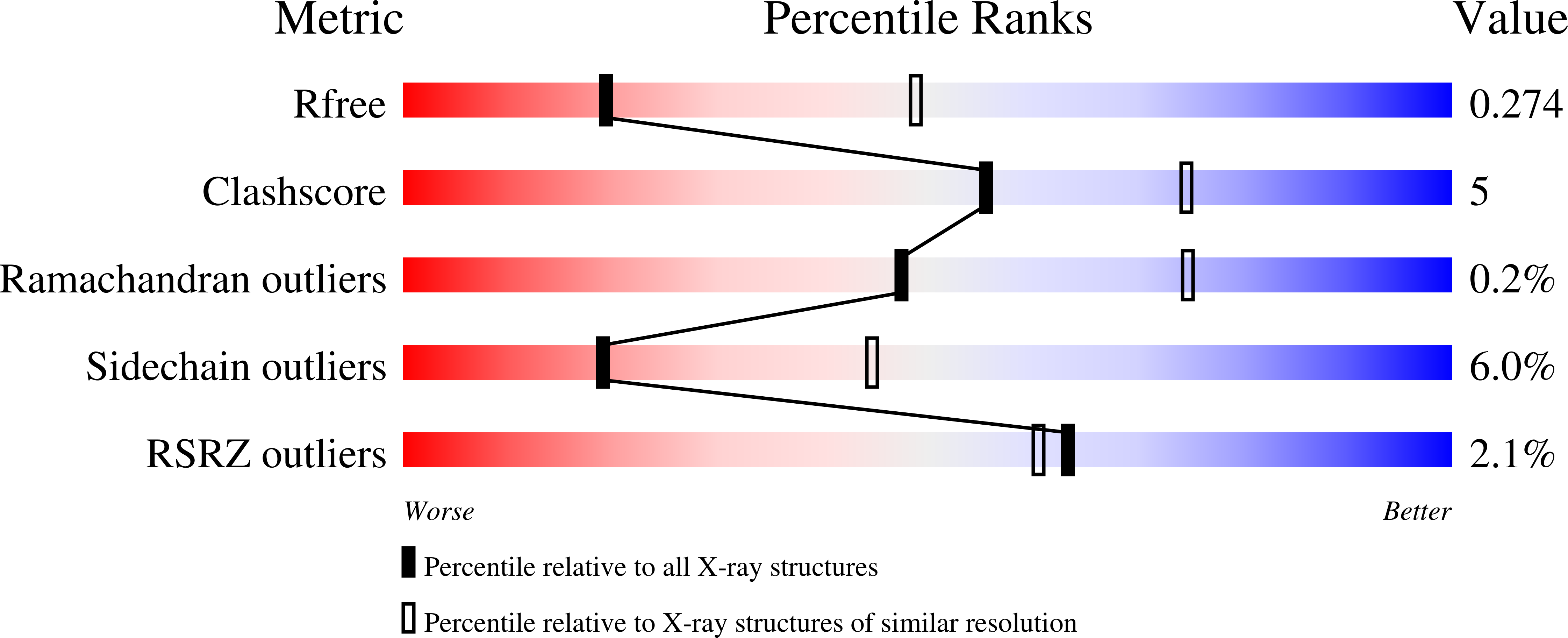
Resolution:
2.85 Å
R-Value Free:
0.27
R-Value Work:
0.20
Space Group:
P 21 21 21
Macromolecular Entities
Polymer Type:polypeptide(L)
Molecule:CII-C-39-CIT
Chain IDs:A (auth: BBB)
Chain Length:9
Number of Molecules:1
Biological Source:Homo sapiens
Polymer Type:polypeptide(L)
Molecule:ACPA 1F2 Fab fragment - heavy chain
Chain IDs:B (auth: HHH)
Chain Length:222
Number of Molecules:1
Biological Source:Homo sapiens
Polymer Type:polypeptide(L)
Molecule:ACPA 1F2 Fab fragment - light chain
Chain IDs:C (auth: LLL)
Chain Length:212
Number of Molecules:1
Biological Source:Homo sapiens
Ligand Molecules
Primary Citation
Surface Ig variable domain glycosylation affects autoantigen binding and acts as threshold for human autoreactive B cell activation.
Sci Adv 8 eabm1759 eabm1759 (2022)
PMID: 35138894 DOI: 10.1126/sciadv.abm1759

Abstact

The hallmark autoantibodies in rheumatoid arthritis are characterized by variable domain glycans (VDGs). Their abundant occurrence results from the selective introduction of N-linked glycosylation sites during somatic hypermutation, and their presence is predictive for disease development. However, the functional consequences of VDGs on autoreactive B cells remain elusive. Combining crystallography, glycobiology, and functional B cell assays allowed us to dissect key characteristics of VDGs on human B cell biology. Crystal structures showed that VDGs are positioned in the vicinity of the antigen-binding pocket, and dynamic modeling combined with binding assays elucidated their impact on binding. We found that VDG-expressing B cell receptors stay longer on the B cell surface and that VDGs enhance B cell activation. These results provide a rationale on how the acquisition of VDGs might contribute to the breach of tolerance of autoreactive B cells in a major human autoimmune disease.

Legend

Protein

Chemical

Disease

Primary Citation of related structures
Feedback Form
Name
Email
Institute
Feedback