6YM4 image
Deposition Date 2020-04-07
Release Date 2021-04-14
Last Version Date 2024-01-24
Entry Detail
PDB ID:
6YM4
Keywords:
Title:
Crystal structure of BAY-297 with PIP4K2A
Biological Source:
Source Organism:
Homo sapiens (Taxon ID: 9606)
Host Organism:
Method Details:
Experimental Method:
Resolution:
1.95 Å
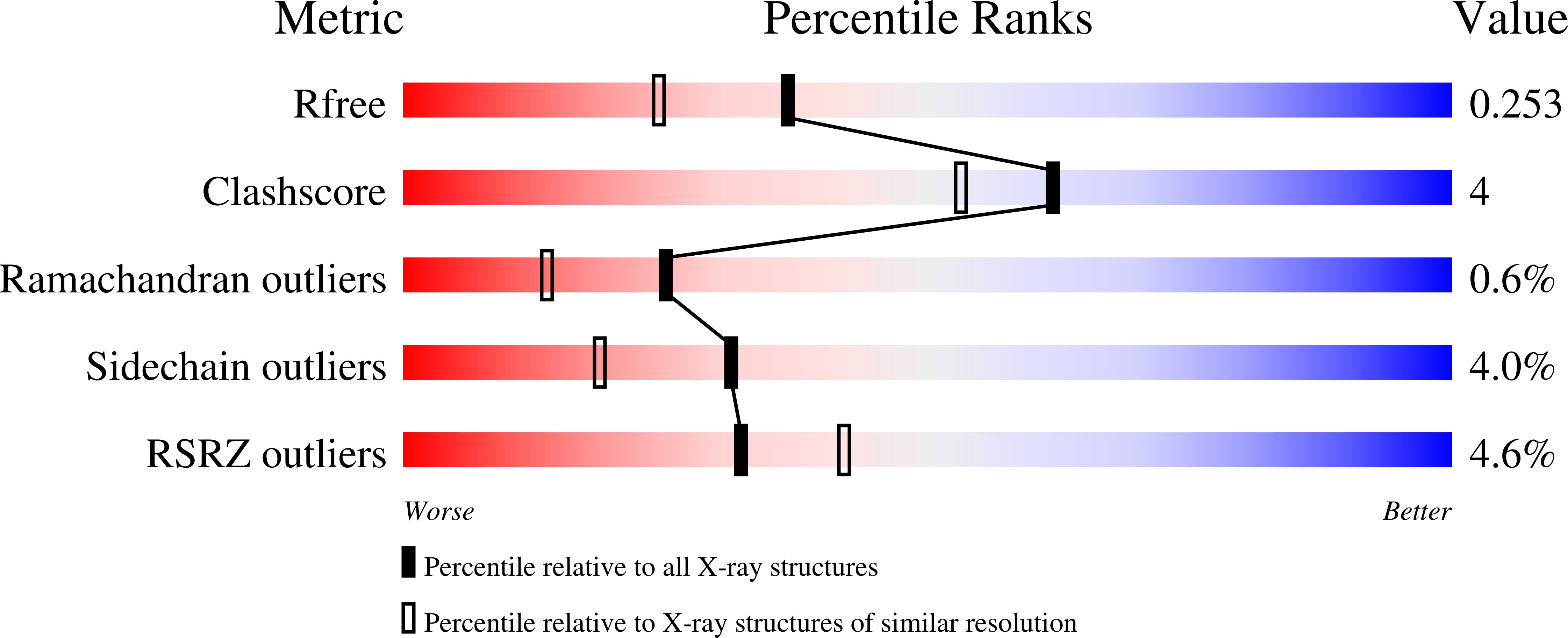
R-Value Free:
0.24
R-Value Work:
0.19
R-Value Observed:
0.20
Space Group:
P 1 21 1
Macromolecular Entities
Structures with similar UniProt ID
Protein Blast
Polymer Type:polypeptide(L)
Molecule:Phosphatidylinositol 5-phosphate 4-kinase type-2 alpha
Gene (Uniprot):PIP4K2A
Chain IDs:A, B
Chain Length:394
Number of Molecules:2
Biological Source:Homo sapiens
Modified Residue
Compound ID Chain ID Parent Comp ID Details 2D Image
PHD A ASP modified residue
Primary Citation
Discovery and Characterization of the Potent and Highly Selective 1,7-Naphthyridine-Based Inhibitors BAY-091 and BAY-297 of the Kinase PIP4K2A.
J.Med.Chem. 64 15883 15911 (2021)
PMID: 34699202 DOI: 10.1021/acs.jmedchem.1c01245

Abstact

PIP4K2A is an insufficiently studied type II lipid kinase that catalyzes the conversion of phosphatidylinositol-5-phosphate (PI5P) into phosphatidylinositol 4,5-bisphosphate (PI4,5P2). The involvement of PIP4K2A/B in cancer has been suggested, particularly in the context of p53 mutant/null tumors. PIP4K2A/B depletion has been shown to induce tumor growth inhibition, possibly due to hyperactivation of AKT and reactive oxygen species-mediated apoptosis. Herein, we report the identification of the novel potent and highly selective inhibitors BAY-091 and BAY-297 of the kinase PIP4K2A by high-throughput screening and subsequent structure-based optimization. Cellular target engagement of BAY-091 and BAY-297 was demonstrated using cellular thermal shift assay technology. However, inhibition of PIP4K2A with BAY-091 or BAY-297 did not translate into the hypothesized mode of action and antiproliferative activity in p53-deficient tumor cells. Therefore, BAY-091 and BAY-297 serve as valuable chemical probes to study PIP4K2A signaling and its involvement in pathophysiological conditions such as cancer.

Legend

Protein

Chemical

Disease

Primary Citation of related structures
Feedback Form
Name
Email
Institute
Feedback