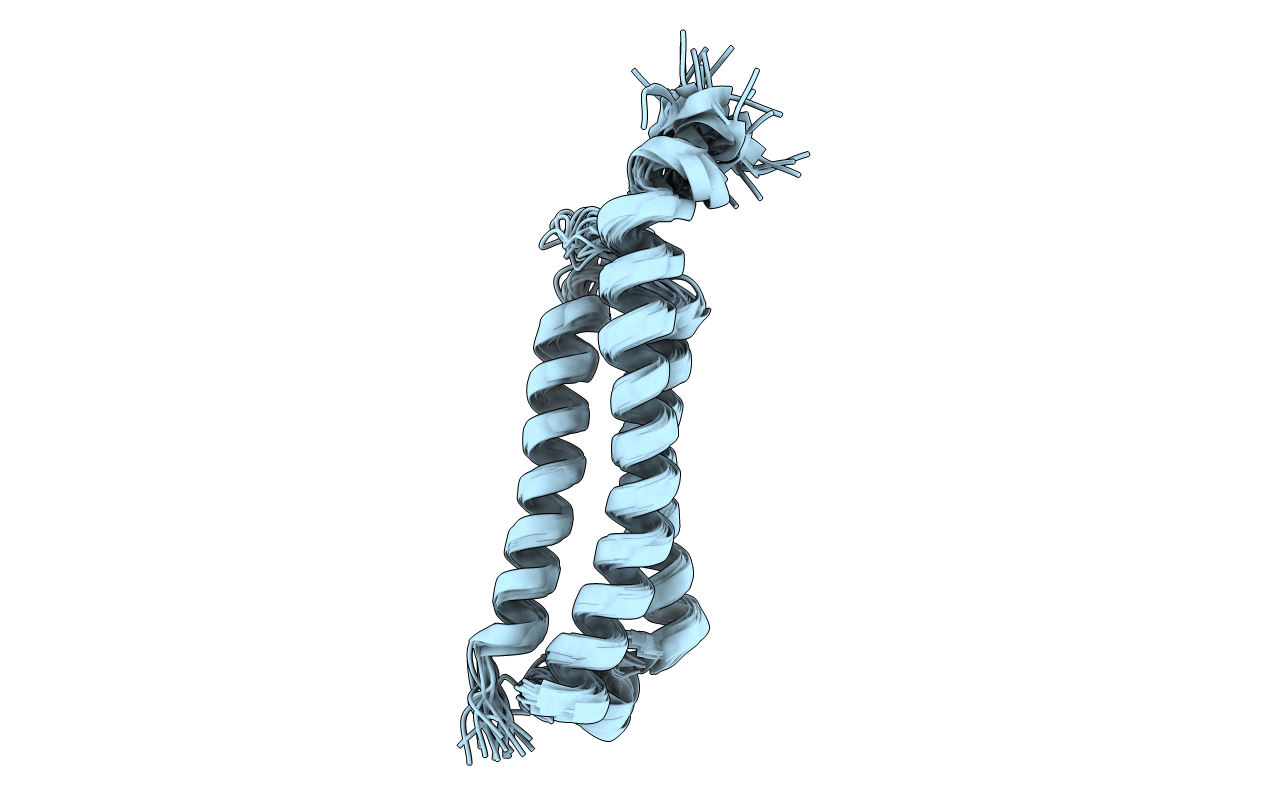
6YEL image
Deposition Date 2020-03-25
Release Date 2020-09-02
Last Version Date 2024-06-19
Entry Detail
PDB ID:
6YEL
Title:
Stromal interaction molecule 1 coiled-coil 1 fragment
Biological Source:
Source Organism:
Homo sapiens (Taxon ID: 9606)
Host Organism:
Method Details:
Experimental Method:
Conformers Calculated:
400
Conformers Submitted:
20
Selection Criteria:
structures with the lowest energy
Macromolecular Entities
Structures with similar UniProt ID
Protein Blast
Polymer Type:polypeptide(L)
Molecule:Stromal interaction molecule 1
Gene (Uniprot):STIM1
Chain IDs:A
Chain Length:115
Number of Molecules:1
Biological Source:Homo sapiens
Ligand Molecules
Primary Citation
Interhelical interactions within the STIM1 CC1 domain modulate CRAC channel activation.
Nat.Chem.Biol. 17 196 204 (2021)
PMID: 33106661 DOI: 10.1038/s41589-020-00672-8

Abstact

The calcium release activated calcium channel is activated by the endoplasmic reticulum-resident calcium sensor protein STIM1. On activation, STIM1 C terminus changes from an inactive, tight to an active, extended conformation. A coiled-coil clamp involving the CC1 and CC3 domains is essential in controlling STIM1 activation, with CC1 as the key entity. The nuclear magnetic resonance-derived solution structure of the CC1 domain represents a three-helix bundle stabilized by interhelical contacts, which are absent in the Stormorken disease-related STIM1 R304W mutant. Two interhelical sites between the CC1α1 and CC1α2 helices are key in controlling STIM1 activation, affecting the balance between tight and extended conformations. Nuclear magnetic resonance-directed mutations within these interhelical interactions restore the physiological, store-dependent activation behavior of the gain-of-function STIM1 R304W mutant. This study reveals the functional impact of interhelical interactions within the CC1 domain for modifying the CC1-CC3 clamp strength to control the activation of STIM1.

Legend

Protein

Chemical

Disease

Primary Citation of related structures
Feedback Form
Name
Email
Institute
Feedback