6YCQ image
Deposition Date 2020-03-18
Release Date 2020-09-09
Last Version Date 2024-01-24
Entry Detail
PDB ID:
6YCQ
Keywords:
Title:
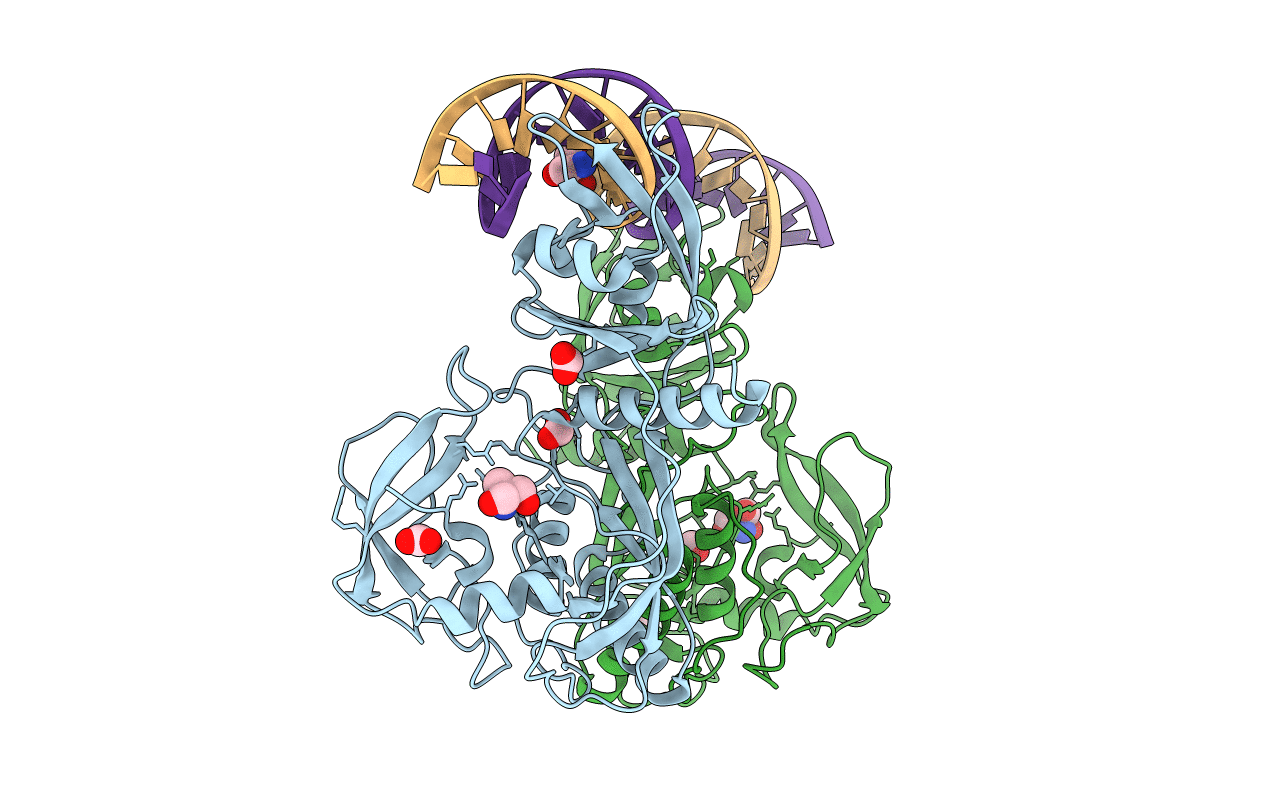
Crystal structure of the DNA binding domain of Arabidopsis thaliana Auxin Response Factor 1 (AtARF1) in complex with High Affinity DNA
Biological Source:
Source Organism:
Host Organism:
Method Details:
Experimental Method:
Resolution:
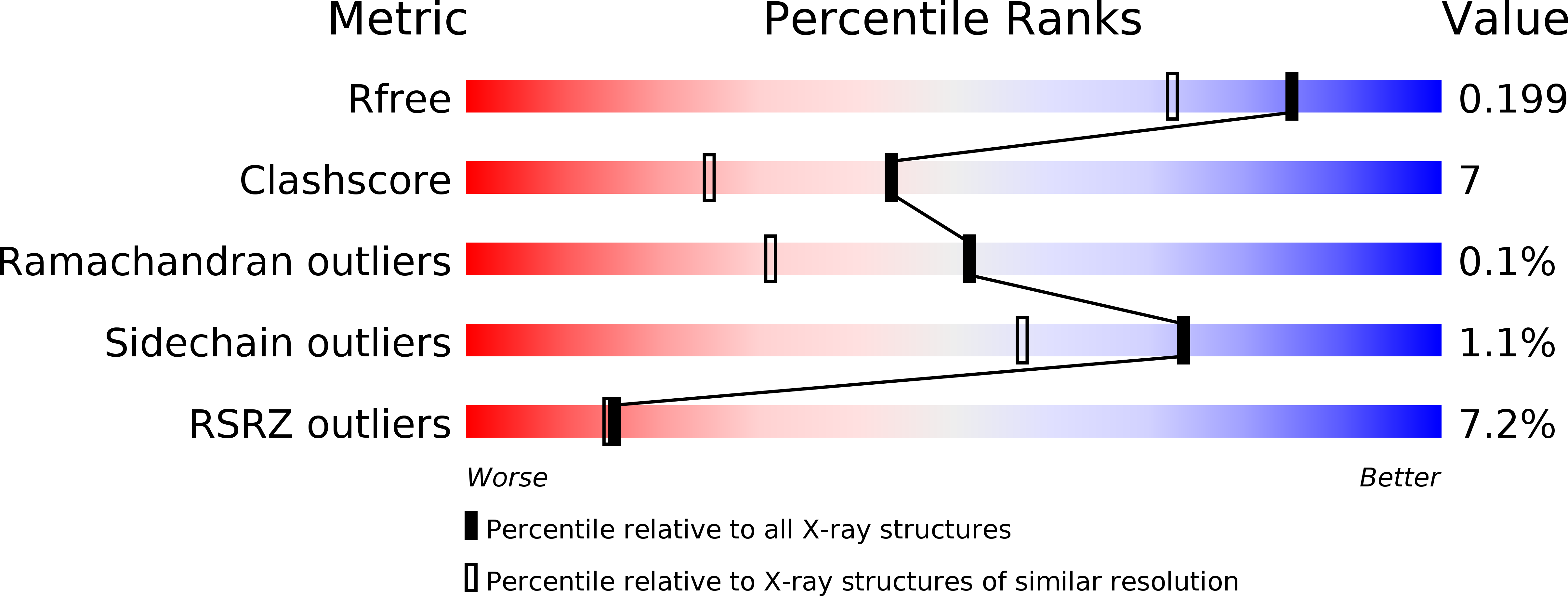
1.65 Å
R-Value Free:
0.19
R-Value Work:
0.17
R-Value Observed:
0.17
Space Group:
P 1 21 1
Macromolecular Entities
Structures with similar UniProt ID
Protein Blast
Polymer Type:polypeptide(L)
Molecule:Auxin response factor 1
Gene (Uniprot):ARF1
Chain IDs:A, B
Chain Length:362
Number of Molecules:2
Biological Source:Arabidopsis thaliana
Polymer Type:polydeoxyribonucleotide
Molecule:21-7A
Chain IDs:C
Chain Length:21
Number of Molecules:1
Biological Source:Arabidopsis thaliana
Polymer Type:polydeoxyribonucleotide
Molecule:21-7B
Chain IDs:D
Chain Length:21
Number of Molecules:1
Biological Source:Arabidopsis thaliana
Primary Citation
Architecture of DNA elements mediating ARF transcription factor binding and auxin-responsive gene expression in Arabidopsis .
Proc.Natl.Acad.Sci.USA 117 24557 24566 (2020)
PMID: 32929017 DOI: 10.1073/pnas.2009554117

Abstact

The hormone auxin controls many aspects of the plant life cycle by regulating the expression of thousands of genes. The transcriptional output of the nuclear auxin signaling pathway is determined by the activity of AUXIN RESPONSE transcription FACTORs (ARFs), through their binding to cis-regulatory elements in auxin-responsive genes. Crystal structures, in vitro, and heterologous studies have fueled a model in which ARF dimers bind with high affinity to distinctly spaced repeats of canonical AuxRE motifs. However, the relevance of this "caliper" model, and the mechanisms underlying the binding affinities in vivo, have remained elusive. Here we biochemically and functionally interrogate modes of ARF-DNA interaction. We show that a single additional hydrogen bond in Arabidopsis ARF1 confers high-affinity binding to individual DNA sites. We demonstrate the importance of AuxRE cooperativity within repeats in the Arabidopsis TMO5 and IAA11 promoters in vivo. Meta-analysis of transcriptomes further reveals strong genome-wide association of auxin response with both inverted (IR) and direct (DR) AuxRE repeats, which we experimentally validated. The association of these elements with auxin-induced up-regulation (DR and IR) or down-regulation (IR) was correlated with differential binding affinities of A-class and B-class ARFs, respectively, suggesting a mechanistic basis for the distinct activity of these repeats. Our results support the relevance of high-affinity binding of ARF transcription factors to uniquely spaced DNA elements in vivo, and suggest that differential binding affinities of ARF subfamilies underlie diversity in cis-element function.

Legend

Protein

Chemical

Disease

Primary Citation of related structures
Feedback Form
Name
Email
Institute
Feedback