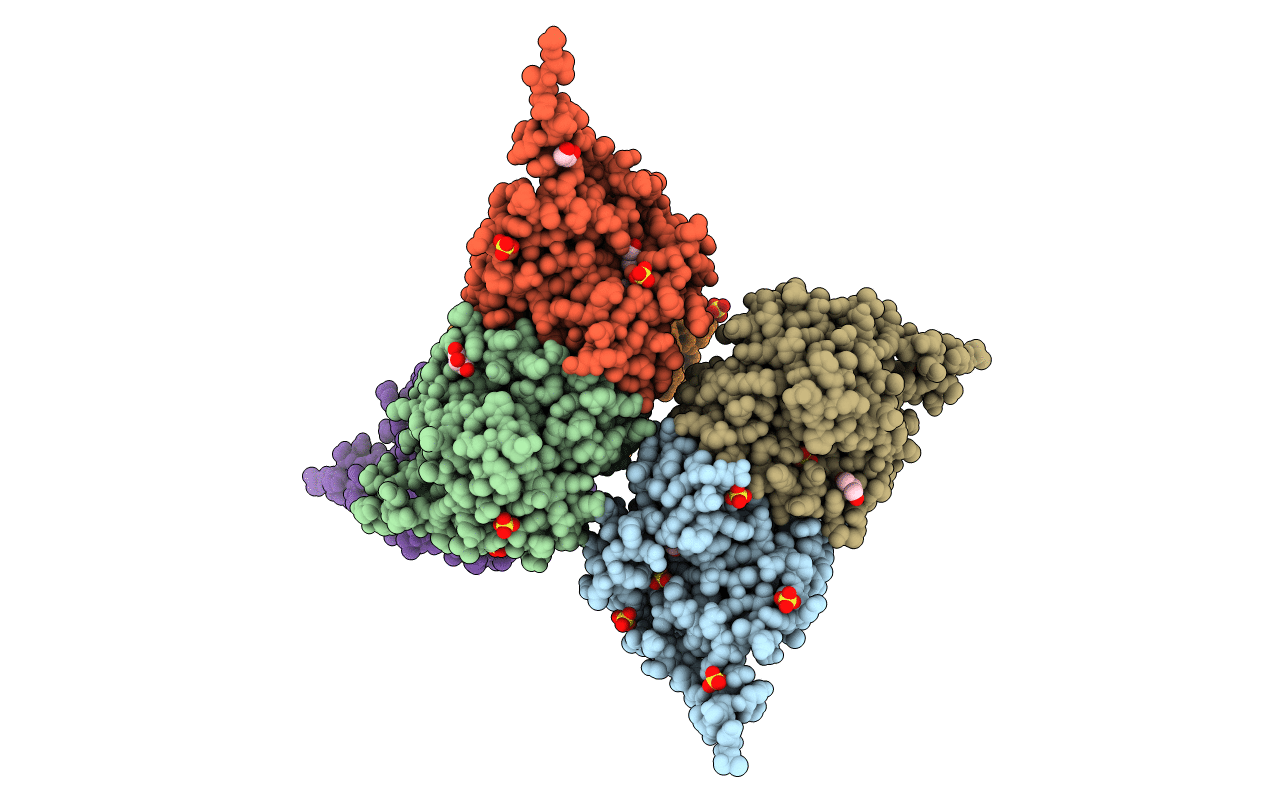
6YBH image
Deposition Date 2020-03-17
Release Date 2021-03-31
Last Version Date 2024-01-31
Entry Detail
PDB ID:
6YBH
Keywords:
Title:
Deoxyribonucleoside Kinase
Biological Source:
Source Organism:
Host Organism:
Method Details:
Experimental Method:
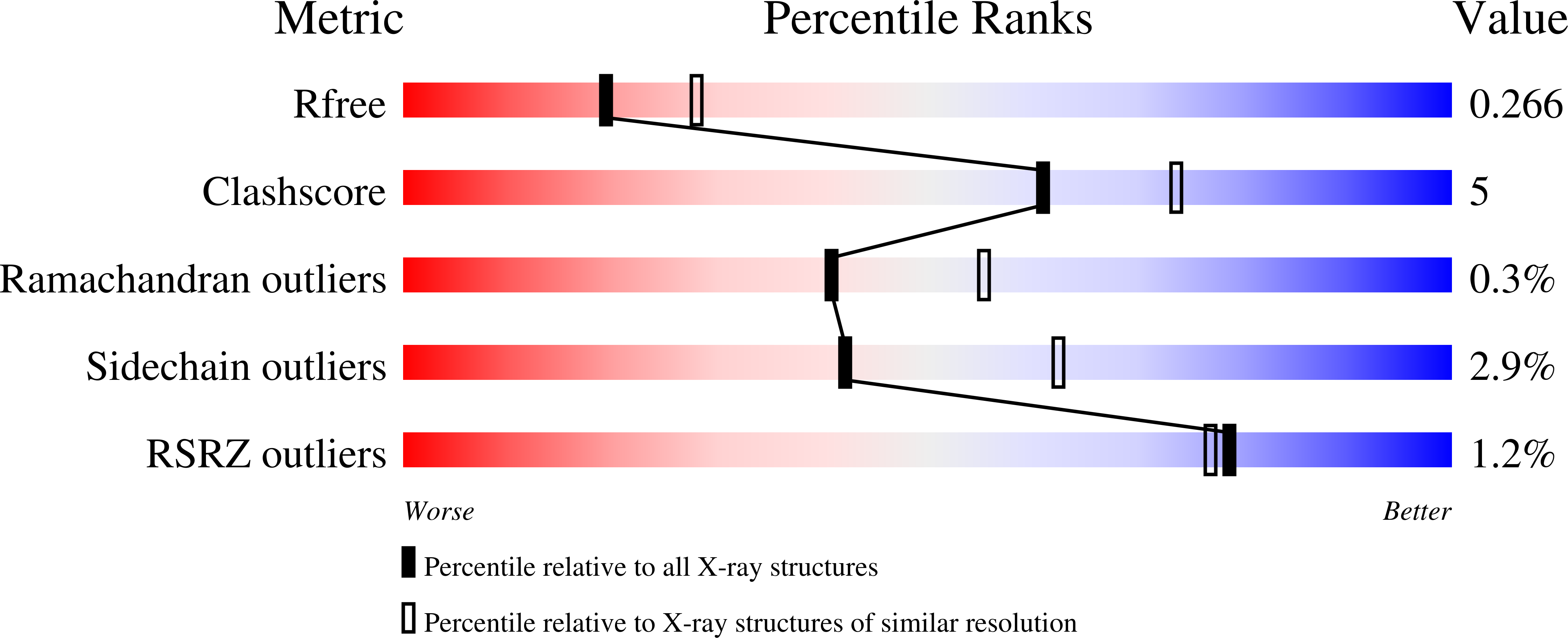
Resolution:
2.40 Å
R-Value Free:
0.26
R-Value Work:
0.20
R-Value Observed:
0.20
Space Group:
H 3
Macromolecular Entities
Structures with similar UniProt ID
Protein Blast
Polymer Type:polypeptide(L)
Molecule:Deoxynucleoside kinase
Gene (Uniprot):dnk
Chain IDs:A, B, C, D, E, F
Chain Length:224
Number of Molecules:6
Biological Source:Drosophila melanogaster
Primary Citation
Computationally designed dual-color MRI reporters for noninvasive imaging of transgene expression.
Nat.Biotechnol. 40 1143 1149 (2022)
PMID: 35102291 DOI: 10.1038/s41587-021-01162-5

Abstact

Imaging of gene-expression patterns in live animals is difficult to achieve with fluorescent proteins because tissues are opaque to visible light. Imaging of transgene expression with magnetic resonance imaging (MRI), which penetrates to deep tissues, has been limited by single reporter visualization capabilities. Moreover, the low-throughput capacity of MRI limits large-scale mutagenesis strategies to improve existing reporters. Here we develop an MRI system, called GeneREFORM, comprising orthogonal reporters for two-color imaging of transgene expression in deep tissues. Starting from two promiscuous deoxyribonucleoside kinases, we computationally designed highly active, orthogonal enzymes ('reporter genes') that specifically phosphorylate two MRI-detectable synthetic deoxyribonucleosides ('reporter probes'). Systemically administered reporter probes exclusively accumulate in cells expressing the designed reporter genes, and their distribution is displayed as pseudo-colored MRI maps based on dynamic proton exchange for noninvasive visualization of transgene expression. We envision that future extensions of GeneREFORM will pave the way to multiplexed deep-tissue mapping of gene expression in live animals.

Legend

Protein

Chemical

Disease

Primary Citation of related structures
Feedback Form
Name
Email
Institute
Feedback