6Y4B image
Deposition Date 2020-02-20
Release Date 2020-12-30
Last Version Date 2024-01-24
Entry Detail
PDB ID:
6Y4B
Title:
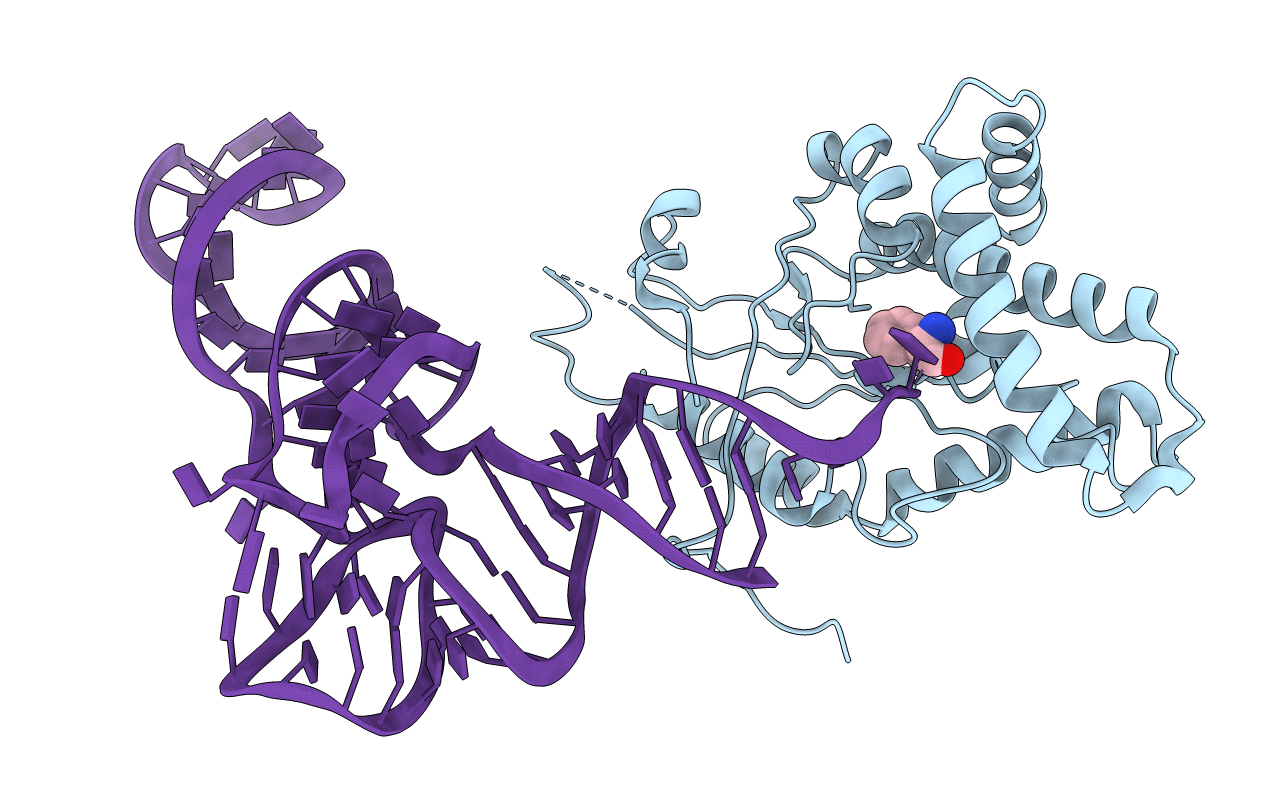
Structure of cyclodipeptide synthase from Candidatus Glomeribacter gigasporarum bound to Phe-tRNAPhe
Biological Source:
Host Organism:
Method Details:
Experimental Method:
Resolution:
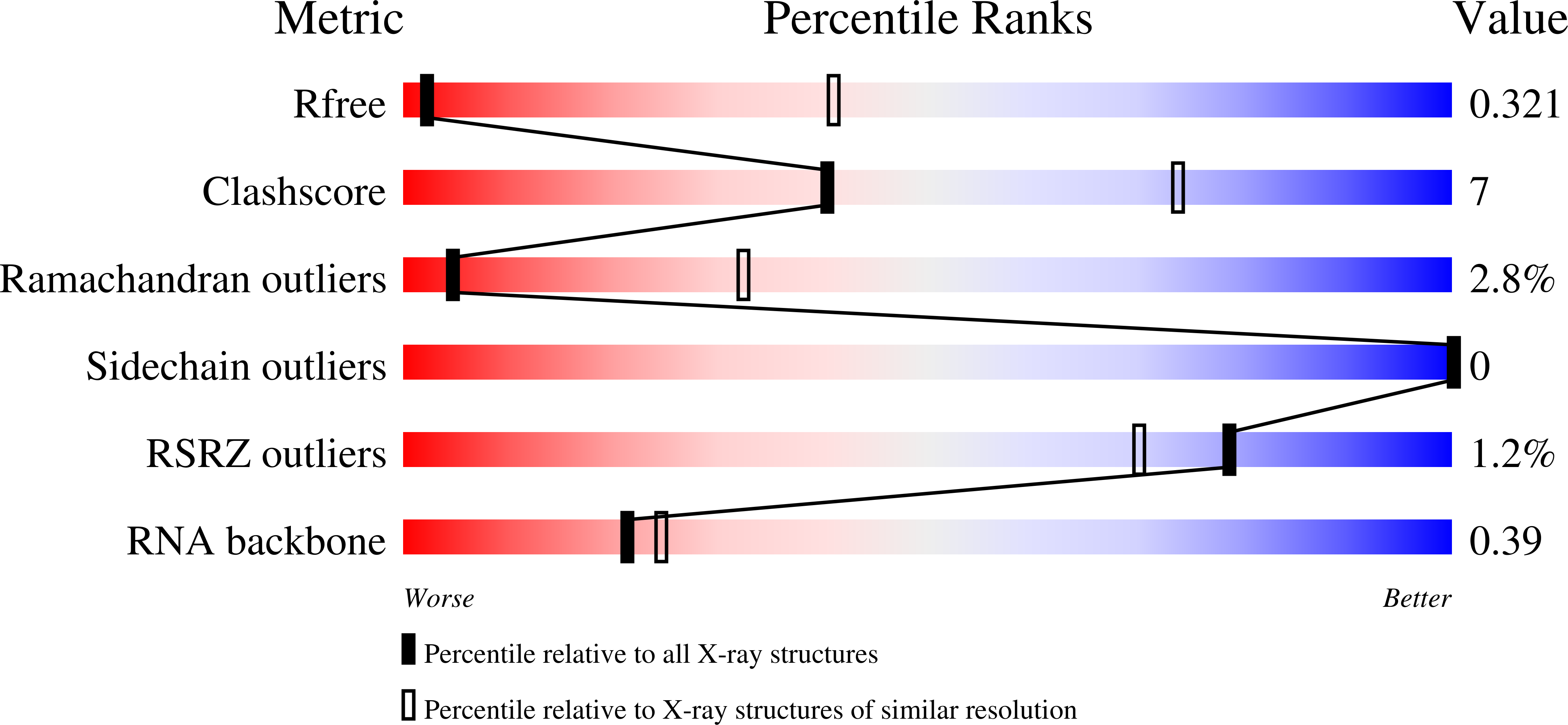
5.00 Å
R-Value Free:
0.31
R-Value Work:
0.30
R-Value Observed:
0.30
Space Group:
P 61 2 2
Macromolecular Entities
Structures with similar UniProt ID
Protein Blast
Polymer Type:polypeptide(L)
Molecule:Cyclodipeptide synthase
Gene (Uniprot):CAGGBEG34_30028
Chain IDs:B (auth: A)
Chain Length:297
Number of Molecules:1
Biological Source:Candidatus Glomeribacter gigasporarum BEG34
Polymer Type:polyribonucleotide
Molecule:RNA (77-MER)
Chain IDs:A (auth: F)
Chain Length:76
Number of Molecules:1
Biological Source:Escherichia coli
Ligand Molecules
Primary Citation
Structural basis of the interaction between cyclodipeptide synthases and aminoacylated tRNA substrates.
Rna 26 1589 1602 (2020)
PMID: 32680846 DOI: 10.1261/rna.075184.120

Abstact

Cyclodipeptide synthases (CDPSs) catalyze the synthesis of various cyclodipeptides by using two aminoacyl-tRNA (aa-tRNA) substrates in a sequential mechanism. Here, we studied binding of phenylalanyl-tRNAPhe to the CDPS from Candidatus Glomeribacter gigasporarum (Cglo-CDPS) by gel filtration and electrophoretic mobility shift assay. We determined the crystal structure of the Cglo-CDPS:Phe-tRNAPhe complex to 5 Å resolution and further studied it in solution using small-angle X-ray scattering (SAXS). The data show that the major groove of the acceptor stem of the aa-tRNA interacts with the enzyme through the basic β2 and β7 strands of CDPSs belonging to the XYP subfamily. A bending of the CCA extremity enables the amino acid moiety to be positioned in the P1 pocket while the terminal A76 adenosine occupies the P2 pocket. Such a positioning indicates that the present structure illustrates the binding of the first aa-tRNA. In cells, CDPSs and the elongation factor EF-Tu share aminoacylated tRNAs as substrates. The present study shows that CDPSs and EF-Tu interact with opposite sides of tRNA. This may explain how CDPSs hijack aa-tRNAs from canonical ribosomal protein synthesis.

Legend

Protein

Chemical

Disease

Primary Citation of related structures
Feedback Form
Name
Email
Institute
Feedback