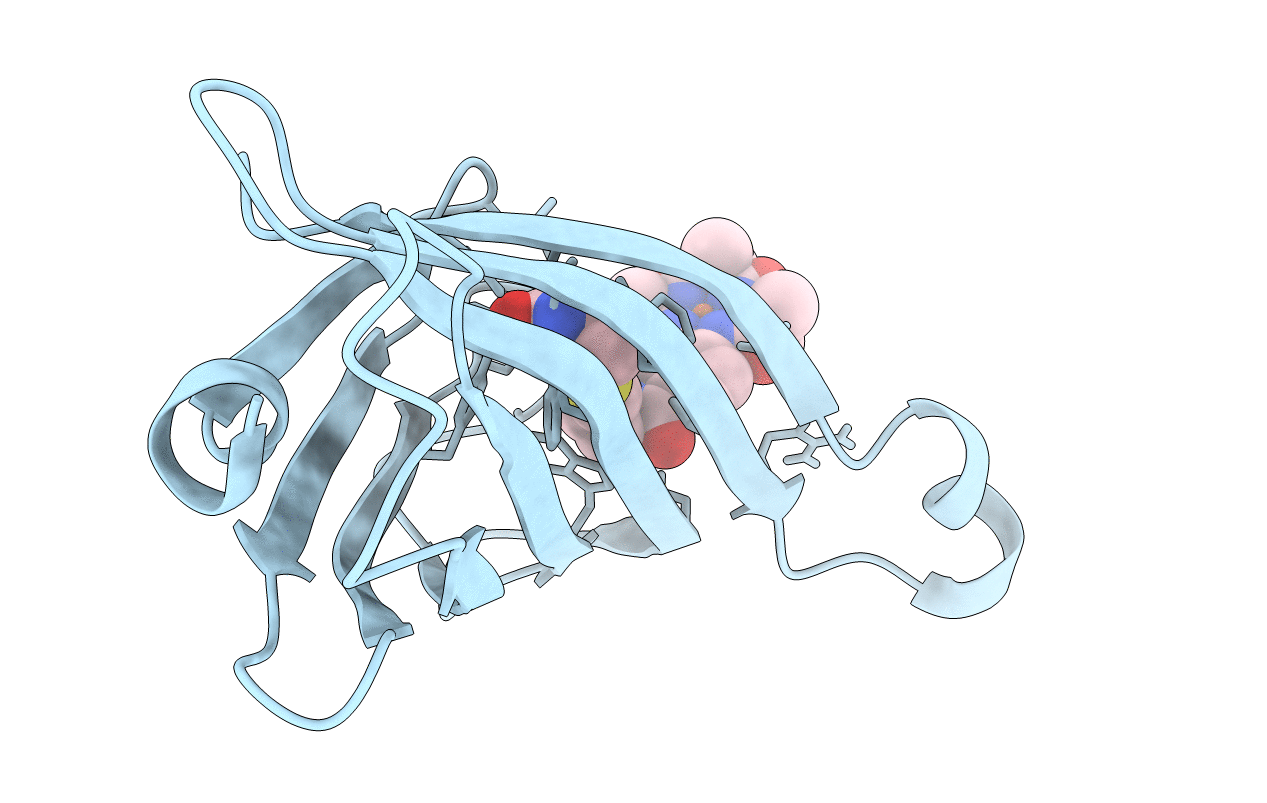
6Y25 image
Deposition Date 2020-02-14
Release Date 2020-07-01
Last Version Date 2024-01-24
Entry Detail
PDB ID:
6Y25
Keywords:
Title:
Streptavidin mutant S112R,K121E with a biotC4-1 cofactor - an artificial iron hydroxylase
Biological Source:
Source Organism:
Method Details:
Experimental Method:
Resolution:
1.95 Å
R-Value Free:
0.20
R-Value Work:
0.19
Space Group:
I 41 2 2

Macromolecular Entities
Structures with similar UniProt ID
Protein Blast
Polymer Type:polypeptide(L)
Molecule:Streptavidin
Mutagens:S112R, K121E
Chain IDs:A (auth: AAA)
Chain Length:159
Number of Molecules:1
Biological Source:Streptomyces avidinii
Ligand Molecules
Primary Citation
Enantioselective Hydroxylation of Benzylic C(sp3)-H Bonds by an Artificial Iron Hydroxylase Based on the Biotin-Streptavidin Technology.
J.Am.Chem.Soc. 142 10617 10623 (2020)
PMID: 32450689 DOI: 10.1021/jacs.0c02788

Abstact

The selective hydroxylation of C-H bonds is of great interest to the synthetic community. Both homogeneous catalysts and enzymes offer complementary means to tackle this challenge. Herein, we show that biotinylated Fe(TAML)-complexes (TAML = Tetra Amido Macrocyclic Ligand) can be used as cofactors for incorporation into streptavidin to assemble artificial hydroxylases. Chemo-genetic optimization of both cofactor and streptavidin allowed optimizing the performance of the hydroxylase. Using H2O2 as oxidant, up to ∼300 turnovers for the oxidation of benzylic C-H bonds were obtained. Upgrading the ee was achieved by kinetic resolution of the resulting benzylic alcohol to afford up to >98% ee for (R)-tetralol. X-ray analysis of artificial hydroxylases highlights critical details of the second coordination sphere around the Fe(TAML) cofactor.

Legend

Protein

Chemical

Disease

Primary Citation of related structures
Feedback Form
Name
Email
Institute
Feedback