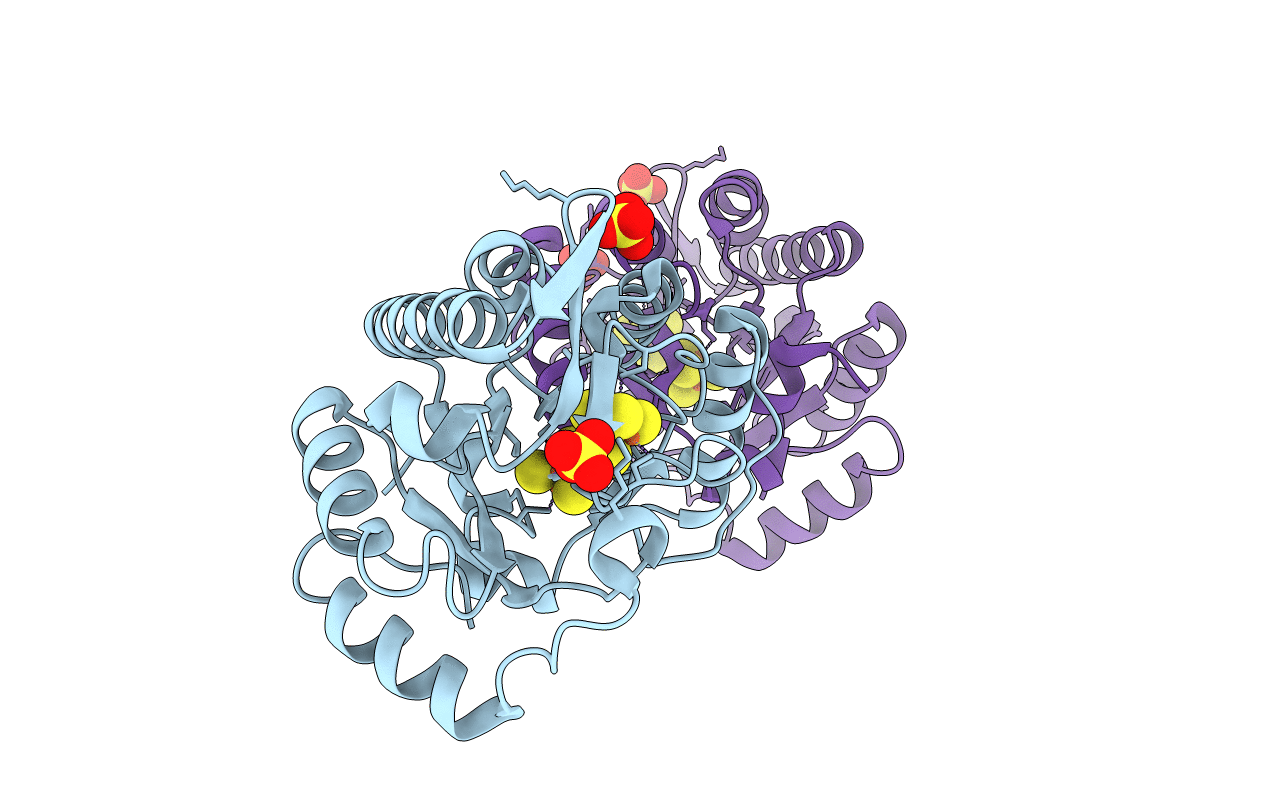
6Y1X image
Deposition Date 2020-02-14
Release Date 2020-06-17
Last Version Date 2024-05-15
Entry Detail
PDB ID:
6Y1X
Title:
X-ray structure of the radical SAM protein NifB, a key nitrogenase maturating enzyme
Biological Source:
Method Details:
Experimental Method:
Resolution:
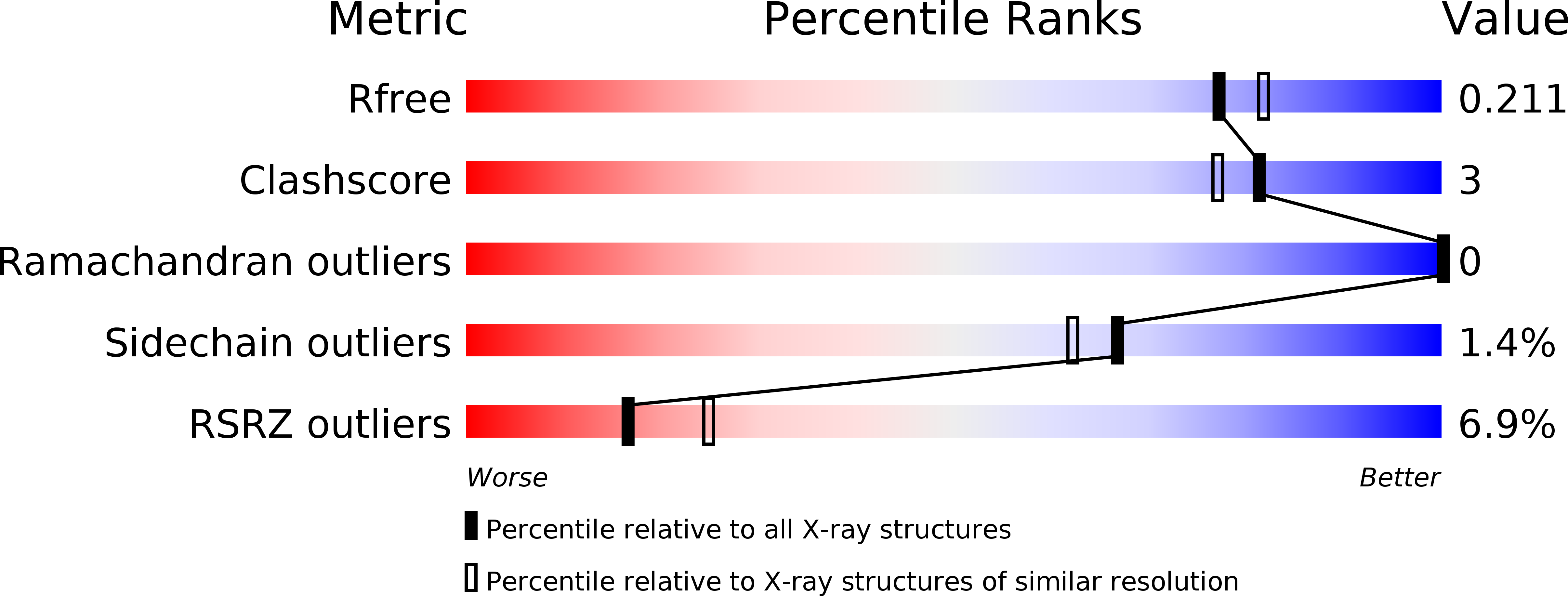
1.95 Å
R-Value Free:
0.21
R-Value Work:
0.17
R-Value Observed:
0.17
Space Group:
P 1
Macromolecular Entities
Structures with similar UniProt ID
Protein Blast
Polymer Type:polypeptide(L)
Molecule:Radical SAM domain protein
Gene (Uniprot):Mthe_0422
Chain IDs:A, B
Chain Length:309
Number of Molecules:2
Biological Source:Methanothrix thermoacetophila (strain DSM 6194 / JCM 14653 / NBRC 101360 / PT)
Primary Citation
Structural Insights into the Mechanism of the Radical SAM Carbide Synthase NifB, a Key Nitrogenase Cofactor Maturating Enzyme.
J.Am.Chem.Soc. 142 11006 11012 (2020)
PMID: 32476412 DOI: 10.1021/jacs.0c02243

Abstact

Nitrogenase is a key player in the global nitrogen cycle, as it catalyzes the reduction of dinitrogen into ammonia. The active site of the nitrogenase MoFe protein corresponds to a [MoFe7S9C-(R)-homocitrate] species designated FeMo-cofactor, whose biosynthesis and insertion requires the action of over a dozen maturation proteins provided by the NIF (for NItrogen Fixation) assembly machinery. Among them, the radical SAM protein NifB plays an essential role, concomitantly inserting a carbide ion and coupling two [Fe4S4] clusters to form a [Fe8S9C] precursor called NifB-co. Here we report on the X-ray structure of NifB from Methanotrix thermoacetophila at 1.95 Å resolution in a state pending the binding of one [Fe4S4] cluster substrate. The overall NifB architecture indicates that this enzyme has a single SAM binding site, which at this stage is occupied by cysteine residue 62. The structure reveals a unique ligand binding mode for the K1-cluster involving cysteine residues 29 and 128 in addition to histidine 42 and glutamate 65. The latter, together with cysteine 62, belongs to a loop inserted in the active site, likely protecting the already present [Fe4S4] clusters. These two residues regulate the sequence of events, controlling SAM dual reactivity and preventing unwanted radical-based chemistry before the K2 [Fe4S4] cluster substrate is loaded into the protein. The location of the K1-cluster, too far away from the SAM binding site, supports a mechanism in which the K2-cluster is the site of methylation.

Legend

Protein

Chemical

Disease

Primary Citation of related structures
Feedback Form
Name
Email
Institute
Feedback