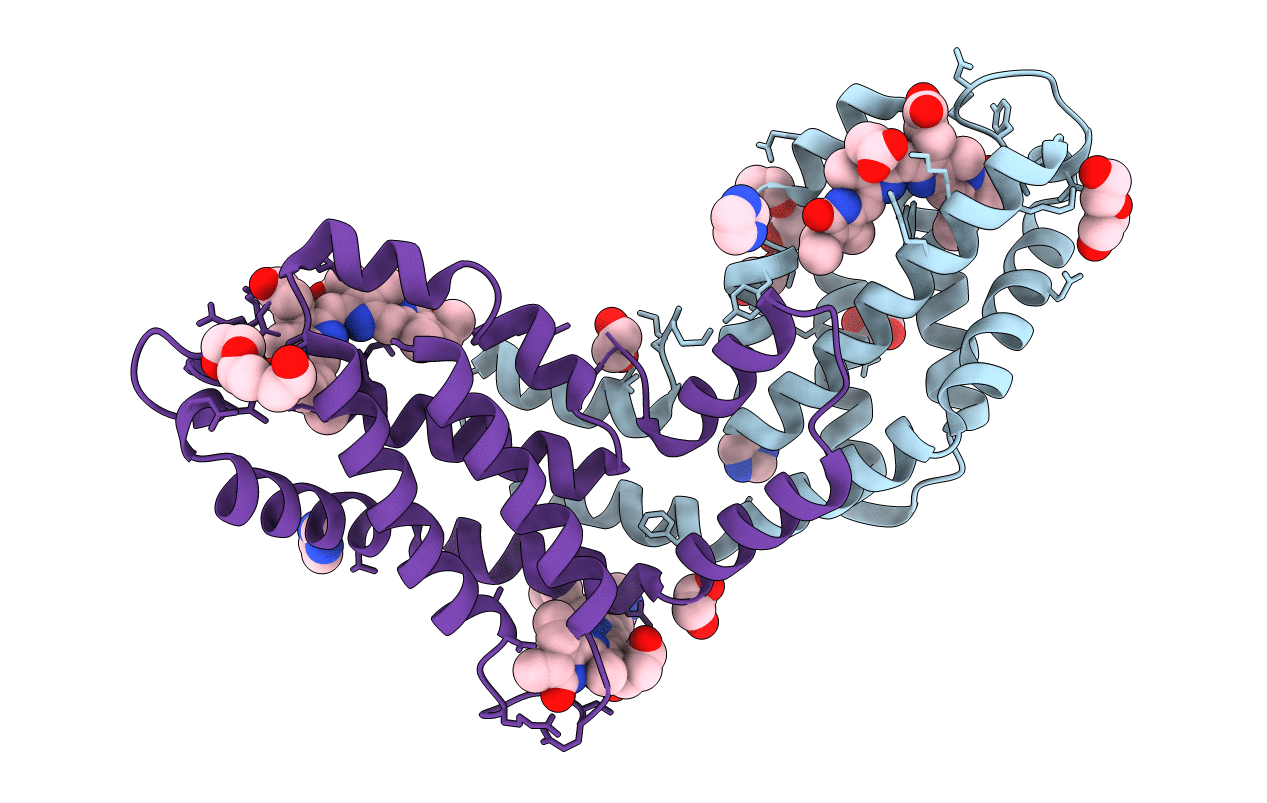
6XWK image
Deposition Date 2020-01-23
Release Date 2020-04-29
Last Version Date 2024-01-24
Entry Detail
PDB ID:
6XWK
Keywords:
Title:
Crystal structure of Phormidium rubidum phycocyanin
Biological Source:
Source Organism:
Method Details:
Experimental Method:
Resolution:
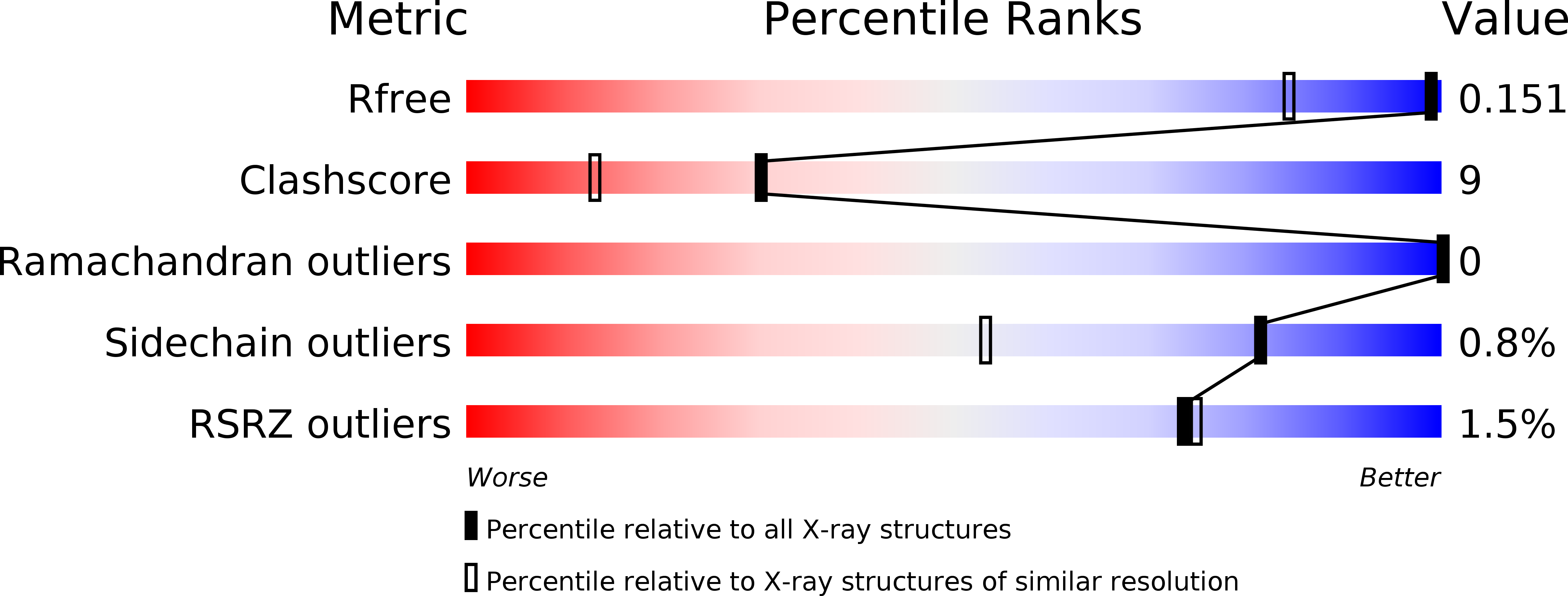
1.17 Å
R-Value Free:
0.14
R-Value Work:
0.11
Space Group:
P 63
Macromolecular Entities
Polymer Type:polypeptide(L)
Molecule:Phycocyanin alpha subunit
Chain IDs:A (auth: AAA)
Chain Length:162
Number of Molecules:1
Biological Source:Phormidium rubidum A09DM
Polymer Type:polypeptide(L)
Molecule:Phycocyanin beta subunit
Chain IDs:B (auth: BBB)
Chain Length:172
Number of Molecules:1
Biological Source:Phormidium rubidum A09DM
Primary Citation
Revisiting high-resolution crystal structure of Phormidium rubidum phycocyanin.
Photosyn. Res. 144 349 360 (2020)
PMID: 32303893 DOI: 10.1007/s11120-020-00746-7

Abstact

The crystal structure of phycocyanin (pr-PC) isolated from Phormidium rubidum A09DM (P. rubidum) is described at a resolution of 1.17 Å. Electron density maps derived from crystallographic data showed many clear differences in amino acid sequences when compared with the previously obtained gene-derived sequences. The differences were found in 57 positions (30 in α-subunit and 27 in β-subunit of pr-PC), in which all residues except one (β145Arg) are not interacting with the three phycocyanobilin chromophores. Highly purified pr-PC was then sequenced by mass spectrometry (MS) using LC-MS/MS. The MS data were analyzed using two independent proteomic search engines. As a result of this analysis, complete agreement between the polypeptide sequences and the electron density maps was obtained. We attribute the difference to multiple genes in the bacterium encoding the phycocyanin apoproteins and that the gene sequencing sequenced the wrong ones. We are not implying that protein sequencing by mass spectrometry is more accurate than that of gene sequencing. The final 1.17 Å structure of pr-PC allows the chromophore interactions with the protein to be described with high accuracy.

Legend

Protein

Chemical

Disease

Primary Citation of related structures
Feedback Form
Name
Email
Institute
Feedback