6XSR image
Deposition Date 2020-07-16
Release Date 2020-12-30
Last Version Date 2024-10-30
Entry Detail
PDB ID:
6XSR
Title:
Crystal structure of GluA2 AMPA receptor in complex with trans-4-butylcyclohexane carboxylic acid (4-BCCA) inhibitor
Biological Source:
Source Organism(s):
Expression System(s):
Method Details:
Experimental Method:
Resolution:
4.25 Å
R-Value Free:
0.29
R-Value Work:
0.26
R-Value Observed:
0.26
Space Group:
P 21 21 21
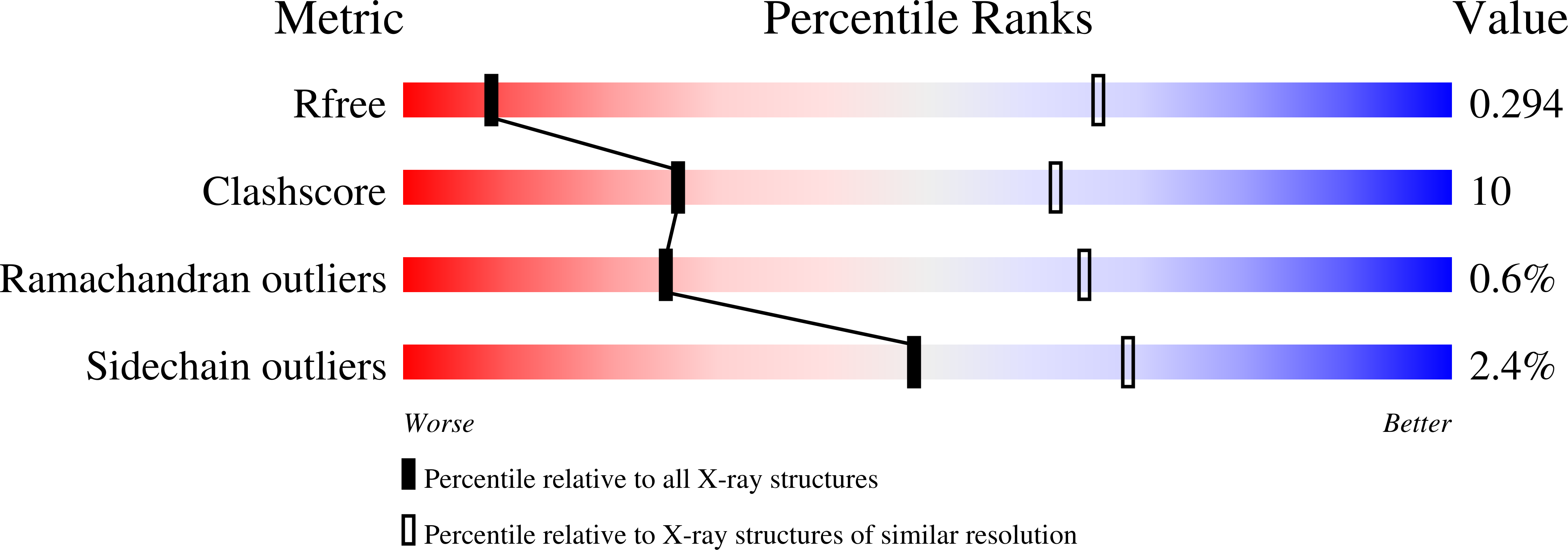
Macromolecular Entities
Structures with similar UniProt ID
Protein Blast
Polymer Type:polypeptide(L)
Molecule:Glutamate receptor 2
Gene (Uniprot):Gria2
Chain IDs:A, B, C, D
Chain Length:808
Number of Molecules:4
Biological Source:Rattus norvegicus
Primary Citation
Structural basis of AMPA receptor inhibition by trans-4-butylcyclohexane carboxylic acid.
Br.J.Pharmacol. 179 3628 3644 (2022)
PMID: 32959886 DOI: 10.1111/bph.15254

Abstact

BACKGROUND AND PURPOSE AMPA receptors, which shape excitatory postsynaptic currents and are directly involved in overactivation of synaptic function during seizures, represent a well-accepted target for anti-epileptic drugs. Trans-4-butylcyclohexane carboxylic acid (4-BCCA) has emerged as a new promising anti-epileptic drug in several in vitro and in vivo seizure models, but the mechanism of its action remained unknown. The purpose of this study is to characterize structure and dynamics of 4-BCCA interaction with AMPA receptors. EXPERIMENTAL APPROACH We studied the molecular mechanism of AMPA receptor inhibition by 4-BCCA using a combination of X-ray crystallography, mutagenesis, electrophysiological assays, and molecular dynamics simulations. KEY RESULTS We identified 4-BCCA binding sites in the transmembrane domain (TMD) of AMPA receptor, at the lateral portals formed by transmembrane segments M1-M4. At this binding site, 4-BCCA is very dynamic, assumes multiple poses, and can enter the ion channel pore. CONCLUSION AND IMPLICATIONS 4-BCCA represents a low-affinity inhibitor of AMPA receptors that acts at the TMD sites distinct from non-competitive inhibitors, such as the anti-epileptic drug perampanel and the ion channel blockers. Further studies might examine the possibsility of synergistic use of these inhibitors in treatment of epilepsy and a wide range of neurological disorders and gliomas. LINKED ARTICLES This article is part of a themed issue on Structure Guided Pharmacology of Membrane Proteins (BJP 75th Anniversary). To view the other articles in this section visit http://onlinelibrary.wiley.com/doi/10.1111/bph.v179.14/issuetoc.

Legend

Protein

Chemical

Disease

Primary Citation of related structures
Feedback Form
Name
Email
Institute
Feedback