6XOQ image
Deposition Date 2020-07-07
Release Date 2021-06-02
Last Version Date 2023-10-18
Entry Detail
PDB ID:
6XOQ
Title:
DCN1 covalently bound to inhibitor 4
Biological Source:
Source Organism:
Host Organism:
Method Details:
Experimental Method:
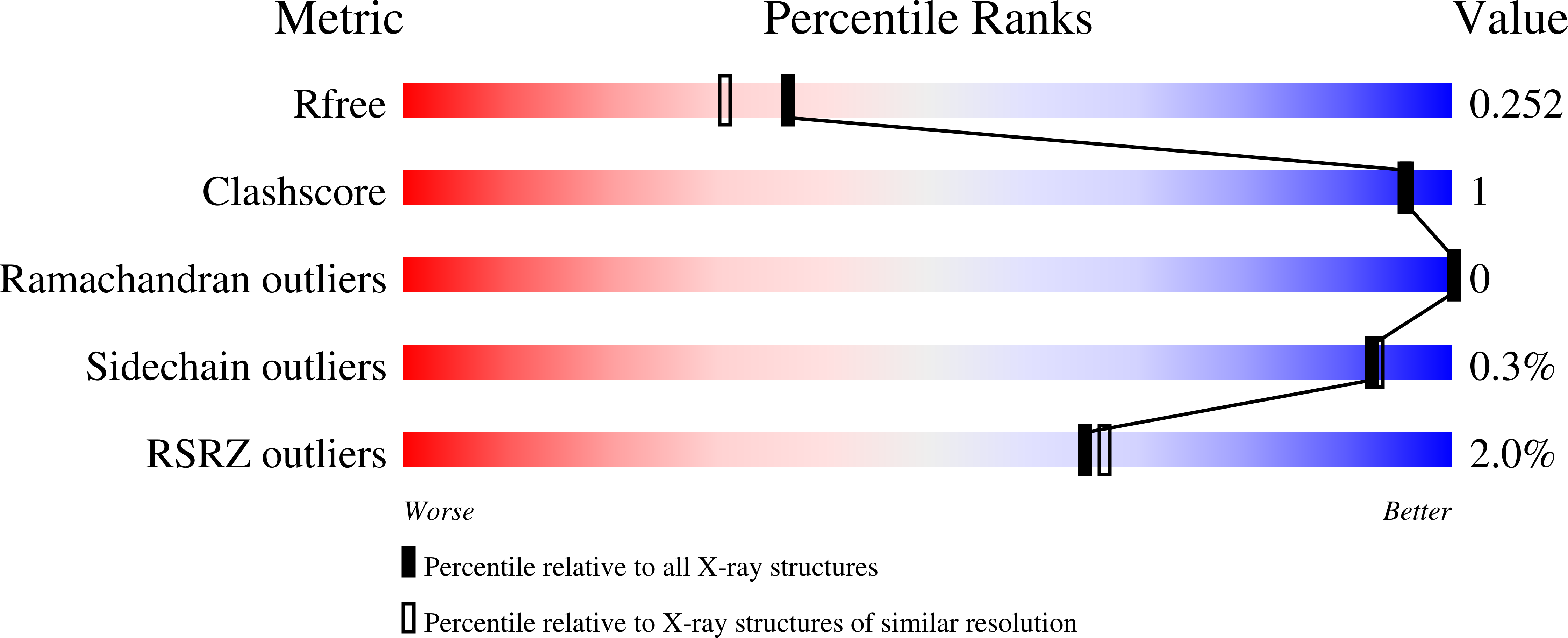
Resolution:
2.07 Å
R-Value Free:
0.24
R-Value Work:
0.20
R-Value Observed:
0.20
Space Group:
P 21 21 21
Macromolecular Entities
Protein Blast
Polymer Type:polypeptide(L)
Molecule:Lysozyme, DCN1-like protein 1 chimera
Gene (Uniprot):e, DCUN1D1
Mutagens:C54T,C97A,D127A,A146T,R154A
Chain IDs:A
Chain Length:386
Number of Molecules:1
Biological Source:Enterobacteria phage T4, Homo sapiens
Ligand Molecules
Primary Citation
Selective inhibition of cullin 3 neddylation through covalent targeting DCN1 protects mice from acetaminophen-induced liver toxicity.
Nat Commun 12 2621 2621 (2021)
PMID: 33976147 DOI: 10.1038/s41467-021-22924-4

Abstact

Cullin-RING E3 ligases (CRLs) regulate the turnover of approximately 20% of mammalian cellular proteins. Neddylation of individual cullin proteins is essential for the activation of each CRL. We report herein the discovery of DI-1548 and DI-1859 as two potent, selective and covalent DCN1 inhibitors. These inhibitors selectively inhibit neddylation of cullin 3 in cells at low nanomolar concentrations and are 2-3 orders of magnitude more potent than our previously reported reversible DCN1 inhibitor. Mass spectrometric analysis and co-crystal structures reveal that these compounds employ a unique mechanism of covalent bond formation with DCN1. DI-1859 induces a robust increase of NRF2 protein, a CRL3 substrate, in mouse liver and effectively protects mice from acetaminophen-induced liver damage. Taken together, this study demonstrates the therapeutic potential of selective inhibition of cullin neddylation.

Legend

Protein

Chemical

Disease

Primary Citation of related structures
Feedback Form
Name
Email
Institute
Feedback