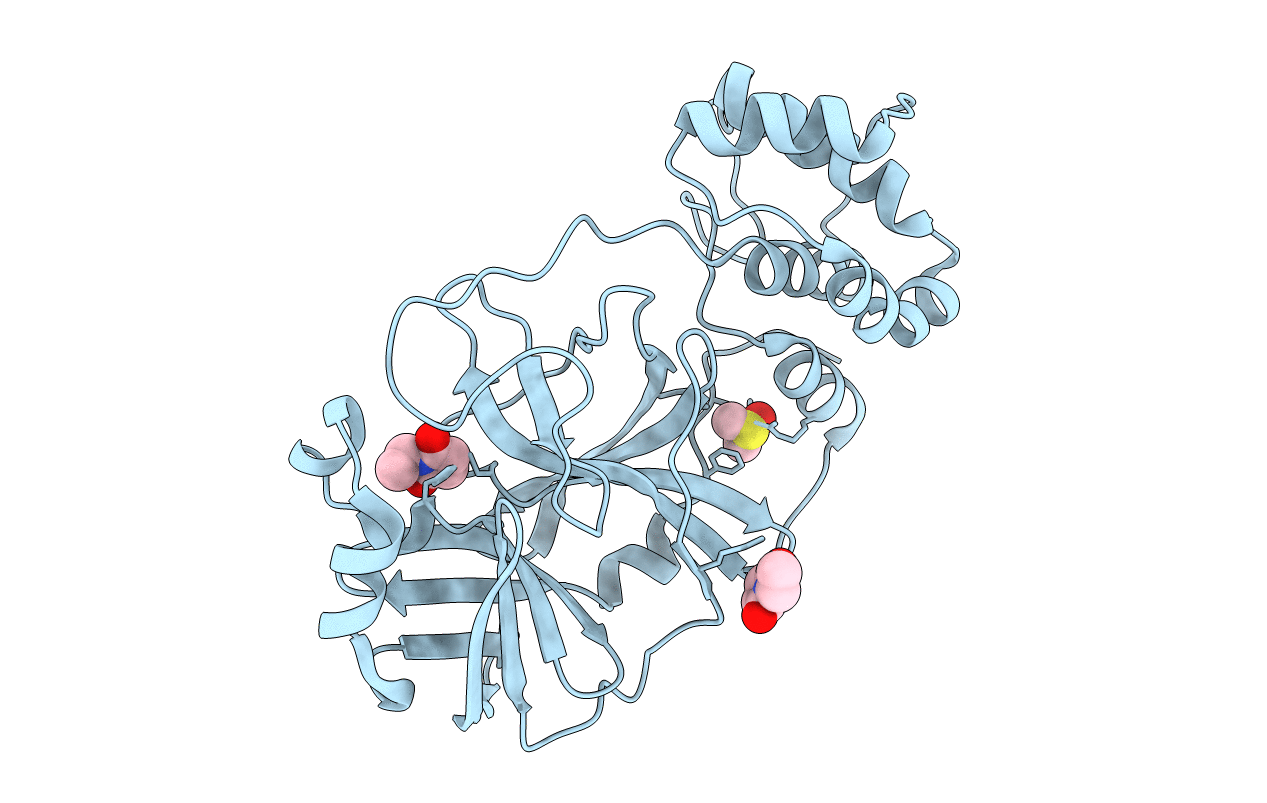
6XB2 image
Deposition Date 2020-06-05
Release Date 2020-06-17
Last Version Date 2024-10-23
Entry Detail
PDB ID:
6XB2
Title:
Room temperature X-ray crystallography reveals catalytic cysteine in the SARS-CoV-2 3CL Mpro is highly reactive: Insights for enzyme mechanism and drug design
Biological Source:
Host Organism:
Method Details:
Experimental Method:
Resolution:
2.10 Å
R-Value Free:
0.25
R-Value Work:
0.19
R-Value Observed:
0.19
Space Group:
I 1 2 1

Macromolecular Entities
Structures with similar UniProt ID
Protein Blast
Polymer Type:polypeptide(L)
Molecule:3C-like proteinase
Gene (Uniprot):rep
Chain IDs:A
Chain Length:306
Number of Molecules:1
Biological Source:Severe acute respiratory syndrome coronavirus 2
Primary Citation
Room-temperature X-ray crystallography reveals the oxidation and reactivity of cysteine residues in SARS-CoV-2 3CL M pro : insights into enzyme mechanism and drug design.
Iucrj 7 ? ? (2020)
PMID: 33063790 DOI: 10.1107/S2052252520012634

Abstact

The emergence of the novel coronavirus SARS-CoV-2 has resulted in a worldwide pandemic not seen in generations. Creating treatments and vaccines to battle COVID-19, the disease caused by the virus, is of paramount importance in order to stop its spread and save lives. The viral main protease, 3CL Mpro, is indispensable for the replication of SARS-CoV-2 and is therefore an important target for the design of specific protease inhibitors. Detailed knowledge of the structure and function of 3CL Mpro is crucial to guide structure-aided and computational drug-design efforts. Here, the oxidation and reactivity of the cysteine residues of the protease are reported using room-temperature X-ray crystallography, revealing that the catalytic Cys145 can be trapped in the peroxysulfenic acid oxidation state at physiological pH, while the other surface cysteines remain reduced. Only Cys145 and Cys156 react with the alkylating agent N-ethylmaleimide. It is suggested that the zwitterionic Cys145-His45 catalytic dyad is the reactive species that initiates catalysis, rather than Cys145-to-His41 proton transfer via the general acid-base mechanism upon substrate binding. The structures also provide insight into the design of improved 3CL Mpro inhibitors.

Legend

Protein

Chemical

Disease

Primary Citation of related structures
Feedback Form
Name
Email
Institute
Feedback