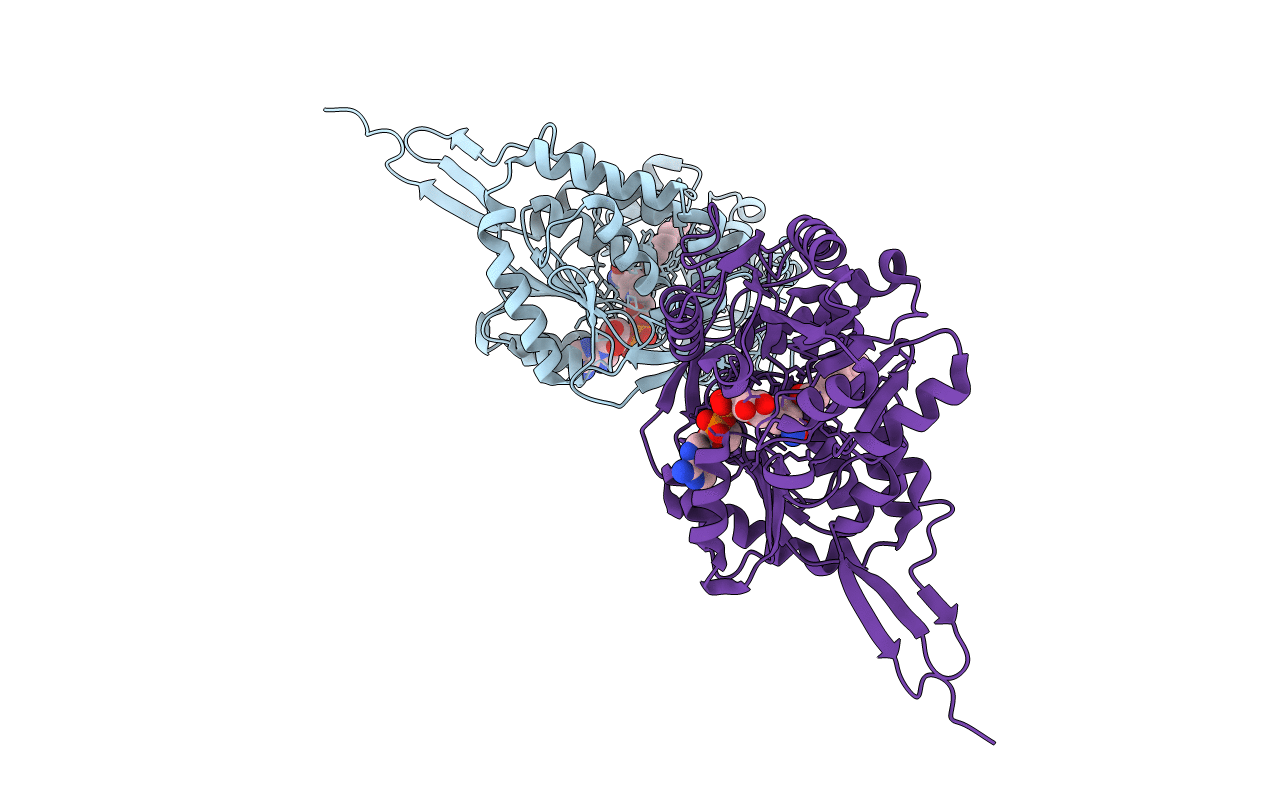
6X9L image
Deposition Date 2020-06-03
Release Date 2020-09-09
Last Version Date 2023-10-18
Entry Detail
PDB ID:
6X9L
Keywords:
Title:
Crystal Structure of Aldehyde Dehydrogenase C (AldC) mutant (C291A) from Pseudomonas syringae in complexed with NAD+ and Octanal
Biological Source:
Method Details:
Experimental Method:
Resolution:
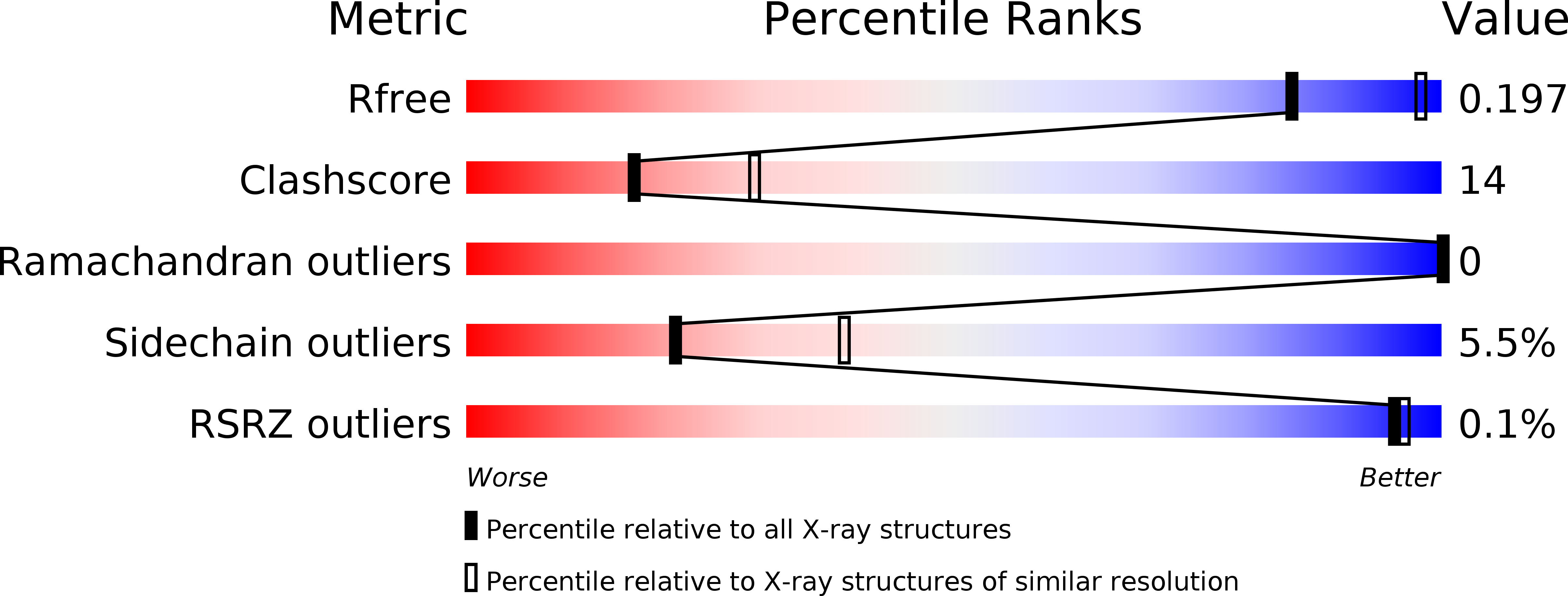
2.52 Å
R-Value Free:
0.19
R-Value Work:
0.19
R-Value Observed:
0.19
Space Group:
C 2 2 21
Macromolecular Entities
Structures with similar UniProt ID
Protein Blast
Polymer Type:polypeptide(L)
Molecule:Aldehyde dehydrogenase family protein
Gene (Uniprot):PSPTO_3644
Mutagens:C291A
Chain IDs:A, B
Chain Length:491
Number of Molecules:2
Biological Source:Pseudomonas syringae pv. tomato (strain ATCC BAA-871 / DC3000)
Primary Citation

Abstact

Aldehyde dehydrogenases are versatile enzymes that serve a range of biochemical functions. Although traditionally considered metabolic housekeeping enzymes because of their ability to detoxify reactive aldehydes, like those generated from lipid peroxidation damage, the contributions of these enzymes to other biological processes are widespread. For example, the plant pathogen Pseudomonas syringae strain PtoDC3000 uses an indole-3-acetaldehyde dehydrogenase to synthesize the phytohormone indole-3-acetic acid to elude host responses. Here we investigate the biochemical function of AldC from PtoDC3000. Analysis of the substrate profile of AldC suggests that this enzyme functions as a long-chain aliphatic aldehyde dehydrogenase. The 2.5 Å resolution X-ray crystal of the AldC C291A mutant in a dead-end complex with octanal and NAD+ reveals an apolar binding site primed for aliphatic aldehyde substrate recognition. Functional characterization of site-directed mutants targeting the substrate- and NAD(H)-binding sites identifies key residues in the active site for ligand interactions, including those in the "aromatic box" that define the aldehyde-binding site. Overall, this study provides molecular insight for understanding the evolution of the prokaryotic aldehyde dehydrogenase superfamily and their diversity of function.

Legend

Protein

Chemical

Disease

Primary Citation of related structures
Feedback Form
Name
Email
Institute
Feedback