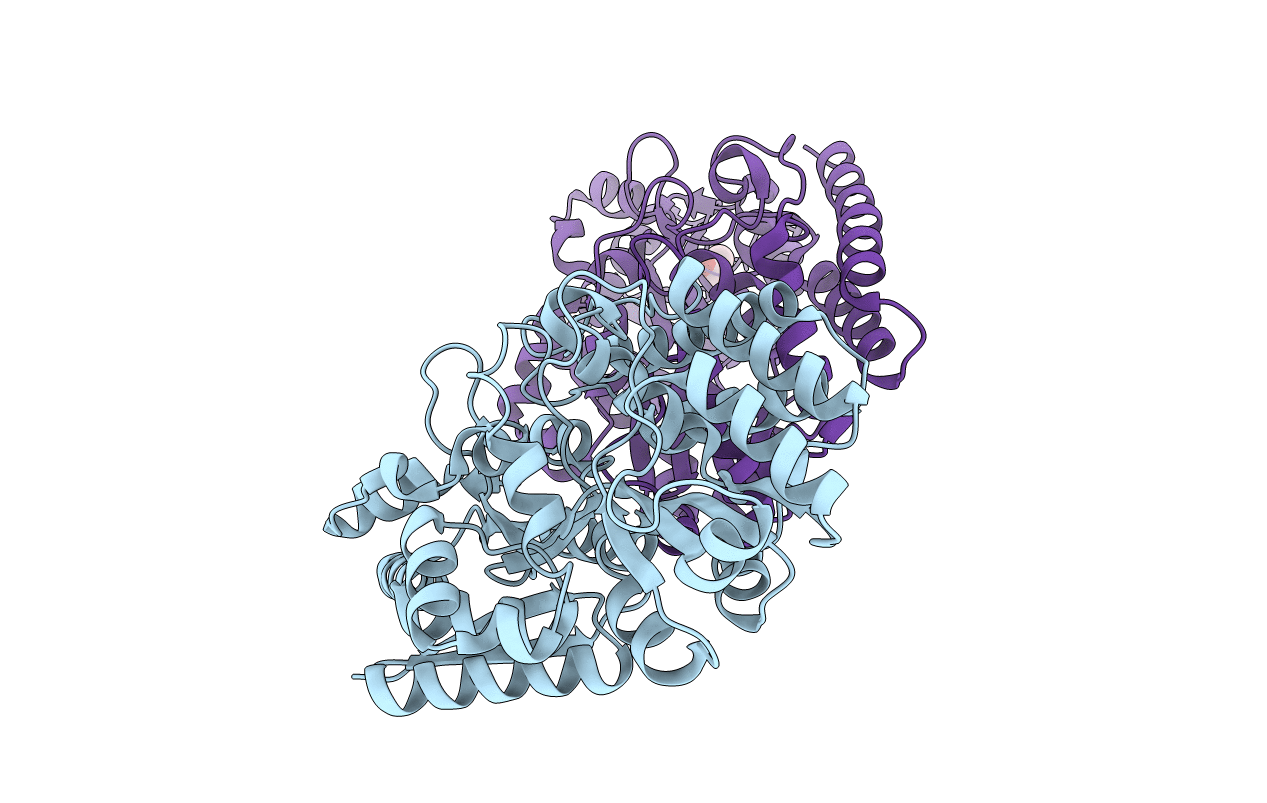
6X84 image
Deposition Date 2020-06-01
Release Date 2020-08-19
Last Version Date 2023-10-18
Entry Detail
PDB ID:
6X84
Keywords:
Title:
Sn-glycerol-3-phosphate binding periplasmic protein UgpB from Escherichia coli - W169S, W172S
Biological Source:
Source Organism(s):
Expression System(s):
Method Details:
Experimental Method:
Resolution:
1.25 Å
R-Value Free:
0.18
R-Value Work:
0.15
R-Value Observed:
0.15
Space Group:
P 1

Macromolecular Entities
Structures with similar UniProt ID
Protein Blast
Polymer Type:polypeptide(L)
Molecule:sn-glycerol-3-phosphate-binding periplasmic protein UgpB
Gene (Uniprot):ugpB
Mutagens:W169S, W172S
Chain IDs:A, B
Chain Length:416
Number of Molecules:2
Biological Source:Escherichia coli (strain K12)
Ligand Molecules
Primary Citation
A metabolite binding protein moonlights as a bile-responsive chaperone.
Embo J. 39 e104231 e104231 (2020)
PMID: 32882062 DOI: 10.15252/embj.2019104231

Abstact

Bile salts are secreted into the gastrointestinal tract to aid in the absorption of lipids. In addition, bile salts show potent antimicrobial activity in part by mediating bacterial protein unfolding and aggregation. Here, using a protein folding sensor, we made the surprising discovery that the Escherichia coli periplasmic glycerol-3-phosphate (G3P)-binding protein UgpB can serve, in the absence of its substrate, as a potent molecular chaperone that exhibits anti-aggregation activity against bile salt-induced protein aggregation. The substrate G3P, which is known to accumulate in the later compartments of the digestive system, triggers a functional switch between UgpB's activity as a molecular chaperone and its activity as a G3P transporter. A UgpB mutant unable to bind G3P is constitutively active as a chaperone, and its crystal structure shows that it contains a deep surface groove absent in the G3P-bound wild-type UgpB. Our work illustrates how evolution may be able to convert threats into signals that first activate and then inactivate a chaperone at the protein level in a manner that bypasses the need for ATP.

Legend

Protein

Chemical

Disease

Primary Citation of related structures
Feedback Form
Name
Email
Institute
Feedback