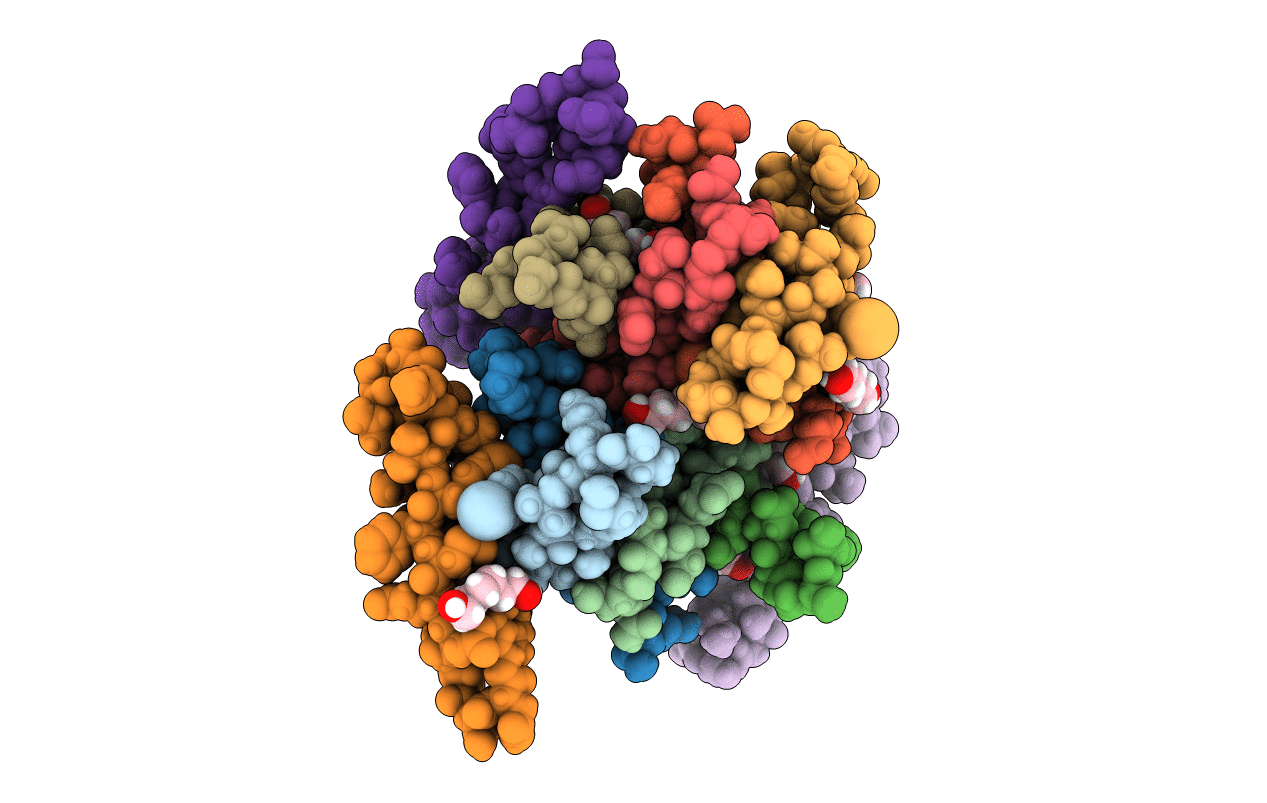
6WXM image
Deposition Date 2020-05-11
Release Date 2020-07-08
Last Version Date 2025-04-02
Entry Detail
PDB ID:
6WXM
Keywords:
Title:
X-ray crystallographic structure of a beta-hairpin peptide derived from amyloid beta 16-36
Biological Source:
Source Organism:
Homo sapiens (Taxon ID: 9606)
Method Details:
Experimental Method:
Resolution:
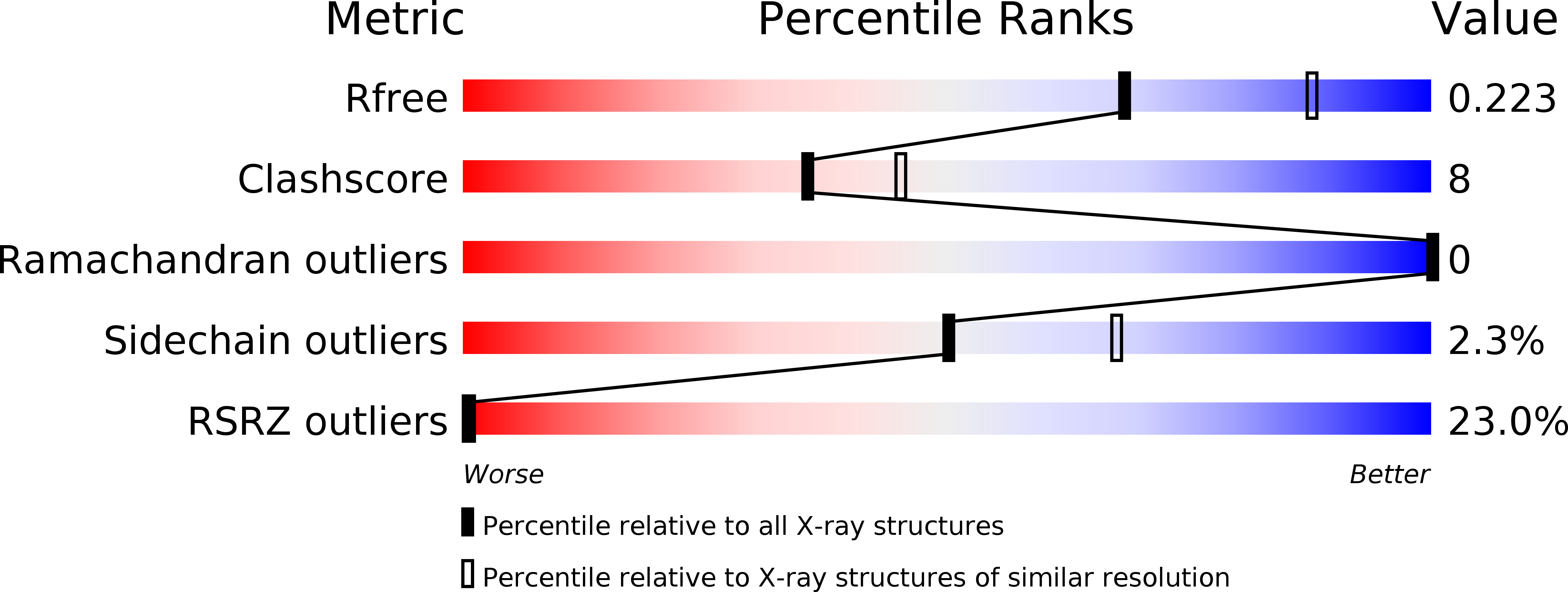
2.30 Å
R-Value Free:
0.21
R-Value Work:
0.17
R-Value Observed:
0.17
Space Group:
C 2 2 21
Macromolecular Entities
Structures with similar UniProt ID
Protein Blast
Polymer Type:polypeptide(L)
Molecule:Amyloid-beta protein
Gene (Uniprot):APP
Chain IDs:A (auth: F), B (auth: H), C (auth: B), D (auth: I), E, F (auth: A), G (auth: C), H (auth: D), I (auth: J), J (auth: G), K
Chain Length:22
Number of Molecules:11
Biological Source:Homo sapiens
Modified Residue
Compound ID Chain ID Parent Comp ID Details 2D Image
PHI A PHE modified residue
SAR A GLY modified residue
Ligand Molecules
Primary Citation
X-ray Crystallography Reveals Parallel and Antiparallel beta-Sheet Dimers of a beta-Hairpin Derived from A beta16-36that Assemble to Form Different Tetramers.
Acs Chem Neurosci 11 2340 2347 (2020)
PMID: 32584538 DOI: 10.1021/acschemneuro.0c00290

Abstact

High-resolution structures of oligomers formed by the β-amyloid peptide, Aβ, are important for understanding the molecular basis of Alzheimer's disease. Dimers of Aβ are linked to the pathogenesis and progression of Alzheimer's disease, and tetramers of Aβ are neurotoxic. This paper reports the X-ray crystallographic structures of dimers and tetramers, as well as an octamer, formed by a peptide derived from the central and C-terminal regions of Aβ. In the crystal lattice, the peptide assembles to form two different dimers-an antiparallel β-sheet dimer and a parallel β-sheet dimer-that each further self-assemble to form two different tetramers-a sandwich-like tetramer and a twisted β-sheet tetramer. The structures of these dimers and tetramers derived from Aβ serve as potential models for dimers and tetramers of full-length Aβ that form in vitro and in Alzheimer's disease-afflicted brains.

Legend

Protein

Chemical

Disease

Primary Citation of related structures
Feedback Form
Name
Email
Institute
Feedback