6WV4 image
Deposition Date 2020-05-05
Release Date 2020-11-11
Last Version Date 2024-11-13
Entry Detail
PDB ID:
6WV4
Title:
Human VKOR C43S with warfarin
Biological Source:
Source Organism:
Aequorea victoria (Taxon ID: 6100)
Homo sapiens (Taxon ID: 9606)
Host Organism:
Method Details:
Experimental Method:
Resolution:
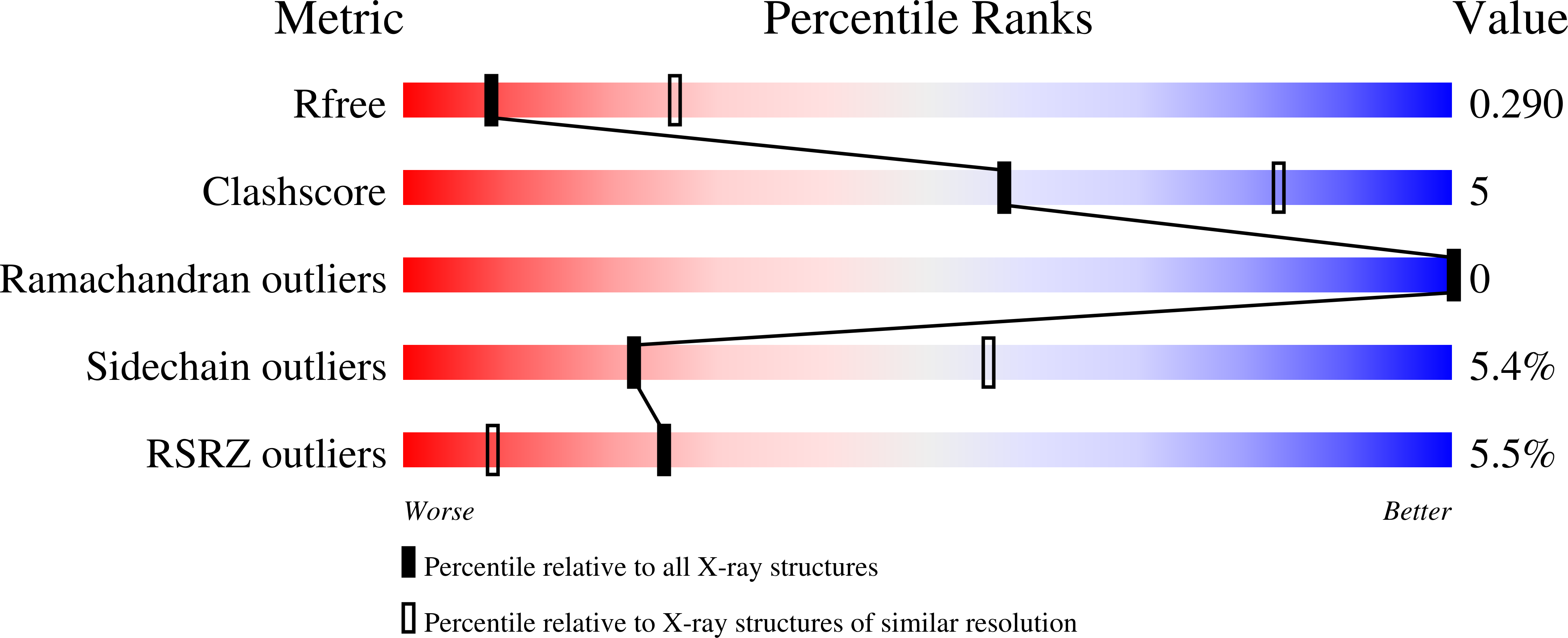
3.01 Å
R-Value Free:
0.29
R-Value Work:
0.26
R-Value Observed:
0.27
Space Group:
P 21 2 21
Macromolecular Entities
Protein Blast
Polymer Type:polypeptide(L)
Molecule:Vitamin K epoxide reductase Cys43Ser mutant, termini restrained by green fluorescent protein
Gene (Uniprot):VKORC1
Mutagens:C43S
Chain IDs:A
Chain Length:392
Number of Molecules:1
Biological Source:Aequorea victoria, Homo sapiens
Modified Residue
Compound ID Chain ID Parent Comp ID Details 2D Image
CRO A THR chromophore
Ligand Molecules
Primary Citation
Structural basis of antagonizing the vitamin K catalytic cycle for anticoagulation.
Science 371 ? ? (2021)
PMID: 33154105 DOI: 10.1126/science.abc5667

Abstact

Vitamin K antagonists are widely used anticoagulants that target vitamin K epoxide reductases (VKOR), a family of integral membrane enzymes. To elucidate their catalytic cycle and inhibitory mechanism, we report 11 x-ray crystal structures of human VKOR and pufferfish VKOR-like, with substrates and antagonists in different redox states. Substrates entering the active site in a partially oxidized state form cysteine adducts that induce an open-to-closed conformational change, triggering reduction. Binding and catalysis are facilitated by hydrogen-bonding interactions in a hydrophobic pocket. The antagonists bind specifically to the same hydrogen-bonding residues and induce a similar closed conformation. Thus, vitamin K antagonists act through mimicking the key interactions and conformational changes required for the VKOR catalytic cycle.

Legend

Protein

Chemical

Disease

Primary Citation of related structures
Feedback Form
Name
Email
Institute
Feedback