6WPI image
Deposition Date 2020-04-27
Release Date 2020-05-20
Last Version Date 2023-10-18
Entry Detail
PDB ID:
6WPI
Title:
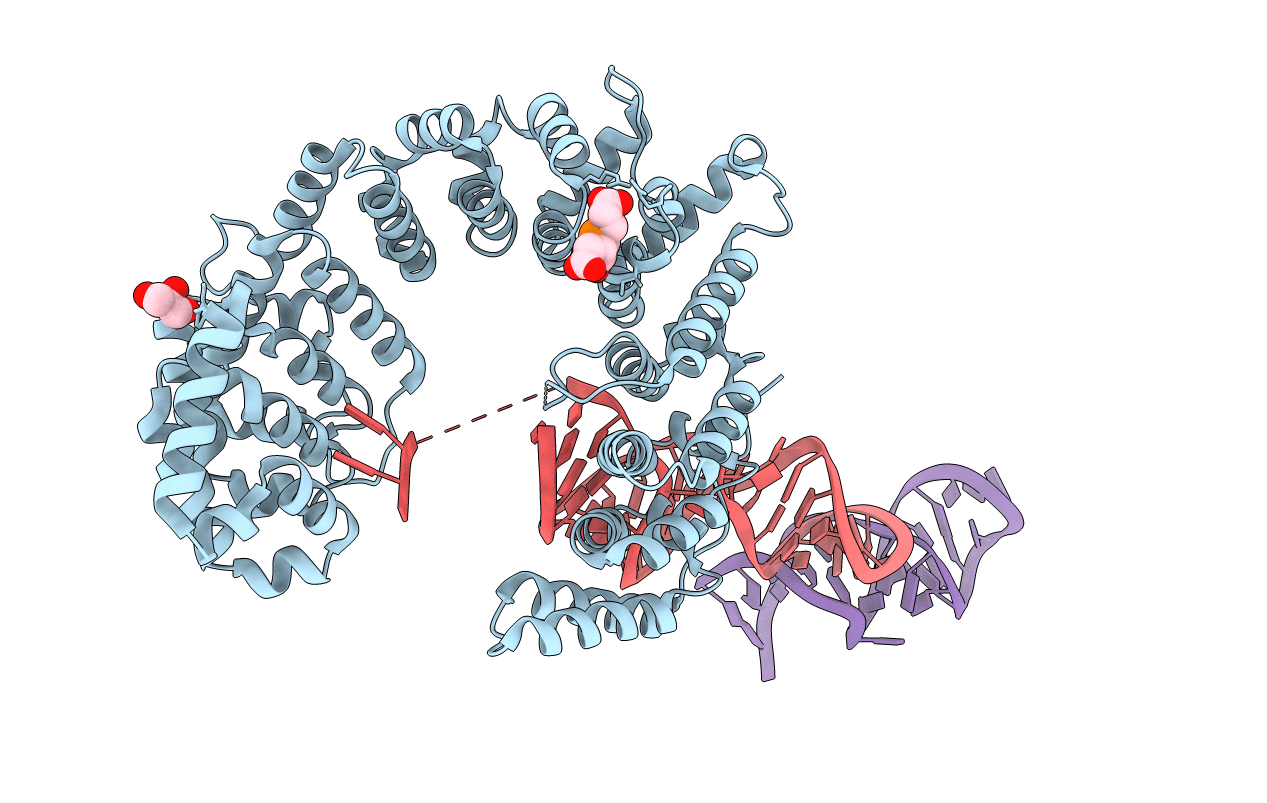
Crystal structure of Nop9 in complex with ITS1 RNA
Biological Source:
Method Details:
Experimental Method:
Resolution:
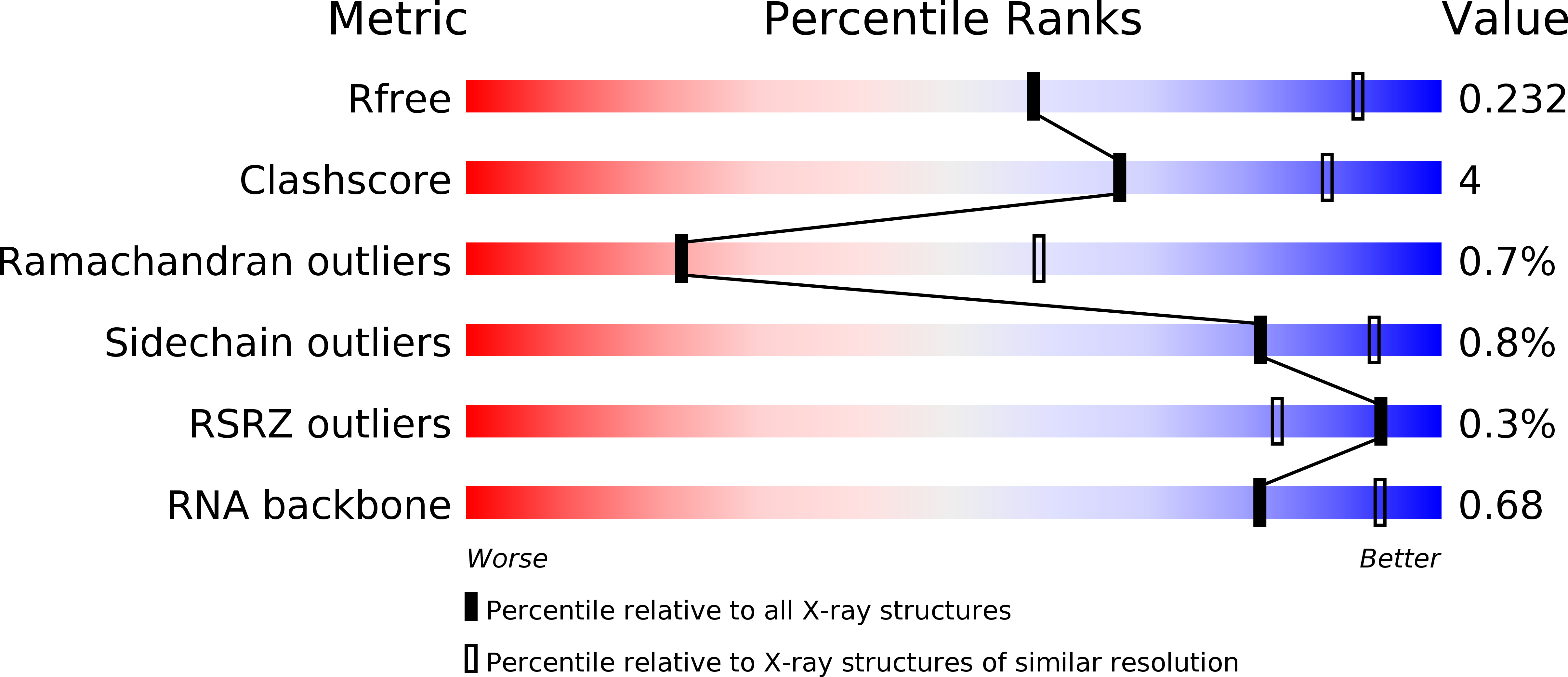
3.02 Å
R-Value Free:
0.23
R-Value Work:
0.19
R-Value Observed:
0.19
Space Group:
P 21 21 21
Macromolecular Entities
Structures with similar UniProt ID
Protein Blast
Polymer Type:polypeptide(L)
Molecule:Nucleolar protein 9
Gene (Uniprot):NOP9
Chain IDs:A
Chain Length:591
Number of Molecules:1
Biological Source:Saccharomyces cerevisiae (strain ATCC 204508 / S288c)
Polymer Type:polyribonucleotide
Molecule:RNA (47-MER)
Chain IDs:B, C
Chain Length:47
Number of Molecules:2
Biological Source:Saccharomyces cerevisiae S288C
Primary Citation
Nop9 recognizes structured and single-stranded RNA elements of preribosomal RNA.
Rna 26 1049 1059 (2020)
PMID: 32371454 DOI: 10.1261/rna.075416.120

Abstact

Nop9 is an essential factor in the processing of preribosomal RNA. Its absence in yeast is lethal, and defects in the human ortholog are associated with breast cancer, autoimmunity, and learning/language impairment. PUF family RNA-binding proteins are best known for sequence-specific RNA recognition, and most contain eight α-helical repeats that bind to the RNA bases of single-stranded RNA. Nop9 is an unusual member of this family in that it contains eleven repeats and recognizes both RNA structure and sequence. Here we report a crystal structure of Saccharomyces cerevisiae Nop9 in complex with its target RNA within the 20S preribosomal RNA. This structure reveals that Nop9 brings together a carboxy-terminal module recognizing the 5' single-stranded region of the RNA and a bifunctional amino-terminal module recognizing the central double-stranded stem region. We further show that the 3' single-stranded region of the 20S target RNA adds sequence-independent binding energy to the RNA-Nop9 interaction. Both the amino- and carboxy-terminal modules retain the characteristic sequence-specific recognition of PUF proteins, but the amino-terminal module has also evolved a distinct interface, which allows Nop9 to recognize either single-stranded RNA sequences or RNAs with a combination of single-stranded and structured elements.

Legend

Protein

Chemical

Disease

Primary Citation of related structures
Feedback Form
Name
Email
Institute
Feedback