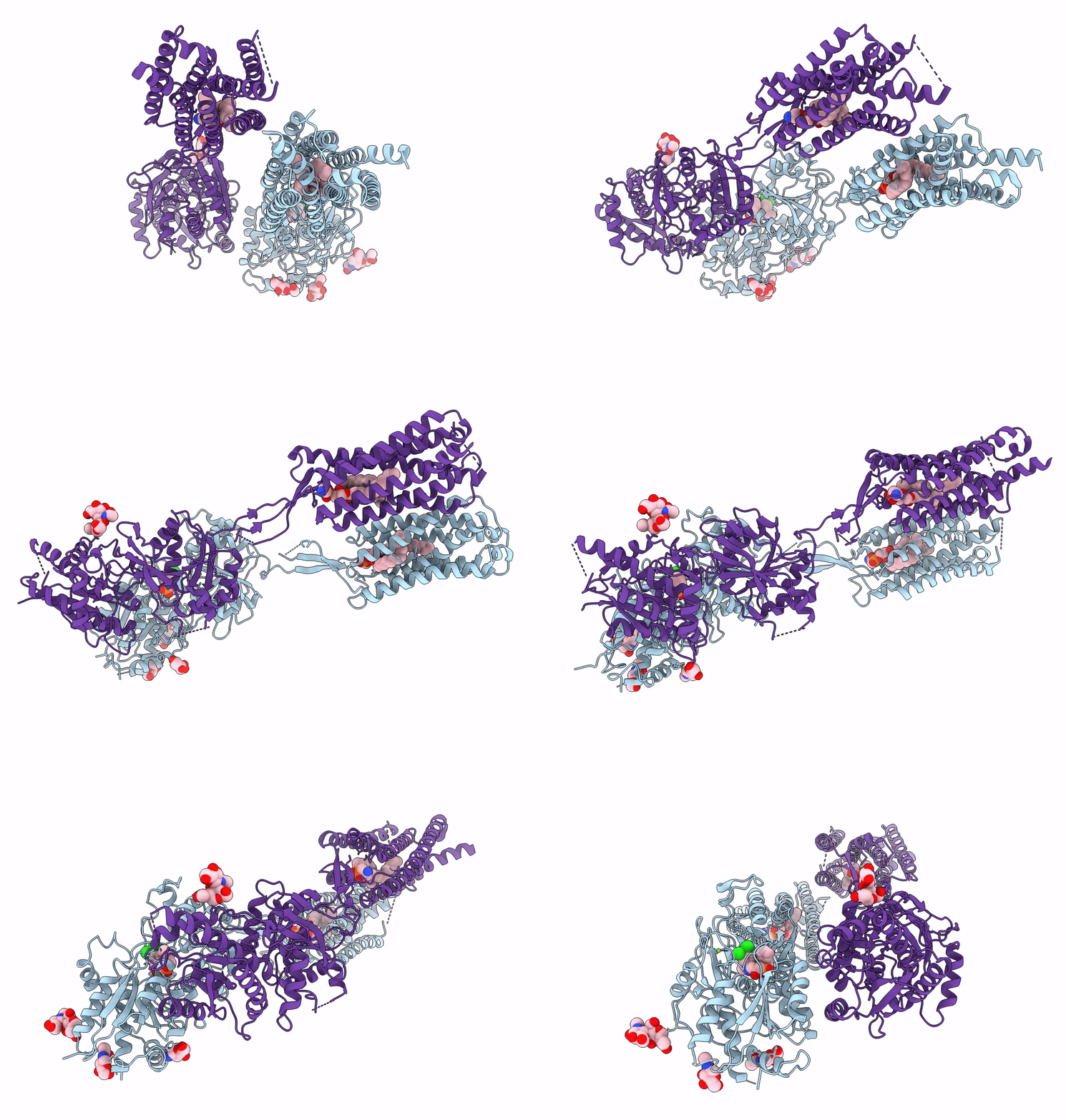
6W2X image
Deposition Date 2020-03-08
Release Date 2020-07-01
Last Version Date 2024-11-20
Entry Detail
PDB ID:
6W2X
Title:
CryoEM Structure of Inactive GABAB Heterodimer
Biological Source:
Source Organism:
Homo sapiens (Taxon ID: 9606)
Host Organism:
Method Details:
Experimental Method:
Resolution:
3.60 Å
Aggregation State:
PARTICLE
Reconstruction Method:
SINGLE PARTICLE
Macromolecular Entities
Structures with similar UniProt ID
Protein Blast
Polymer Type:polypeptide(L)
Molecule:Gamma-aminobutyric acid type B receptor subunit 1
Gene (Uniprot):GABBR1
Chain IDs:A
Chain Length:829
Number of Molecules:1
Biological Source:Homo sapiens
Structures with similar UniProt ID
Protein Blast
Polymer Type:polypeptide(L)
Molecule:Gamma-aminobutyric acid type B receptor subunit 2
Gene (Uniprot):GABBR2
Chain IDs:B
Chain Length:908
Number of Molecules:1
Biological Source:Homo sapiens
Primary Citation
Structures of metabotropic GABABreceptor.
Nature 584 310 314 (2020)
PMID: 32580208 DOI: 10.1038/s41586-020-2469-4

Abstact

Stimulation of the metabotropic GABAB receptor by γ-aminobutyric acid (GABA) results in prolonged inhibition of neurotransmission, which is central to brain physiology1. GABAB belongs to family C of the G-protein-coupled receptors, which operate as dimers to transform synaptic neurotransmitter signals into a cellular response through the binding and activation of heterotrimeric G proteins2,3. However, GABAB is unique in its function as an obligate heterodimer in which agonist binding and G-protein activation take place on distinct subunits4,5. Here we present cryo-electron microscopy structures of heterodimeric and homodimeric full-length GABAB receptors. Complemented by cellular signalling assays and atomistic simulations, these structures reveal that extracellular loop 2 (ECL2) of GABAB has an essential role in relaying structural transitions by ordering the linker that connects the extracellular ligand-binding domain to the transmembrane region. Furthermore, the ECL2 of each of the subunits of GABAB caps and interacts with the hydrophilic head of a phospholipid that occupies the extracellular half of the transmembrane domain, thereby providing a potentially crucial link between ligand binding and the receptor core that engages G proteins. These results provide a starting framework through which to decipher the mechanistic modes of signal transduction mediated by GABAB dimers, and have important implications for rational drug design that targets these receptors.

Legend

Protein

Chemical

Disease

Primary Citation of related structures
Feedback Form
Name
Email
Institute
Feedback