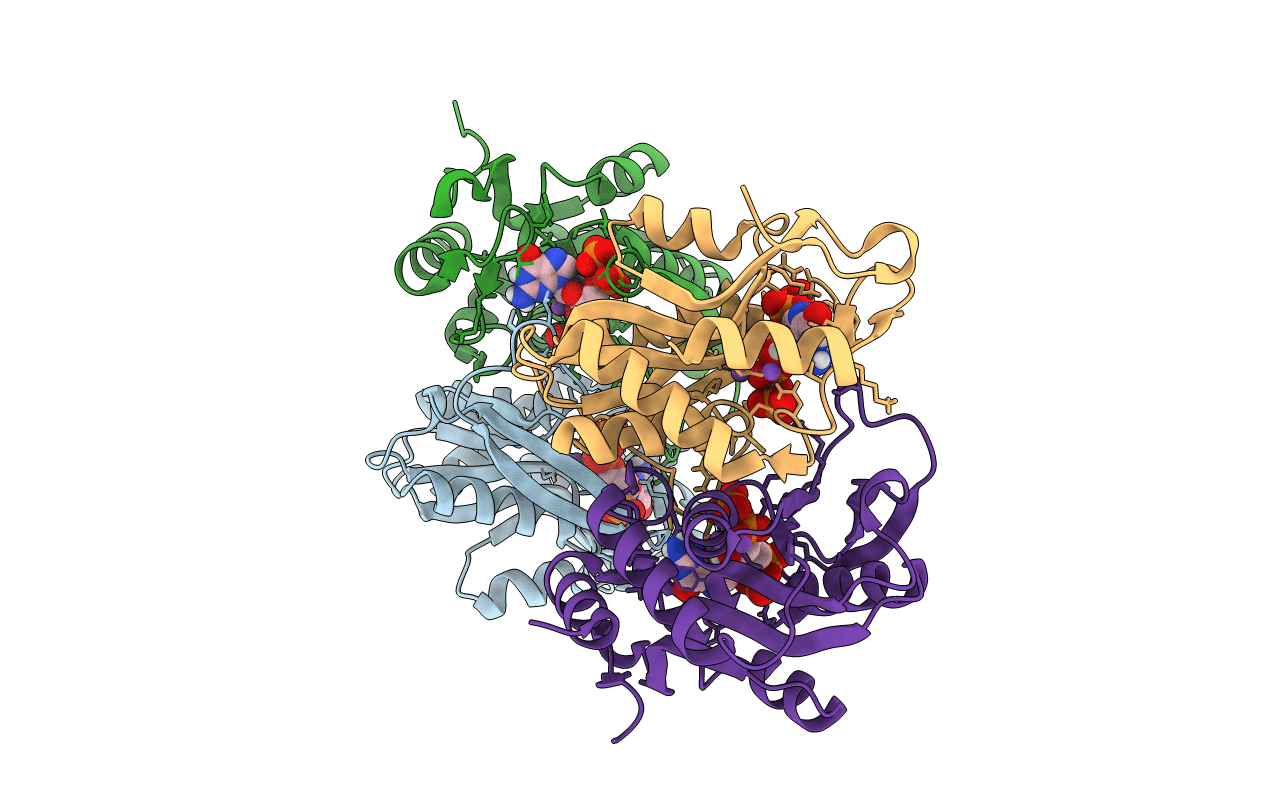
6W1I image
Deposition Date 2020-03-04
Release Date 2020-07-29
Last Version Date 2024-10-23
Entry Detail
PDB ID:
6W1I
Keywords:
Title:
Re-interpretation of ppGpp (G4P) electron density in the deposited crystal structure of Xanthine phosphoribosyltransferase (XPRT) (1Y0B).
Biological Source:
Source Organism:
Host Organism:
Method Details:
Experimental Method:
Resolution:
1.80 Å
R-Value Free:
0.20
R-Value Work:
0.15
R-Value Observed:
0.16
Space Group:
P 1 21 1

Macromolecular Entities
Structures with similar UniProt ID
Protein Blast
Polymer Type:polypeptide(L)
Molecule:Xanthine phosphoribosyltransferase
Gene (Uniprot):xpt
Chain IDs:A, B, C, D
Chain Length:197
Number of Molecules:4
Biological Source:Bacillus subtilis (strain 168)
Modified Residue
Compound ID Chain ID Parent Comp ID Details 2D Image
MSE A MET modified residue
Primary Citation
Molecular Mechanism of Regulation of the Purine Salvage Enzyme XPRT by the Alarmones pppGpp, ppGpp, and pGpp.
J.Mol.Biol. 432 4108 4126 (2020)
PMID: 32446804 DOI: 10.1016/j.jmb.2020.05.013

Abstact

The alarmones pppGpp and ppGpp mediate starvation response and maintain purine homeostasis to protect bacteria. In the bacterial phyla Firmicutes and Bacteroidetes, xanthine phosphoribosyltransferase (XPRT) is a purine salvage enzyme that produces the nucleotide XMP from PRPP and xanthine. Combining structural, biochemical, and genetic analyses, we show that pppGpp and ppGpp, as well as a third newly identified alarmone pGpp, all directly interact with XPRT from the Gram-positive bacterium Bacillus subtilis and inhibit XPRT activity by competing with its substrate PRPP. Structural analysis reveals that ppGpp binds the PRPP binding motif within the XPRT active site. This motif is present in another (p)ppGpp target, the purine salvage enzyme HPRT, suggesting evolutionary conservation in different enzymes. However, XPRT oligomeric interaction is distinct from HPRT in that XPRT forms a symmetric dimer with two (p)ppGpp binding sites at the dimer interface. (p)ppGpp's interaction with an XPRT bridging loop across the interface results in XPRT cooperatively binding (p)ppGpp. Also, XPRT displays differential regulation by the alarmones as it is potently inhibited by both ppGpp and pGpp, but only modestly by pppGpp. Lastly, we demonstrate that the alarmones are necessary for protecting GTP homeostasis against excess environmental xanthine in B. subtilis, suggesting that regulation of XPRT is key for regulating the purine salvage pathway.

Legend

Protein

Chemical

Disease

Primary Citation of related structures
Feedback Form
Name
Email
Institute
Feedback