6V6B image
Deposition Date 2019-12-04
Release Date 2020-01-01
Last Version Date 2025-05-28
Entry Detail
PDB ID:
6V6B
Title:
Structures of GCP2 and GCP3 in the native human gamma-tubulin ring complex
Biological Source:
Source Organism:
Homo sapiens (Taxon ID: 9606)
Method Details:
Experimental Method:
Resolution:
3.80 Å
Aggregation State:
PARTICLE
Reconstruction Method:
SINGLE PARTICLE
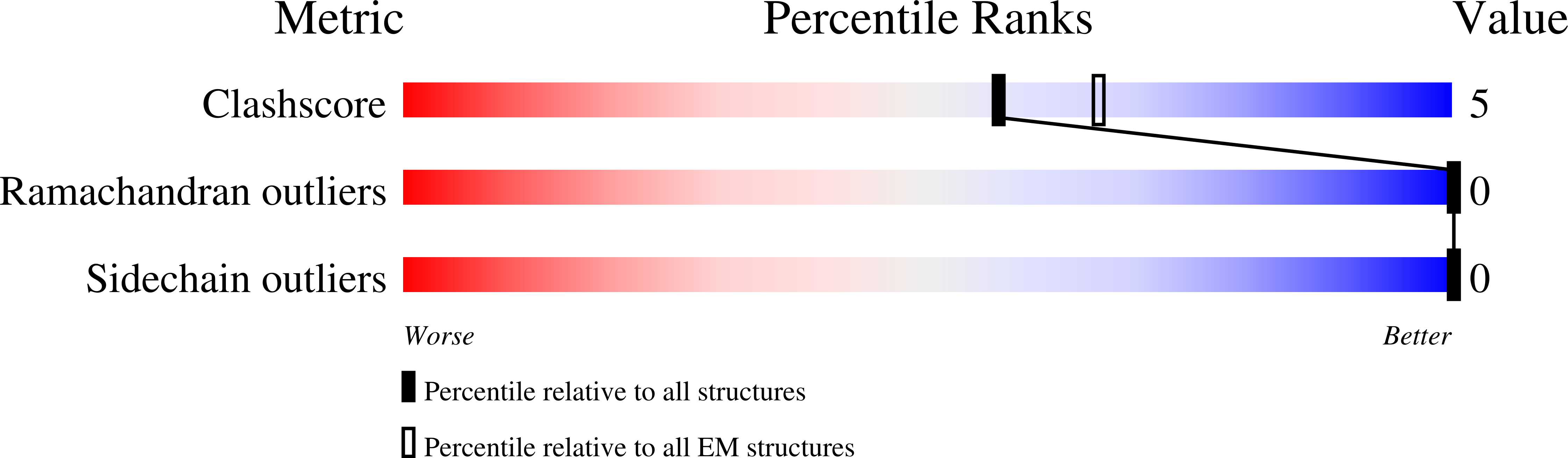
Macromolecular Entities
Structures with similar UniProt ID
Protein Blast
Polymer Type:polypeptide(L)
Molecule:Gamma-tubulin complex component 3
Gene (Uniprot):TUBGCP3
Chain IDs:A (auth: B)
Chain Length:907
Number of Molecules:1
Biological Source:Homo sapiens
Structures with similar UniProt ID
Protein Blast
Polymer Type:polypeptide(L)
Molecule:Gamma-tubulin complex component 2
Gene (Uniprot):TUBGCP2
Chain IDs:B (auth: C)
Chain Length:930
Number of Molecules:1
Biological Source:Homo sapiens
Ligand Molecules
Primary Citation
Asymmetric Molecular Architecture of the Human gamma-Tubulin Ring Complex.
Cell 180 165 175.e16 (2020)
PMID: 31862189 DOI: 10.1016/j.cell.2019.12.007

Abstact

The γ-tubulin ring complex (γ-TuRC) is an essential regulator of centrosomal and acentrosomal microtubule formation, yet its structure is not known. Here, we present a cryo-EM reconstruction of the native human γ-TuRC at ∼3.8 Å resolution, revealing an asymmetric, cone-shaped structure. Pseudo-atomic models indicate that GCP4, GCP5, and GCP6 form distinct Y-shaped assemblies that structurally mimic GCP2/GCP3 subcomplexes distal to the γ-TuRC "seam." We also identify an unanticipated structural bridge that includes an actin-like protein and spans the γ-TuRC lumen. Despite its asymmetric architecture, the γ-TuRC arranges γ-tubulins into a helical geometry poised to nucleate microtubules. Diversity in the γ-TuRC subunits introduces large (>100,000 Å2) surfaces in the complex that allow for interactions with different regulatory factors. The observed compositional complexity of the γ-TuRC could self-regulate its assembly into a cone-shaped structure to control microtubule formation across diverse contexts, e.g., within biological condensates or alongside existing filaments.

Legend

Protein

Chemical

Disease

Primary Citation of related structures
Feedback Form
Name
Email
Institute
Feedback