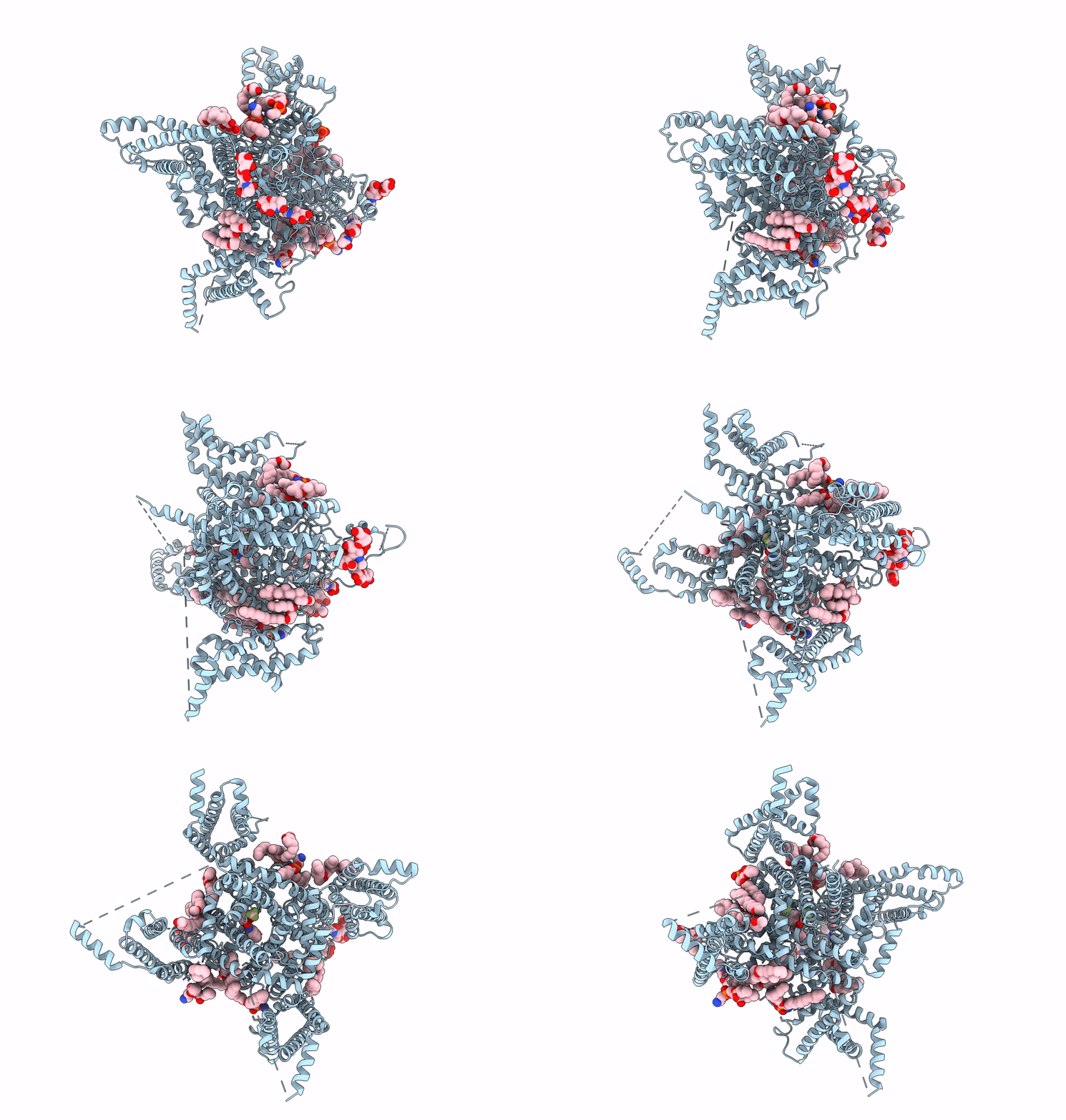
6UZ0 image
Deposition Date 2019-11-14
Release Date 2020-01-01
Last Version Date 2024-11-13
Entry Detail
PDB ID:
6UZ0
Keywords:
Title:
Cardiac sodium channel with flecainide
Biological Source:
Source Organism:
Method Details:
Experimental Method:
Resolution:
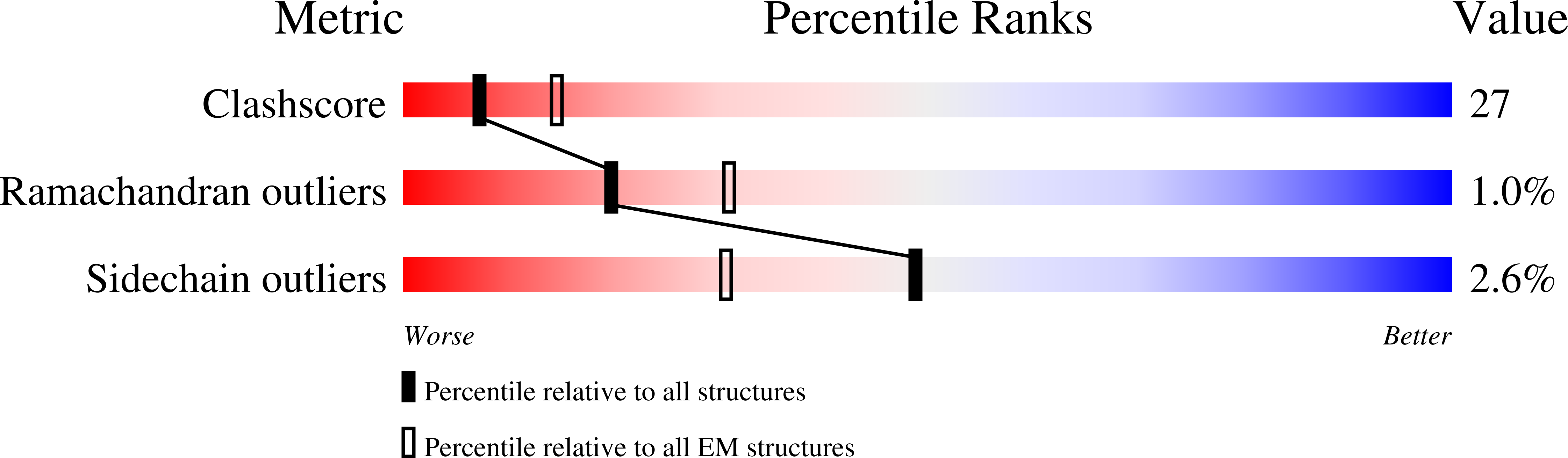
3.24 Å
Aggregation State:
PARTICLE
Reconstruction Method:
SINGLE PARTICLE
Macromolecular Entities
Protein Blast
Polymer Type:polypeptide(L)
Molecule:Sodium channel protein type 5 subunit alpha,Green fluorescent protein
Gene (Uniprot):Scn5a, GFP
Chain IDs:A
Chain Length:1838
Number of Molecules:1
Biological Source:Rattus norvegicus, Aequorea victoria
Primary Citation
Structure of the Cardiac Sodium Channel.
Cell 180 122 134.e10 (2020)
PMID: 31866066 DOI: 10.1016/j.cell.2019.11.041

Abstact

Voltage-gated sodium channel Nav1.5 generates cardiac action potentials and initiates the heartbeat. Here, we report structures of NaV1.5 at 3.2-3.5 Å resolution. NaV1.5 is distinguished from other sodium channels by a unique glycosyl moiety and loss of disulfide-bonding capability at the NaVβ subunit-interaction sites. The antiarrhythmic drug flecainide specifically targets the central cavity of the pore. The voltage sensors are partially activated, and the fast-inactivation gate is partially closed. Activation of the voltage sensor of Domain III allows binding of the isoleucine-phenylalanine-methionine (IFM) motif to the inactivation-gate receptor. Asp and Ala, in the selectivity motif DEKA, line the walls of the ion-selectivity filter, whereas Glu and Lys are in positions to accept and release Na+ ions via a charge-delocalization network. Arrhythmia mutation sites undergo large translocations during gating, providing a potential mechanism for pathogenic effects. Our results provide detailed insights into Nav1.5 structure, pharmacology, activation, inactivation, ion selectivity, and arrhythmias.

Legend

Protein

Chemical

Disease

Primary Citation of related structures
Feedback Form
Name
Email
Institute
Feedback