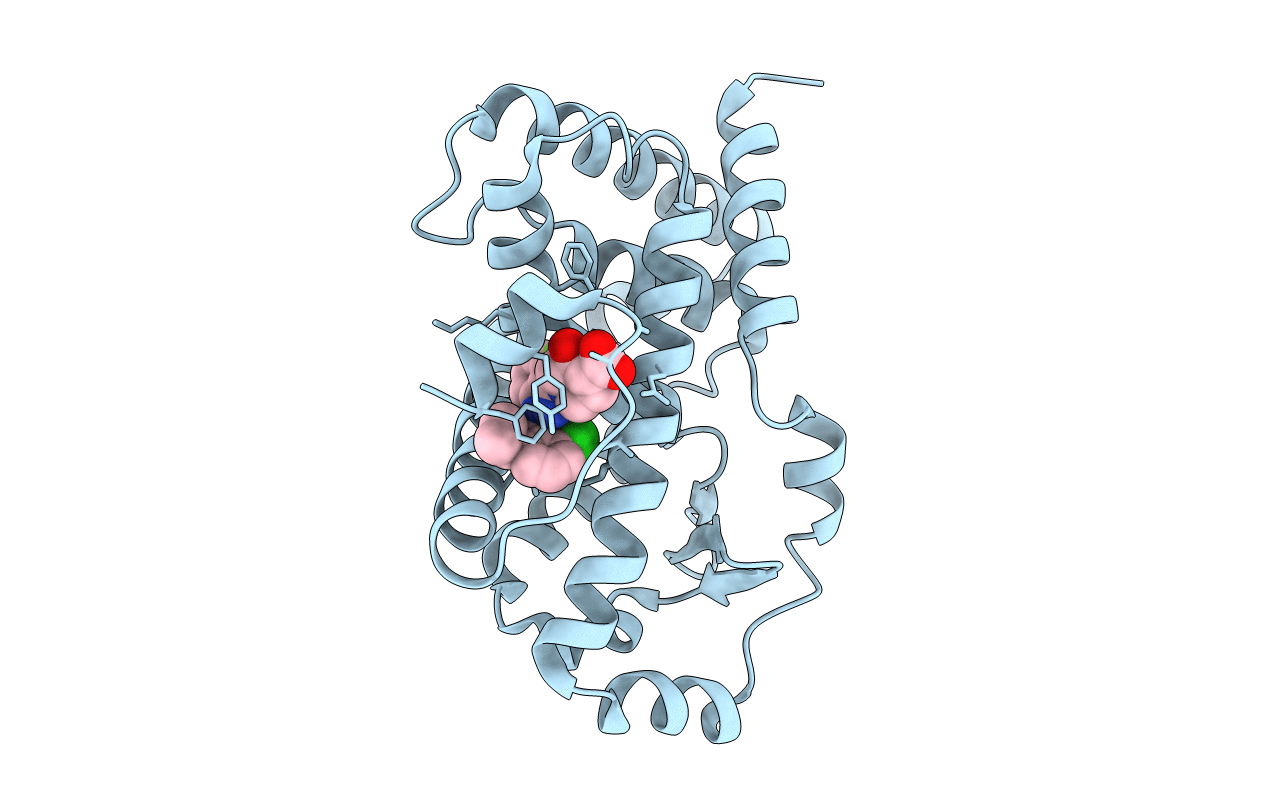
6UCG image
Deposition Date 2019-09-16
Release Date 2020-03-04
Last Version Date 2024-03-13
Entry Detail
PDB ID:
6UCG
Keywords:
Title:
Retinoic acid receptor-related orphan receptor (ROR) gamma in complex with allosteric compound 28
Biological Source:
Source Organism:
Homo sapiens (Taxon ID: 9606)
Host Organism:
Method Details:
Experimental Method:
Resolution:
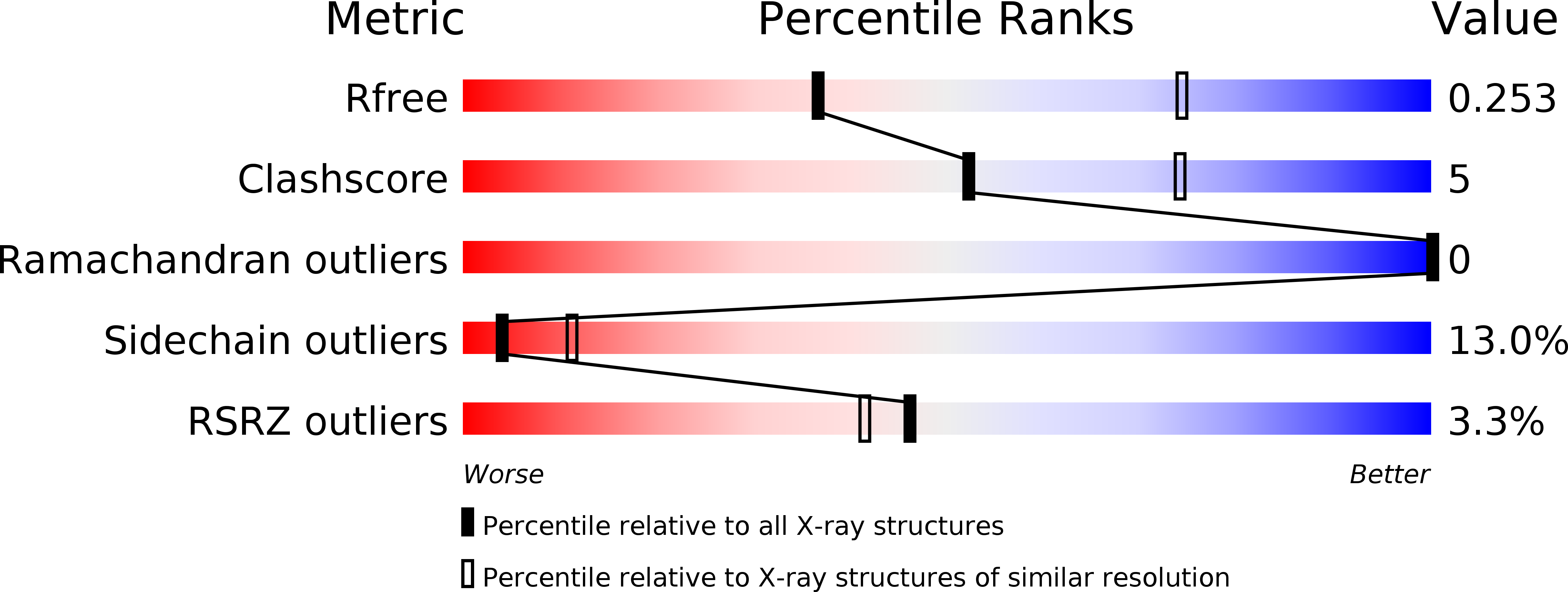
2.87 Å
R-Value Free:
0.26
R-Value Work:
0.19
R-Value Observed:
0.20
Space Group:
P 61 2 2
Macromolecular Entities
Structures with similar UniProt ID
Protein Blast
Polymer Type:polypeptide(L)
Molecule:Nuclear receptor ROR-gamma
Gene (Uniprot):RORC
Chain IDs:A
Chain Length:241
Number of Molecules:1
Biological Source:Homo sapiens
Ligand Molecules
Primary Citation
Discovery ofN-(Indazol-3-yl)piperidine-4-carboxylic Acids as ROR gamma t Allosteric Inhibitors for Autoimmune Diseases.
Acs Med.Chem.Lett. 11 114 119 (2020)
PMID: 32071676 DOI: 10.1021/acsmedchemlett.9b00431

Abstact

The clinical success of anti-IL-17 monoclonal antibodies (i.e., Cosentyx and Taltz) has validated Th17 pathway modulation for the treatment of autoimmune diseases. The nuclear hormone receptor RORγt is a master regulator of Th17 cells and affects the production of a host of cytokines, including IL-17A, IL-17F, IL-22, IL-26, and GM-CSF. Substantial interest has been spurred across both academia and industry to seek small molecules suitable for RORγt inhibition. A variety of RORγt inhibitors have been reported in the past few years, the majority of which are orthosteric binders. Here we disclose the discovery and optimization of a class of inhibitors, which bind differently to an allosteric binding pocket. Starting from a weakly active hit 1, a tool compound 14 was quickly identified that demonstrated superior potency, selectivity, and off-target profile. Further optimization focused on improving metabolic stability. Replacing the benzoic acid moiety with piperidinyl carboxylate, modifying the 4-aza-indazole core in 14 to 4-F-indazole, and incorporating a key hydroxyl group led to the discovery of 25, which possesses exquisite potency and selectivity, as well as an improved pharmacokinetic profile suitable for oral dosing.

Legend

Protein

Chemical

Disease

Primary Citation of related structures
Feedback Form
Name
Email
Institute
Feedback